The Indonesian electric vehicle landscape is undergoing a profound transformation, driven by innovative ownership models that aim to lower the financial barrier to entry for prospective buyers. Traditionally, one of the most substantial cost drivers in purchasing an electric motorcycle has been the lithium-ion battery pack, which often constitutes nearly 40 percent of the vehicle’s total manufacturing and retail cost. To mitigate this fiscal hurdle, major automotive manufacturers operating within the Indonesian market have increasingly adopted a Battery-as-a-Service (BaaS) or battery rental framework. This subscription-based model decouples the cost of the battery from the purchase price of the motorcycle chassis, allowing consumers to acquire brand-new electric two-wheelers at a significantly reduced initial cost.
As of September 2026, the monthly subscription tariffs for these battery rental programs range broadly from Rp84,000 to Rp250,000, depending heavily on the brand, vehicle model, the number of battery units required, and the specific service tier selected by the consumer. This evolving market dynamic is reshaping how urban commuters, commercial delivery fleets, and daily motorists perceive electric vehicle adoption, aligning with national goals to accelerate green transportation, reduce fossil fuel dependency, and bolster the domestic electric vehicle ecosystem.
The Evolution and Background of Battery Rental Frameworks in Indonesia
The genesis of the battery subscription model in Indonesia traces back to the broader governmental push toward sustainable mobility and emissions reduction. Over the past several years, the Indonesian government has implemented various fiscal incentives, subsidies, and regulatory frameworks aimed at increasing the adoption of battery-based electric motor vehicles. Despite these initiatives, market penetration faced initial friction due to consumer anxieties surrounding upfront acquisition costs, long-term battery degradation, and perceived resale value risks.
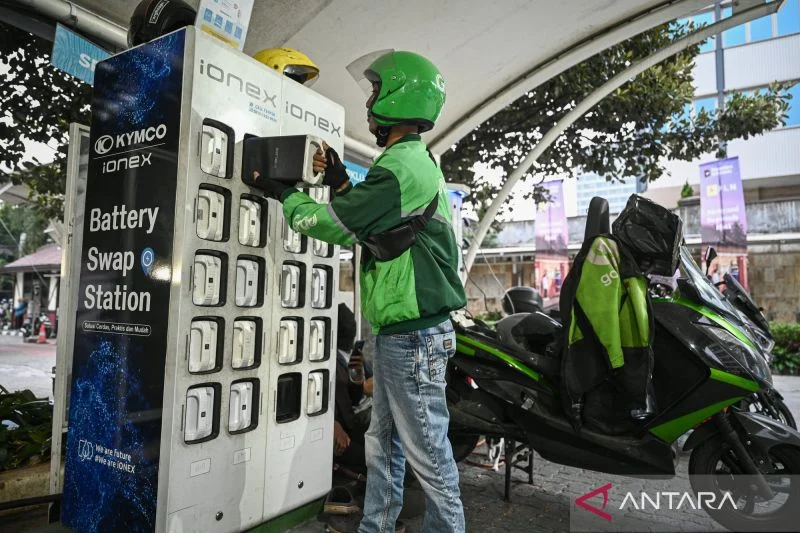
To address these concerns, pioneering manufacturers introduced the BaaS concept, drawing inspiration from successful global models popularized in markets like China and Europe. By treating the battery as a service rather than a permanent capital asset, manufacturers effectively eliminated consumer fears regarding catastrophic battery failure and expensive replacements out of warranty. Furthermore, this model supports various energy replenishment infrastructures, including home charging, public fast-charging stations, and battery-swap networks. Industry analysts note that this shift has democratized access to electric mobility, allowing price-sensitive segments—such as ride-hailing drivers, last-mile delivery couriers, and budget-conscious urban households—to transition smoothly from internal combustion engine motorcycles to zero-emission alternatives.
Comparative Breakdown of Major Brands and Battery Subscription Tariffs
To understand the practical implications of this financing structure, it is essential to examine the specific offerings provided by prominent manufacturers leading the Indonesian market in 2026. Each brand employs distinct pricing strategies, slot configurations, and maintenance guarantees tailored to its vehicle lineup.
1. VinFast: Accessibility and Low-Cost Entry
Vietnamese electric vehicle manufacturer VinFast has aggressively positioned itself in the Indonesian market by offering some of the most competitive subscription rates available. The brand’s battery subscription service encompasses three primary electric motorcycle models: the Evo, the Feliz II, and the Viper.
Under VinFast’s operational framework, consumers who purchase any of these compatible models without owning the battery outright can enroll in a monthly rental scheme. For a single-battery configuration, the subscription fee is fixed at an affordable Rp84,000 per month. Meanwhile, models utilizing a dual-battery setup are charged Rp144,000 per month. All three designated models feature dual battery slots conveniently situated beneath the seat and fully support modern battery-swapping protocols. By establishing a starting rate of Rp84,000 per month, VinFast currently holds one of the lowest entry barriers for battery subscriptions in the Indonesian market, successfully attracting budget-conscious commuters looking to minimize operational overhead.
2. Polytron: Robust Performance with Degradation Protections
Indonesian electronics and automotive giant Polytron has integrated battery rental options across several of its flagship electric motorcycle variants to stimulate domestic sales and alleviate initial investment pressures.
In Polytron’s pricing structure, the urban-focused Fox 200 carries a monthly battery rental fee of Rp125,000. Meanwhile, the higher-performance Fox 500 and the popular Fox R models are subject to a standard subscription fee of Rp200,000 per month. Polytron executives have emphasized that this program is strategically designed to slash the upfront purchasing cost of the vehicles, making advanced electric mobility accessible to a wider demographic.
Crucially, Polytron offers structural consumer protections within its rental agreement. The company explicitly guarantees that if a rented battery experiences a capacity degradation drop below 85 percent under normal operational usage and adheres to program guidelines, the battery will be replaced at no additional cost. This policy effectively shields consumers from the lingering anxiety of diminished riding range over years of continuous operation.
3. ALVA: Comprehensive Service Tiers and Transparent Pricing
Lifestyle mobility brand ALVA has introduced a structured program known as BEBAS (Berlangganan Baterai Sewa, or Battery Rental Subscription) tailored specifically for its advanced N3 and CERVO models.
For the ALVA N3 model, the monthly rental fee varies based on the vehicle’s power configuration: a single-battery setup is priced at Rp150,000 per month, while the dual-battery configuration scales to Rp250,000 per month. For the high-performance ALVA CERVO, which operates exclusively on a dual-battery system, the tariff is similarly established at Rp250,000 per month. Notably, ALVA’s pricing structure is fully transparent, with these monthly fees inclusive of applicable taxes under the brand’s standard service provisions. Through this scheme, the battery remains permanently bound to the corporate service ecosystem, meaning consumers are permanently absolved from purchasing replacement units independently when natural wear and tear eventually occurs.
Economic Implications and Total Cost of Ownership Analysis
While battery rental models successfully lower the threshold for initial vehicle acquisition, financial experts and industry analysts advise consumers to conduct a comprehensive Total Cost of Ownership (TCO) evaluation before committing to a specific brand.
It is vital to distinguish between the monthly battery subscription fee and the complete operational expenditure of owning an electric motorcycle. Consumers must continue to budget for several distinct financial components:
- Initial Vehicle Chassis Purchase Price: Although lower without the battery, the base price of the motorcycle must still be financed or paid upfront.
- Electricity Charging Costs: Expenses incurred from home-charging electricity tariffs or public charging station fees.
- Routine Maintenance and Servicing: Regular checks on braking systems, tires, suspension, and electrical wiring.
- Taxes and Registration: Annual vehicle registration fees (STNK) and regional transportation levies based on prevailing government regulations.
- Subscription Compliance: Adhering strictly to mileage caps, payment schedules, and maintenance terms stipulated in the battery rental contract.
Despite these recurring obligations, the economic implications of the BaaS model are largely positive. By transferring the burden of battery degradation, recycling, and ultimate disposal onto the manufacturer, consumers insulate themselves against major future capital expenditures.
Broader Industry Impact and Governmental Alignment
The proliferation of battery subscription schemes directly supports national strategic initiatives spearheaded by the Indonesian government. The Ministry of Industry has consistently emphasized that expanding the domestic electric vehicle population—which recently surpassed 280,000 units nationwide—is a critical pillar in building a sustainable green ecosystem and reducing carbon emissions in dense urban centers.
Furthermore, institutions such as the House of Representatives (DPR RI) have continuously advocated for the acceleration of the domestic battery industry operational pipeline. Lawmakers stress that localizing battery production will eventually drive down component costs, secure supply chains, and reduce reliance on imported energy commodities. Concurrently, the Ministry of Higher Education, Science, and Technology has championed electric motorcycle conversion programs as a pragmatic method to curb energy imports and foster local technological innovation.
As rental tariffs hover between Rp84,000 and Rp250,000 per month across various brands, market analysts predict that consumer adoption will accelerate steadily throughout the remainder of the decade. Prospective buyers are encouraged to thoroughly compare subscription terms, evaluate daily commuting distances, and weigh the long-term operational costs against traditional outright purchases to determine the most financially viable ownership pathway in Indonesia’s rapidly modernizing transportation sector.