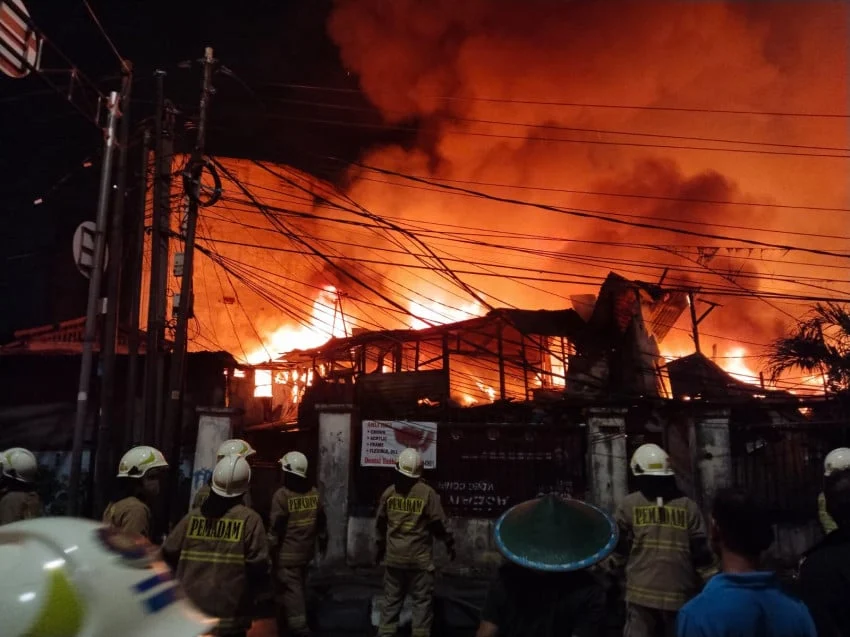
A catastrophic fire broke out in a densely populated residential area located on Jalan Teuku Nyak Arif, Kebayoran Lama Utara, South Jakarta, on Tuesday evening, September 22, 2026. The incident, which triggered a massive emergency response from local authorities, saw 128 firefighters and 24 specialized fire trucks deployed to combat the blaze. The inferno, which consumed several structures including residential units, a small eatery, and an automotive repair shop, has once again highlighted the extreme fire risks inherent in Jakarta’s highly compacted urban landscape.
Chronology of the Incident
The emergency response operation commenced at approximately 20:31 WIB (Western Indonesian Time) when the Command Center of the Jakarta Fire and Rescue Department (Gulkarmat) received a distress call from a local resident. The report indicated that flames were rapidly engulfing a property situated near the high-traffic intersection at the Jalan Kramat traffic lights.
Given the proximity of the residential area to a busy thoroughfare, the fire posed an immediate threat to surrounding buildings and local infrastructure. The first fire engine units arrived at the scene at 20:39 WIB, just eight minutes after the initial alert. By 20:41 WIB, the teams had initiated active suppression measures, focusing on preventing the fire from jumping to adjacent properties. Despite the rapid response, the high density of the buildings and the presence of combustible materials, such as tires at the nearby workshop, caused the fire to spread with alarming speed.
Initial Investigation and Probable Causes
Preliminary testimonies from eyewitnesses and residents suggest that the fire may have originated from a short circuit in the electrical wiring of an upper-level room in a rented house. Electrical faults remain the leading cause of residential fires in Jakarta, often stemming from substandard wiring, overloaded circuits, or the use of non-compliant electrical appliances in older, poorly maintained structures.
As the flames moved from the initial room to the rest of the dwelling, they quickly encroached upon neighboring structures. The inclusion of a small eatery and a tire repair shop added volatile fuel to the fire, complicating the efforts of the 128 personnel on the ground. Firefighters had to manage not only the primary structural fire but also the toxic smoke and chemical fumes generated by the burning rubber at the workshop, which hampered visibility and respiratory safety for the responders.
The Challenge of Urban Density
The geography of Kebayoran Lama, particularly in the vicinity of Jalan Teuku Nyak Arif, presents significant logistical hurdles for emergency services. These areas are characterized by narrow alleyways and high-density housing, which often restricts the maneuverability of heavy fire apparatus. The deployment of 24 units reflects the complexity of the operation, as responders had to establish long-distance water relay systems and coordinate containment efforts across multiple, tightly packed properties.
In Jakarta, the risk of fire propagation is exacerbated by the "cascading effect," where the proximity of buildings—often separated by only a few centimeters or shared walls—allows heat to transfer rapidly. Furthermore, the reliance on makeshift electrical connections and the lack of fire-resistant building materials in informal or semi-formal housing settlements create a environment where a minor accident can quickly escalate into a multi-structure disaster.
Comparative Analysis and Regional Context
This incident is not an isolated event in South Jakarta. The city’s history of fire incidents, including the notable blaze near Simprug Golf which resulted in a fatality, underscores a systemic issue regarding urban planning and safety regulation compliance. Data from the Jakarta Gulkarmat over the past five years indicates that the majority of fire incidents in the capital occur within residential zones, often peaking during the dry season or during periods of high electrical usage.

The density of Kebayoran Lama presents a unique challenge for urban planners. While city authorities have implemented various "Kampung Improvement Programs," the challenge of retrofitting fire-safety infrastructure—such as fire hydrants, emergency access roads, and fire-resistant materials—into established, high-density neighborhoods remains a formidable task.
Official Response and Public Safety Measures
Following the containment of the fire, authorities have emphasized the importance of public awareness regarding electrical safety. The Jakarta Fire and Rescue Department regularly conducts outreach programs aimed at educating residents on the dangers of illegal power tapping, overloaded power strips, and the necessity of routine electrical inspections by licensed professionals.
However, the socio-economic reality for many residents in these areas—where housing is often rented and occupants have little control over the maintenance of the electrical infrastructure—creates a barrier to prevention. Local government agencies are currently evaluating the need for stricter enforcement of building codes in densely populated districts to mitigate the risk of future catastrophes.
Broader Implications for Urban Resilience
The impact of such fires extends beyond the immediate destruction of property. Displaced families often face significant economic hardship, losing both their homes and their livelihoods, as seen in this incident where a local business was destroyed. The psychological trauma for the community and the strain on municipal emergency resources underscore the necessity of a multi-faceted approach to urban resilience.
Experts in urban disaster management suggest that effective fire mitigation in Jakarta requires a combination of top-down and bottom-up strategies. This includes:
- Infrastructure Investment: Expanding the network of accessible hydrants and ensuring consistent water pressure in high-risk zones.
- Community Training: Establishing local volunteer fire-watch groups (Relawan Pemadam Kebakaran) that can provide initial containment before professional help arrives.
- Strict Enforcement: Periodic mandatory inspections of electrical installations in rental properties to ensure they meet the Indonesian National Standard (SNI).
- Public Education: Sustained campaigns regarding the dangers of fire hazards, particularly in high-density informal settlements.
Economic and Social Recovery
In the aftermath of the Kebayoran Lama fire, the immediate focus of the local government shifts toward humanitarian aid. Coordinating with the Social Agency (Dinas Sosial), the city typically provides emergency tents, food supplies, and basic necessities for those displaced. The long-term recovery, however, rests on the ability of the affected families to rebuild and the capacity of the local economy to absorb the loss of the small businesses affected.
As the investigation into the exact cause of the fire continues, the incident serves as a stark reminder of the fragile balance between urban growth and safety in Jakarta. With the city continuing to densify, the role of the Gulkarmat has become increasingly critical, transitioning from purely reactive firefighting to a more proactive role in community safety and disaster preparedness.
Conclusion
The fire at Jalan Teuku Nyak Arif serves as a sobering case study of the vulnerabilities inherent in Jakarta’s urban fabric. While the swift action of the 128 firefighters prevented a larger loss of life and contained the spread to the surrounding blocks, the incident highlights the ongoing struggle to protect residents from the hazards of high-density living. As the city moves forward, it remains imperative that policymakers, building owners, and residents alike prioritize safety measures that can prevent these tragedies from recurring. The resilience of the Kebayoran Lama community will be tested in the coming weeks as they begin the process of rebuilding, but for the city at large, the lesson is clear: fire prevention is not merely a matter of equipment, but a continuous commitment to urban safety and infrastructure integrity.
As of the latest updates from the scene, the fire has been successfully extinguished, and investigators are working to secure the area to prevent any rekindling. No official casualty count has been released beyond the initial reports, and the focus remains on supporting the affected families and clearing the debris that has blocked local access roads. The incident serves as a critical checkpoint for the local administration to assess the emergency response time and the efficacy of current fire mitigation strategies in the Kebayoran Lama district.