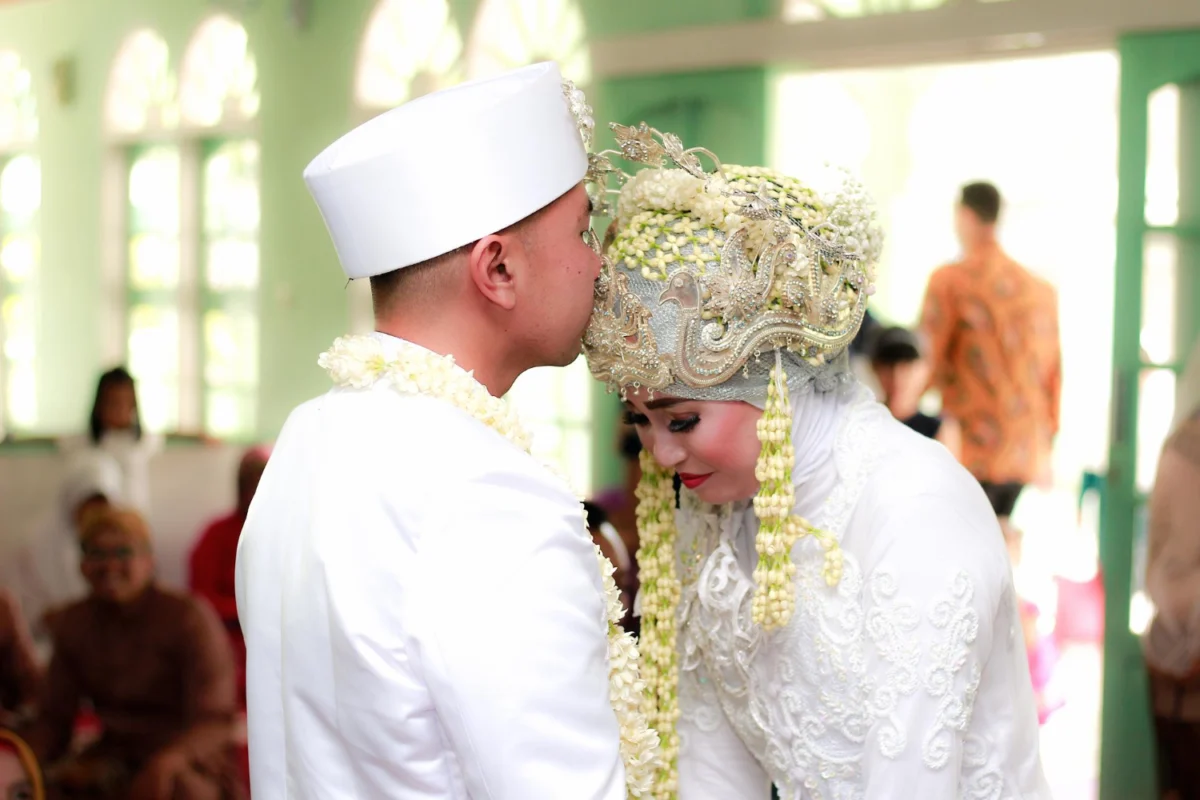
The moment of the marriage contract, or akad nikah, represents a foundational juncture in Islamic tradition, signifying the transition of two individuals into a sacred partnership sanctioned by divine decree. Within the Islamic scholarly tradition, this ceremony is not merely a social or legal transaction but a spiritual covenant. Scholars, including the esteemed Imam An-Nawawi, have emphasized that the sanctity of this union should be anchored in supplication, specifically through prayers that invoke divine blessings upon the newlyweds. By examining the historical precedents set by Prophet Muhammad and the subsequent codifications by classical jurists, one gains a deeper understanding of how these prayers serve to fortify the marital bond against the complexities of modern life.
Historical Context and Canonical Foundations
The instruction to recite specific supplications during an akad nikah is rooted in the hadith literature, which serves as the primary source for Islamic legal and social practices. Imam An-Nawawi, in his seminal work Al-Adzkar, documents the Sunnah—the practice of the Prophet—regarding how to congratulate and pray for a couple entering into marriage. This practice is also extended to the walimatul ursy, or the marriage feast, which acts as a public declaration and celebration of the union.
The primary prayer advocated by the tradition is: Barakallahu laka, wa barakallahu ‘alayka, wa jama‘a bainakuma fī khair. Translated as "May Allah bless you, and bless you, and unite you both in goodness," this brief yet profound prayer encapsulates the essential requirements for a successful marriage: divine blessing, protection, and a harmonious union rooted in virtue.
The Chronology of the Prophetic Tradition
The historical precedent for this specific supplication is traced back to the time of the Prophet Muhammad, particularly involving the Companion Abdurrahman bin Auf. According to authentic narrations found in the collections of Imam Bukhari and Imam Muslim, Abdurrahman bin Auf informed the Prophet of his marriage.
In pre-Islamic Arabian society, the standard congratulatory phrase was bil-rafā’i wal-banīn, which translates to "may you live in harmony and have many sons." While this reflected the cultural priorities of the era—namely tribal expansion and male lineage—the Prophet Muhammad deliberately pivoted away from this traditional greeting. By offering a new, spiritually centered prayer, the Prophet shifted the focus from worldly outcomes to the quality of the relationship and the pursuit of divine pleasure. This pedagogical shift serves as a significant marker in Islamic social history, demonstrating how the faith replaced prevailing tribal customs with values focused on spiritual well-being.

Scholarly Analysis and Theological Implications
Imam Ibnu Hajar al-Asqalani, in his monumental commentary Fathul Bari, provides a critical analysis of this event. He notes that the Prophet’s rejection of the pre-Islamic greeting was intentional. By choosing a supplication that emphasizes "goodness" (khair) rather than specific demographic outcomes like the number of sons, the Prophet established a template for marital success that is inclusive and sustainable.
From a sociological perspective, this transition highlights a core tenet of Islamic family law: the marriage contract is a contract of mutual responsibility and partnership. When a couple enters this union, they are entering a state of ibadah (worship). Consequently, the prayers recited during the akad are designed to serve as a reminder that the relationship is subject to divine oversight. This creates a framework for accountability, where both the husband and wife are encouraged to maintain their conduct according to the values of kindness, patience, and mutual support—qualities implied by the phrase "unite you both in goodness."
The Evolution of Marriage Customs
In contemporary Islamic societies, the integration of these Prophetic supplications into the wedding ceremony serves as a bridge between ancient tradition and modern reality. Despite the increasing complexity of wedding logistics—including legal registration, elaborate festivities, and cultural variations—the core prayer remains a constant.
Data from various marriage counseling agencies and religious institutions indicate that couples who ground their initial union in traditional religious frameworks often report higher levels of marital satisfaction and better conflict resolution skills. While correlation does not imply causation, the psychological impact of beginning a marriage with a focus on spiritual values and divine blessing provides a mental and emotional anchor. It shifts the couple’s perspective from viewing the wedding as a singular event to viewing the marriage as a long-term spiritual journey.
Comparative Perspective: Worldly vs. Divine Intentions
A central theme in the analysis of the Barakallahu laka prayer is the rejection of materialism. As highlighted by Ibn Hajar, the traditional pre-Islamic focus on wealth and male offspring often led to a utilitarian view of marriage. By contrast, the Prophetic model promotes a holistic view of the relationship.
In the modern context, where the divorce rate is statistically significant across various cultures, the emphasis on "uniting in goodness" offers a buffer. "Goodness" or khair in the Islamic sense is comprehensive; it encompasses financial stability, emotional intimacy, intellectual compatibility, and spiritual growth. By invoking this during the akad, the couple acknowledges that their union is meant to be a source of tranquility—or sakinah—as mentioned in the Quran.

The Role of the Walimah and Public Witnessing
The extension of these prayers to the walimatul ursy reinforces the communal nature of marriage in Islam. The wedding feast is not merely a social event; it is a Sunnah that serves to announce the marriage to the community. When guests join the couple in prayer, they become witnesses to the commitment and part of the support system that will assist the couple in maintaining their vows.
This communal aspect is vital in mitigating the isolation that can occur in modern urbanized settings. By involving the family and community in the act of prayer, the couple is reminded that they are part of a larger social fabric. The prayers offered by the guests, reflecting the same sentiments as those offered by the Prophet, reinforce the couple’s sense of belonging and duty to the community.
Challenges and Future Considerations
While the adoption of these prayers is widespread, there is a noted need for deeper comprehension of their meaning among younger generations. Often, these phrases are recited ritually without an active engagement with the theological weight they carry. Religious educators and community leaders are increasingly emphasizing that the efficacy of the prayer lies in the consciousness—or khushu—of the participants.
Furthermore, as society continues to evolve, the application of these traditional teachings to modern legal frameworks remains a relevant area of study. The marriage contract today involves complex legal paperwork, civil registration, and secular requirements. However, the spiritual act of the akad remains distinct. Maintaining this distinction is essential for preserving the identity of the Islamic marriage as a sacred institution.
Conclusion: The Lasting Impact of Prophetic Wisdom
The practice of reciting the Barakallahu laka prayer is a testament to the enduring nature of Islamic teachings on human relationships. By prioritizing spiritual blessing over worldly accumulation, the tradition provides a blueprint for resilience. As couples navigate the challenges of the 21st century, the wisdom found in the words of the Prophet—documented by scholars like An-Nawawi and analyzed by thinkers like Ibn Hajar—continues to provide a foundation of stability.
Ultimately, the akad nikah is the first step in a lifelong process of building a home. By starting with a prayer for divine blessing and union in goodness, the couple establishes a trajectory for their marriage that transcends the immediate celebration. It serves as an ongoing commitment to nurture a relationship that is not only beneficial to the two individuals involved but also to the wider community of which they are a part. The simplicity of the prayer belies its profound impact, acting as a reminder that the most enduring unions are those built upon the foundation of shared values and a common commitment to the divine.