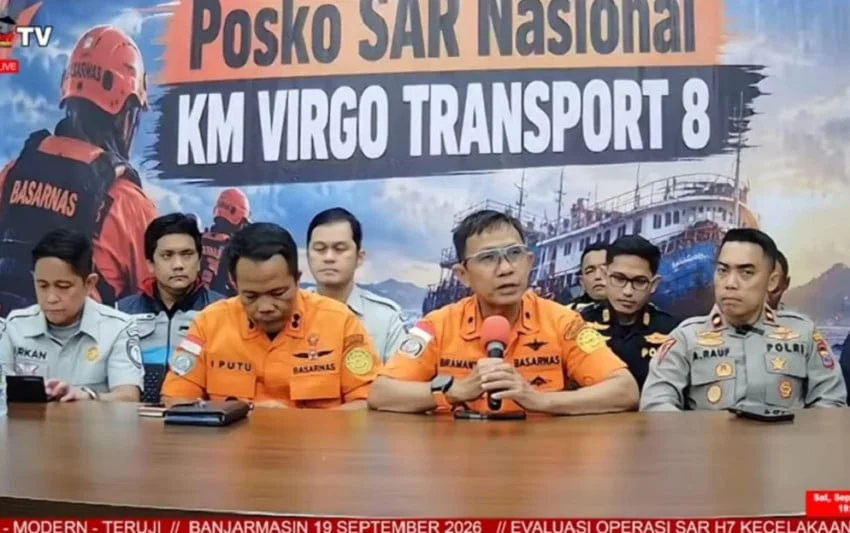
The National Search and Rescue Agency (Basarnas) of Indonesia has officially announced a seven-day extension for the ongoing search and rescue operations dedicated to locating the remaining victims of the tragic KM Virgo Transport 8 maritime incident. The decision to prolong the mission comes as rescue teams face complex logistical challenges, compounded by the recent arrival of specialized salvage teams tasked with the delicate operation of raising the sunken vessel from the seabed.
Speaking on the operational updates, Basarnas Director of Operations, First Admiral Yudhi Bramantyo Nur Sasongko, confirmed the extension during a press briefing on Saturday, September 19, 2026. The move underscores the agency’s commitment to exhausting all viable avenues in the search for missing persons, ensuring that families and loved ones receive closure while supporting ongoing recovery efforts at the disaster site.
Background Context of the Maritime Incident
The disaster involving KM Virgo Transport 8 has sent shockwaves through the Indonesian maritime community, drawing significant attention from federal authorities, safety regulators, and the general public. Maritime incidents of this scale invariably trigger rigorous reviews regarding vessel safety compliance, weather monitoring, and operational protocols within the archipelago’s bustling commercial shipping lanes.
While preliminary investigations into the exact cause of the sinking remain ongoing, transportation safety experts have pointed to a combination of unpredictable open-water conditions, potential cargo shifts, and structural integrity factors as common contributors to such maritime mishaps in the region. The incident has once again highlighted the inherent risks faced by commercial transport vessels operating across Indonesia’s vast maritime territory, where inter-island shipping serves as a vital economic lifeline.
As the recovery phase transitions into a complex salvage operation, authorities are under increasing pressure to determine the root cause of the sinking. Stakeholders from the Ministry of Transportation, the National Transportation Safety Committee (KNKT), and maritime police are collaborating to piece together the sequence of events that led to the tragedy, aiming to implement corrective safety measures to prevent similar occurrences in the future.
Operational Challenges and the Salvage Strategy
The primary catalyst for extending the search operation by another week is the arrival and deployment of a specialized maritime salvage team. According to First Admiral Bramantyo, the integration of these salvage experts is a critical step not only for recovering remaining victims but also for addressing the physical wreckage of KM Virgo Transport 8.
Unlike surface-level search and rescue sweeps—which rely on visual sightings, sonar mapping, and shoreline patrols—salvage operations require intricate underwater engineering, deep-sea diving capabilities, and heavy lifting equipment. These procedures are inherently time-consuming and fraught with environmental and technical hurdles, including strong underwater currents, limited visibility, and the structural complexity of the submerged hull.
"The salvage operation that will be executed may take a long, extended period," Bramantyo explained, addressing reporters regarding the timeline. "We cannot determine an exact completion date at this stage, but what is certain is that the methodology and execution plan are currently being deliberated in detail by our team of maritime engineering experts."
The presence of the salvage team opens up new possibilities for locating victims who may be trapped within the hull or in the immediate vicinity of the wreckage. Consequently, Basarnas deemed it operationally necessary to maintain its active search posture on the surface and along surrounding coastlines concurrently with the underwater engineering efforts.

Wider Humanitarian and Institutional Response
Beyond search and rescue operations, institutional support for the victims and their families has mobilized across multiple fronts. In the wake of the tragedy, state-owned social insurance enterprise PT Jasa Raharja stepped forward to provide immediate financial assistance and compensation packages to the designated heirs of the deceased victims.
In a recent disbursement ceremony held in West Java, Jasa Raharja officials delivered statutory death benefits and survivor compensation to the families of two identified victims of KM Virgo Transport 8. This swift administrative response is part of the government’s standard protocol to alleviate the immediate financial burdens faced by bereaved families following sudden maritime and transit disasters.
State agencies, including the Ministry of Social Affairs and local regional governments, have also established crisis centers to provide psychological counseling, logistical aid, and administrative support to the families waiting for news. The emotional toll on the families has been immense, prompting calls from community leaders for sustained mental health support throughout the extended search period.
Implications for Maritime Safety and Regulation
The sinking of KM Virgo Transport 8 and the subsequent multi-week rescue and salvage operation carry broad implications for Indonesia’s maritime sector. As an archipelagic nation heavily dependent on domestic shipping for passenger and cargo transport, maintaining stringent adherence to the International Safety Management (ISM) Code and domestic maritime regulations is paramount.
Industry analysts suggest that the findings from the KNKT investigation into this incident will likely prompt a comprehensive review of vessel inspection protocols, cargo loading standards, and emergency preparedness training for commercial crews. Furthermore, the incident serves as a stark reminder of the critical importance of equipping commercial vessels with real-time tracking systems, robust distress signaling equipment, and adequate life-saving appliances.
For Basarnas, the operation underscores the agency’s operational readiness and adaptability when confronting protracted maritime crises. Coordinating surface searches, aerial surveillance, and deep-water salvage requires seamless inter-agency cooperation involving the Indonesian Navy (TNI AL), the Water Police (Polairud), port authorities, and local volunteer networks.
Looking Ahead: The Next Seven Days
With the search operation officially extended for another week, Basarnas has called upon all maritime actors, commercial vessels transiting the area, and coastal communities to remain vigilant and report any potential debris or sightings to authorities immediately.
As the salvage team begins its meticulous work beneath the surface, the families of the missing and the broader Indonesian public await further updates. While the path to complete closure is laden with technical and emotional difficulties, the steadfast commitment of search and rescue personnel ensures that every possible effort is being deployed in the ongoing mission to account for all victims of the KM Virgo Transport 8 tragedy.