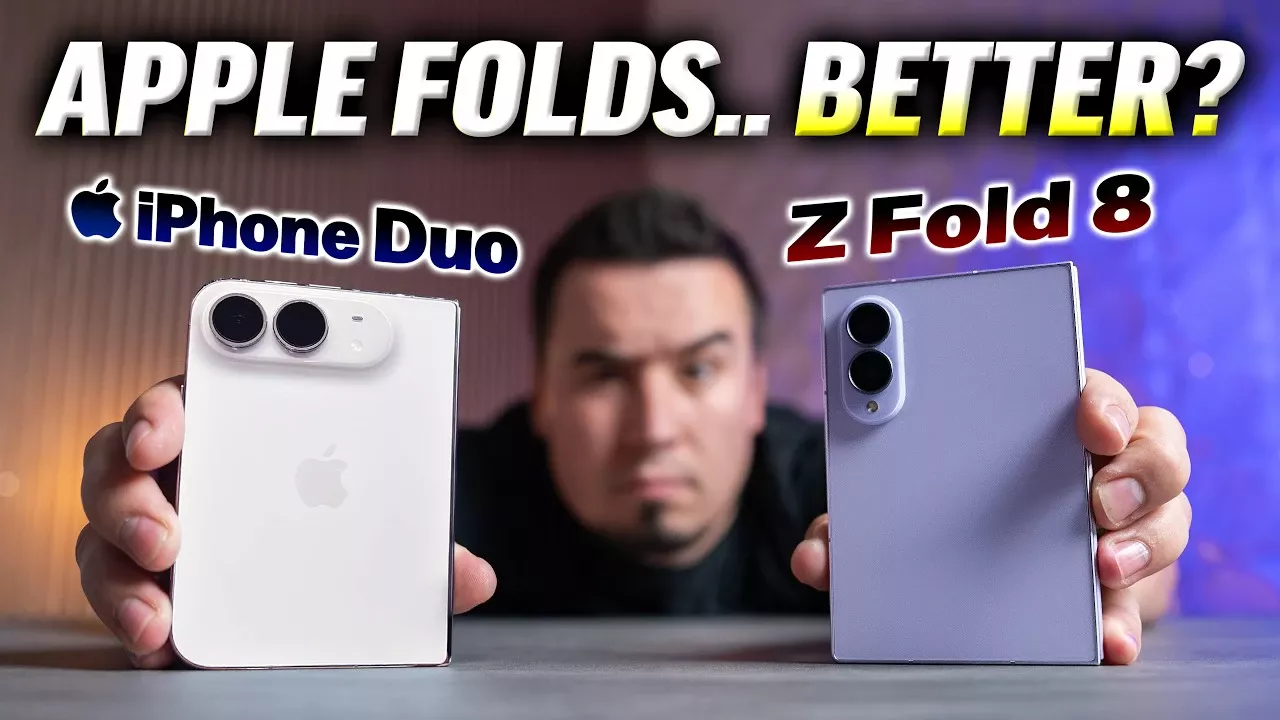
The landscape of the premium smartphone market has undergone a seismic shift following the long-awaited entry of Apple into the foldable device segment. With the official introduction of the "iPhone Duo," a dual-screen foldable handset priced at $1,999, Apple has directly challenged Samsung’s years-long hegemony in the category. While Samsung has long been the undisputed leader in the foldable space, the arrival of a Cupertino-designed foldable device creates an immediate threat to its market dominance, forcing a recalibration of strategies for both industry titans.
The Evolution of the Foldable Segment: A Brief Chronology
The foldable smartphone market did not materialize overnight. Its trajectory has been defined by years of iterative hardware development and consumer education.
- 2019: The Genesis: Samsung officially launched the Galaxy Fold, effectively creating the foldable category. Despite early hardware hurdles, the device signaled the start of a new form-factor era.
- 2020–2023: Refinement and Expansion: Samsung introduced the "Flip" series, focusing on portability, while competitors like Huawei, Motorola, and Google entered the fray, each iterating on hinge mechanisms and crease reduction.
- 2024: Market Maturation: Foldables moved from a niche enthusiast category to a mainstream premium option, with global shipments seeing steady year-over-year growth.
- 2026: The Apple Pivot: In early September, under the leadership of CEO John Ternus, Apple unveiled the iPhone Duo. This move validated the form factor, moving it from a risky experimental design to a standard-bearer for premium mobile technology.
Market Dynamics: Counterpoint Research Forecasts
Market analysts at Counterpoint Research suggest that the introduction of the iPhone Duo will significantly alter the market share distribution. Currently, Samsung enjoys a commanding 38% to 40% share of the global foldable market. Projections indicate that Apple, leveraging its massive, loyal customer base, could capture 25% of the segment within the first year of availability. This expansion by Apple is expected to pull Samsung’s market share down to approximately 32%.
The pricing strategy is equally critical. By positioning the iPhone Duo at $1,999, Apple has placed it in direct competition with the Samsung Galaxy Z Fold 8, which retails at $1,899. This $100 differential is negligible in the ultra-premium segment, suggesting that Apple is not competing on price but on ecosystem value and brand prestige.
The Power of the Ecosystem
One of the primary obstacles for Samsung has been the "walled garden" effect inherent to iOS. For years, hundreds of millions of iPhone users remained in the ecosystem, effectively locked out of the foldable experience unless they were willing to abandon iMessage, iCloud, and the seamless integration of Apple services.
The iPhone Duo removes this barrier. By offering a foldable device within the Apple ecosystem, the company has effectively neutralized the primary incentive for power users to migrate to Android. This represents a significant defensive win for Apple, while simultaneously creating a new growth vector for their hardware division.
Samsung’s Strategic Response
Despite the competitive pressure, Samsung remains a formidable player with deep structural advantages. The South Korean tech giant maintains a massive global scale, an extensive supply chain, and a portfolio that spans from entry-level budget phones to ultra-premium flagships.
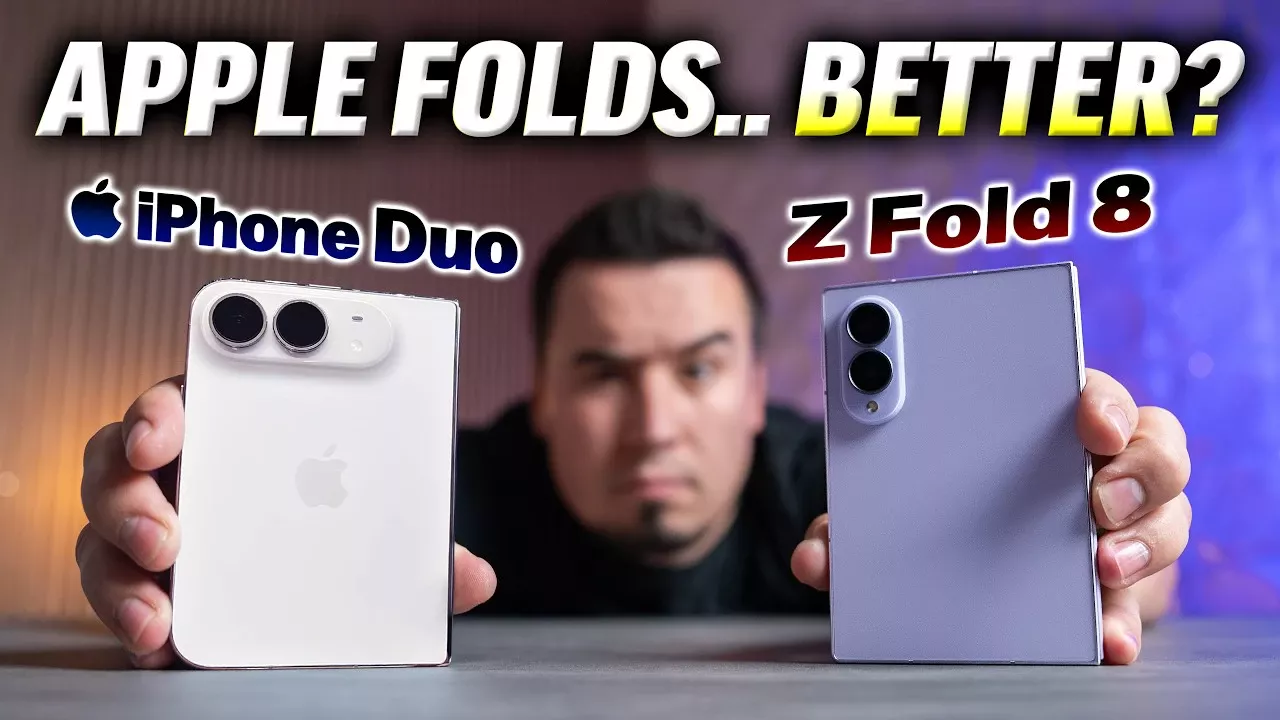
Samsung’s leadership has framed Apple’s entry as a "validation" of the category. From the perspective of Samsung executives, the entry of a company like Apple serves to grow the overall total addressable market (TAM), making foldables more attractive to the general public.
Furthermore, Samsung has been aggressive in its efforts to entice iOS defectors. Recent internal data from Samsung indicates that the switch rate of iPhone users to the Galaxy Z Fold 8 is 1.6 times higher than that of previous generations. In the United States, 30% of Galaxy Z Flip 8 buyers are former competitors’ customers, many of whom are first-time foldable users. To facilitate this transition, Samsung has overhauled its "Smart Switch" feature, allowing users to transfer data from an iPhone to a Galaxy device via a simple QR code scan, removing the friction of installing redundant applications.
Technical Drivers: What Consumers Want
Samsung’s market research highlights specific consumer preferences that have guided the development of the Z Fold 8 and Z Flip 8.
- Design and Ergonomics: Consumers are increasingly prioritizing thinness and weight reduction.
- Multitasking: The internal displays of the Fold 8 are designed to serve as a productivity hub, allowing users to move away from tablets.
- The "Ultra" Appeal: For the Fold 8 Ultra, users are prioritizing screen real estate, viewing the device as a replacement for both a phone and a small tablet.
The Global Perspective: The Role of Huawei
While the discourse is heavily dominated by the Apple vs. Samsung narrative, the global market remains tripartite. Huawei, based in Shenzhen, continues to hold significant sway in the Chinese market. According to data from July, Huawei remains a dominant force in the high-end segment within China, consistently innovating in thinness and camera technology. The global foldable landscape, therefore, is not merely a duopoly but a complex, three-way contest that involves distinct regional preferences and geopolitical supply chain considerations.
Economic Implications and Future Outlook
The entry of Apple into the foldable market will likely drive a new wave of research and development across the industry. We can expect to see:
- Supply Chain Strain: Increased demand for foldable-specific components—such as specialized ultra-thin glass (UTG) and hinge mechanisms—may drive up production costs, potentially leading to price increases across the board.
- Software Optimization: Developers will face increased pressure to optimize applications for multiple aspect ratios, a long-standing challenge that Apple’s entry will force the developer community to address more aggressively.
- Hardware Durability Wars: With both Apple and Samsung vying for the "most reliable" foldable, the industry will likely see a surge in innovation regarding screen longevity and hinge durability.
Conclusion: A Market in Transition
The launch of the iPhone Duo marks a pivotal moment in mobile technology. While Samsung has served as the pioneer and the primary architect of the foldable market, the entry of Apple introduces a level of competition that will redefine consumer expectations and market share.
Samsung’s strategy appears to be one of "scale and diversity," relying on its broad product range and deep experience to maintain its lead in volume. Meanwhile, Apple is betting on its brand loyalty and the strength of its software ecosystem to carve out a massive slice of the premium revenue pie. As the market enters this new phase, the ultimate winners will be the consumers, who stand to benefit from the intense innovation and improved hardware quality that this high-stakes competition will undoubtedly produce. The battle for the future of the smartphone is no longer just about the screen—it is about how that screen folds, and who controls the ecosystem behind it.