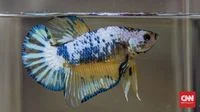
The process of distinguishing between male and female Betta splendens, commonly known as Siamese fighting fish, remains one of the most persistent challenges for both novice hobbyists and professional breeders. While casual observers often assume that color intensity and fin length serve as definitive gender markers, ichthyologists and experienced aquarists emphasize that these visual traits are highly variable and frequently misleading. Accurate sexing requires a multi-faceted approach, relying on the convergence of anatomical, behavioral, and physiological indicators rather than a single morphological trait.
The Evolutionary Context of Betta Dimorphism
The genus Betta has undergone significant selective breeding over the past century, primarily in Southeast Asia, where the fish were originally cultivated for their territorial displays. This history of artificial selection has resulted in a wide array of phenotypes, particularly concerning fin morphology and coloration. Consequently, modern domesticated Bettas often blur the lines of sexual dimorphism that are strictly observed in their wild-type ancestors.
In the wild, male Bettas exhibit a clear advantage in fin size and intensity to attract mates and intimidate rivals. However, in captivity, the proliferation of "Plakat" strains—a type of short-finned male—has rendered the "long fin vs. short fin" rule of thumb largely obsolete. Understanding the nuanced anatomy of the female specimen is therefore critical for effective population management, breeding programs, and the maintenance of aquatic community harmony.
Anatomical Markers: The Primary Indicators
The most reliable anatomical feature for identifying a female Betta is the presence of the ovipositor, colloquially referred to as the "egg spot." This structure is located on the ventral side of the fish, situated between the pelvic fins and the anal fin. In a mature, healthy female, this appears as a small, distinct white or cream-colored papilla.
However, reliance on the egg spot alone is discouraged by industry experts. Juvenile females often lack a clearly defined ovipositor, and stress can cause the organ to retract or become less visible. Furthermore, some male specimens may exhibit small, light-colored protrusions that can be mistaken for an egg spot. To minimize error, observers should corroborate this finding with at least two other physical characteristics, such as body shape and gill membrane development.
The Role of Body Morphology and Fin Structure
Beyond the ovipositor, the overall body shape provides significant clues. Females typically possess a more rounded, robust midsection compared to the streamlined, elongated bodies of males. When a female is in peak reproductive condition, her abdomen often appears slightly distended due to the development of oocytes. While this is a helpful indicator, it must be balanced against the fish’s nutritional status; an overfed male may also appear round, potentially leading to misidentification.
Regarding fin morphology, the female’s fins—specifically the dorsal, anal, and caudal fins—are generally shorter and more compact. While males of the long-finned variety (such as Halfmoon or Veil Tail) display dramatic, flowing appendages, females maintain a more modest profile. In the case of short-finned varieties, the rounded edges of the female’s fins often contrast with the slightly more angular or pointed fin tips observed in males.
Sensory and Physiological Cues: The Beard and Stress Bars
The operculum, or gill cover, hides a vital sexing tool: the branchiostegal membrane, or "beard." When a Betta flares—an act of aggression or intimidation—this membrane expands. In males, the beard is significantly larger and more prominent, often protruding well beyond the gill cover. In females, the beard is present but much smaller, typically remaining hidden when the fish is at rest.
Another physiological indicator occurs specifically in females during the breeding cycle: the emergence of "breeding bars." These are vertical, alternating light and dark stripes that appear along the flanks of a female ready to spawn. It is imperative to distinguish these from "stress stripes," which manifest as horizontal lines and can appear on either gender during periods of environmental instability or illness. Recognizing this distinction is essential for keepers to avoid confusing a healthy, receptive female with one that is suffering from poor water quality.
Comparative Data: Sexing Metrics for Hobbyists
Data compiled by the Betta Fish enthusiasts’ network suggests that a "weighted approach" to sexing yields a 95% accuracy rate. By assigning values to various traits, keepers can reach a more scientific conclusion:
| Feature | Male Characteristic | Female Characteristic |
|---|---|---|
| Egg Spot | Absent | Present (White/Cream) |
| Ventral Fins | Long, thick | Short, thin |
| Body Shape | Streamlined/Slender | Round/Deep |
| Beard Size | Large, prominent | Small, discrete |
| Behavior | Highly territorial | Moderately territorial |
While these metrics provide a foundation, the impact of environmental factors cannot be overstated. A fish’s environment—specifically the volume of the tank, water temperature, and protein content of its diet—directly influences growth rates and the prominence of secondary sexual characteristics.
Broader Implications for Aquarium Management
The misidentification of Betta genders carries significant implications for the sustainability and safety of aquatic environments. Placing two males together invariably leads to violent, often fatal, territorial disputes. Conversely, the "sorority" tank—a group of female Bettas—requires precise management. If a male is mistakenly introduced into a female-only group, the social structure will collapse, resulting in aggression and stress.
Furthermore, the misunderstanding of female aggression is a common pitfall. Many keepers operate under the false assumption that females are docile. In reality, female Bettas are highly territorial and establish complex social hierarchies. Failure to acknowledge this can lead to fin nipping, secondary infections from combat wounds, and the suppression of the immune system due to chronic stress.
Scientific and Ethical Considerations
From a research perspective, the ability to accurately sex fish at a young age is vital for genetic studies and selective breeding. Breeders must ensure that the selection of broodstock is based on verified gender to avoid unwanted cross-breeding or the accidental propagation of undesirable traits. Ethically, providing an appropriate environment is a fundamental responsibility of the aquarist; this begins with understanding the specific social requirements of the fish in one’s care.
In professional breeding facilities, the use of ultrasound or microscopic examination of the gonads is sometimes employed for high-value specimens, though this is impractical for the average hobbyist. For the general public, the combination of visual observation, behavioral monitoring, and a basic understanding of anatomy remains the gold standard.
Conclusion: A Holistic Approach to Identification
In summary, determining the sex of a Betta fish is not a task that should be rushed. Observers must take the time to observe the fish in a stress-free environment, allowing the animal to settle into its surroundings before making a final determination. By focusing on the convergence of the ovipositor, body shape, and gill structure—while remaining skeptical of color and fin length—keepers can ensure they provide the correct care and social environment for their aquatic charges. As the hobby of fish-keeping continues to grow, the emphasis on education and species-specific knowledge remains the most effective tool for promoting the health and longevity of the Siamese fighting fish.