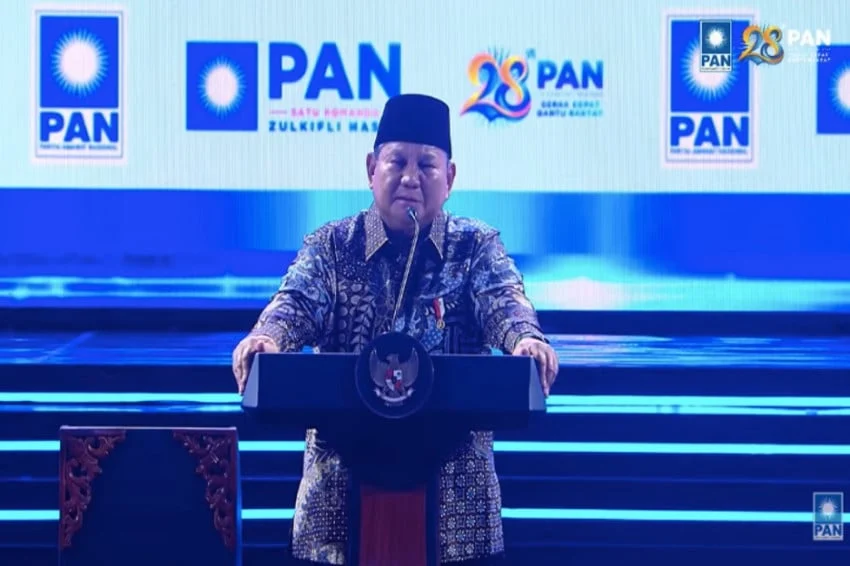
JAKARTA — Indonesian President Prabowo Subianto issued a stern warning regarding the vulnerability of the nation’s political system, cautioning that democracy can be hijacked and systematically bought by powerful economic actors wielding illicit wealth. The statement was delivered during the commemoration of the 28th anniversary of the National Mandate Party (PAN) held at the Jakarta International Convention Center (JICC) in Senayan, Jakarta.
Addressing thousands of party cadres, lawmakers, and invited dignitaries, the head of state emphasized that while Indonesia has made remarkable strides in establishing a democratic society since the onset of the Reformasi era in 1998, systemic threats persist. He highlighted how vast financial resources, particularly capital acquired through questionable or illegal means, pose a direct peril to the integrity of democratic governance, state institutions, and the rule of law.
The speech immediately drew significant public attention, sparking widespread discussions among political analysts, civil society organizations, and ordinary citizens regarding the intersection of money politics, governance reform, and the future of Indonesian democracy.
The Context of the PAN Anniversary Celebration
The 28th anniversary of the National Mandate Party served as a major political gathering, bringing together coalition partners, high-ranking government officials, and key figures from across the national political spectrum. PAN, which has been a steadfast political ally of Prabowo’s administration, provided a platform for the President to address broader national concerns.
In his opening remarks, Prabowo reflected on the long journey of political partnership and mutual loyalty among coalition members, describing the gathering as a reunion of reliable comrades-in-arms. However, the tone quickly shifted from celebratory to cautionary as the President pivoted toward the perils facing contemporary governance.
"Brothers and sisters, we must be careful because democracy can be hijacked. Democracy can be bought by those with immense economic power, those with abundant money, and especially those whose money is obtained through unlawful means," Prabowo stated during his keynote address.
The President elaborated on the mechanics of this perceived threat, warning that corrupt economic elites harbor ambitions to subvert state institutions for private gain. He outlined an alarming scenario in which money is deployed to corrupt the foundational pillars of the republic.
"They want to hijack our democracy. They want to bribe our political figures. They want to buy them—bribe judges, bribe prosecutors, bribe generals, bribe ministers, they even want to bribe the President!" he added emphatically.
The Modern Threat Landscape: Algorithms, Social Media, and Digital Manipulation
Beyond traditional forms of political corruption such as vote-buying and illicit campaign financing, President Prabowo drew attention to contemporary challenges posed by the digital age. He warned that the battleground for democracy has expanded into cyberspace, where advanced technologies are frequently weaponized to deceive the electorate.
Prabowo specifically highlighted the deployment of algorithms, paid social media influencers, automated bot networks, and organized buzzer teams. According to the President, these digital tools are utilized to spread misinformation, polarize public opinion, and manipulate social discourse, ultimately undermining the psychological resilience of the public.
This aspect of the speech resonates with growing global concerns regarding information warfare and the erosion of digital trust. In recent years, political observers have noted an increasing reliance on algorithmic manipulation during election cycles in various democracies worldwide, raising questions about how nations can safeguard digital sovereignty without compromising freedom of speech.
Chronology of Money Politics and Institutional Reform in Indonesia
To fully understand the weight of President Prabowo’s warnings, it is necessary to examine the historical trajectory of money politics and anti-corruption efforts in post-Authoritarian Indonesia.
Since the fall of President Suharto in 1998, Indonesia transitioned from a centralized, authoritarian regime to one of the largest decentralized democracies in the world. The transition introduced direct elections for local executive positions, legislative seats, and the presidency. However, decentralization also decentralized corruption, giving rise to local political dynasties and the heavy monetization of political campaigns.
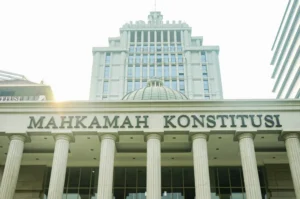
- Early 2000s: The establishment of foundational democratic institutions, including the Constitutional Court (MK) and the Corruption Eradication Commission (KPK), aimed to curb systemic abuse of power.
- 2010s: Legislative and presidential campaigns saw a steady escalation in campaign expenditures, prompting the General Elections Commission (KPU) and the Election Supervisory Agency (Bawaslu) to tighten regulations on campaign finance transparency.
- 2020–Present: Despite stringent reporting requirements, watchdog organizations continue to report pervasive vote-buying practices, commonly referred to locally as serangan fajar (dawn attacks), during regional and national elections. Furthermore, high-profile corruption scandals involving senior members of the judiciary, law enforcement, and parliament have periodically shaken public confidence in state institutions.
Broader Implications for Governance and the Rule of Law
Political analysts and governance experts suggest that Prabowo’s remarks reflect an acute awareness of the challenges facing his administration as it attempts to consolidate power while simultaneously pursuing an aggressive anti-corruption agenda.
The warning that even high-ranking officials—ranging from judges and prosecutors to military generals and cabinet ministers—could be targeted by corrupt financial interests underscores the deep-rooted nature of systemic graft. Observers note that systemic corruption not only distorts economic development by favoring monopolistic practices over free-market competition, but it also hollows out the institutional checks and balances necessary for a functioning democracy.
By publicly acknowledging these vulnerabilities, the President places immense pressure on law enforcement agencies, including the KPK, the National Police, and the Attorney General’s Office, to demonstrate tangible results in prosecuting financial crimes and high-level corruption.
Reactions from Political Parties and Civil Society
Responses to the President’s address have poured in from various political factions and civil society organizations.
Representatives from PAN expressed strong support for the President’s stance, emphasizing that the party remains committed to clean governance and strengthening democratic institutions from within. Party insiders noted that safeguarding democracy from the corrosive influence of illicit capital is a shared responsibility that transcends partisan lines.
Meanwhile, civil society groups focused on anti-corruption and electoral integrity, such as Indonesia Corruption Watch (ICW) and the Association for Elections and Democracy (Perludem), welcomed the rhetorical commitment to fighting elite capture of the state. However, these organizations stressed that rhetoric must be matched by concrete policy reforms.
Key recommendations often put forward by civil society include:
- Stricter Campaign Finance Audits: Enhancing the transparency of political party funding and enforcing real-time tracking of campaign donations.
- Asset Recovery Legislation: Accelerating the passage and implementation of asset forfeiture laws to target the ill-gotten gains of corrupt individuals.
- Judicial Independence: Strengthening ethical oversight within the judiciary and law enforcement agencies to prevent external financial interference in legal proceedings.
- Digital Literacy and Regulation: Developing robust frameworks to address algorithmic manipulation and coordinated inauthentic behavior on social media platforms without curtailing legitimate political expression.
Conclusion and Future Outlook
President Prabowo Subianto’s address at the PAN anniversary serves as a stark reminder of the fragile nature of democratic systems when confronted by unbridled economic power and illicit capital. As Indonesia navigates its complex political and economic landscape, the challenge ahead lies in translating these high-level warnings into structural reforms that can effectively immunize state institutions against the corrupting influence of money.
The coming months will likely test the administration’s resolve as it balances coalition politics with the imperative of institutional purification, setting the tone for the remainder of the presidential term and the long-term health of Indonesian democracy.