State Islamic Religious Universities (PTKIN) operating under the auspices of the Indonesian Ministry of Religious Affairs have achieved a historic milestone by dominating various prestigious accolades at the UI GreenMetric Sustainable University Rankings Indonesia 2026. The grand awarding ceremony took place at the majestic Auditorium Graha Sabha Pramana, located within the campus of Universitas Gadjah Mada (UGM) in Yogyakarta, on Tuesday, September 15, 2026. This year’s edition underscored a monumental shift in sustainability consciousness across higher education institutions in Indonesia, with faith-based institutions proving that environmental stewardship, ecological preservation, and sustainable development can be successfully integrated alongside religious and academic education.
Global and National Participation Surge in UI GreenMetric 2026
The UI GreenMetric Sustainable University Rankings has consistently grown in stature and global participation since its inception. The 2026 edition registered an unprecedented level of global engagement, with a staggering 2,016 universities participating from 110 countries across the globe. This reflects a worldwide institutional commitment to addressing climate change, reducing carbon footprints, and implementing robust campus sustainability policies.
The growth trajectory within Indonesia is equally remarkable. When the ranking system was first introduced in 2010, only 22 Indonesian universities partook in the assessment. Over the past sixteen years, that number has surged exponentially, culminating in 217 participating institutions spread across 27 provinces for the 2026 edition. This massive expansion highlights how Indonesian universities—both public and private, secular and religious—have increasingly prioritized environmental criteria, including setting infrastructure metrics, energy efficiency measures, waste management protocols, water conservation efforts, sustainable transportation policies, and integration of environmental education into their core curricula.
UIN Raden Intan Lampung Shatters Public University Dominance
In a performance that sent ripples of excitement across the Indonesian academic landscape, Universitas Islam Negeri (UIN) Raden Intan Lampung delivered a stellar performance, breaking into the elite national top ten. UIN Raden Intan Lampung secured the prestigious eighth position nationally, competing directly against and outranking some of the nation’s most prominent general and technical public universities.
By claiming the eighth spot, the Lampung-based Islamic university successfully surpassed several heavyweight technological and comprehensive institutions. Specifically, UIN Raden Intan Lampung outperformed Telkom University, which landed in the ninth position, and the prestigious Institut Teknologi Sepuluh Nopember (ITS), which rounded out the national top ten at tenth place. This achievement represents a significant paradigm shift, proving that state religious institutions are not only competitive in theological and social sciences but also stand at the vanguard of environmental engineering, ecological campus planning, and sustainable resource management.
Regional Pride and Leadership Among Islamic Higher Education
The triumphs of UIN Raden Intan Lampung extended far beyond its national top-ten placement. Within the vast geographical expanse of Sumatra, the university emerged as the solitary representative to crack the elite top ten of the Indonesian rankings. This unique distinction solidified its leadership role within the regional academic community.
In recognition of its overarching environmental initiatives, energy conservation strategies, and extensive green open spaces, UIN Raden Intan Lampung was officially crowned as the First-Ranked Most Sustainable Islamic Higher Education Institution in Indonesia under the Directorate General of Islamic Education at the Ministry of Religious Affairs.
The competitive landscape among State Islamic Religious Universities was fierce, yet several other institutions distinguished themselves through rigorous sustainability transformations. Securing the second position within the PTKIN category was Universitas Islam Negeri (UIN) Syarif Hidayatullah Jakarta, which landed impressively at the 15th position on the overall national leaderboard. Close behind was Universitas Islam Negeri (UIN) Raden Fatah Palembang, which claimed the third spot among PTKIN institutions while securing the 21st position nationally. These collective achievements demonstrate that sustainability has become an institutional priority deeply embedded across multiple campuses within the Ministry of Religious Affairs network.
Chronology and Background of the UI GreenMetric Assessment
The journey leading up to the September 15, 2026, awarding ceremony at UGM involved months of rigorous data collection, verification, and evaluation by the UI GreenMetric assessment team. Established originally by Universitas Indonesia in 2010, the ranking system evaluates participating institutions based on six core indicators: Setting and Infrastructure (15%), Energy and Climate Change (21%), Waste (18%), Water (10%), Transportation (18%), and Education and Research (18%).
Throughout the early months of 2026, universities across Indonesia compiled comprehensive data regarding their electricity consumption, renewable energy investments, waste recycling rates, water recycling initiatives, bicycle and pedestrian-friendly paths, electric vehicle integration, and the number of academic courses and research publications dedicated to sustainability topics. The meticulous auditing process ensured that only universities demonstrating genuine, measurable progress in environmental management earned top-tier placements. The choice of Universitas Gadjah Mada as the host venue for the 2026 awarding ceremony added further prestige to the event, bringing together academic leaders, environmental experts, and government officials from across the archipelago.
Official Perspectives and Institutional Implications
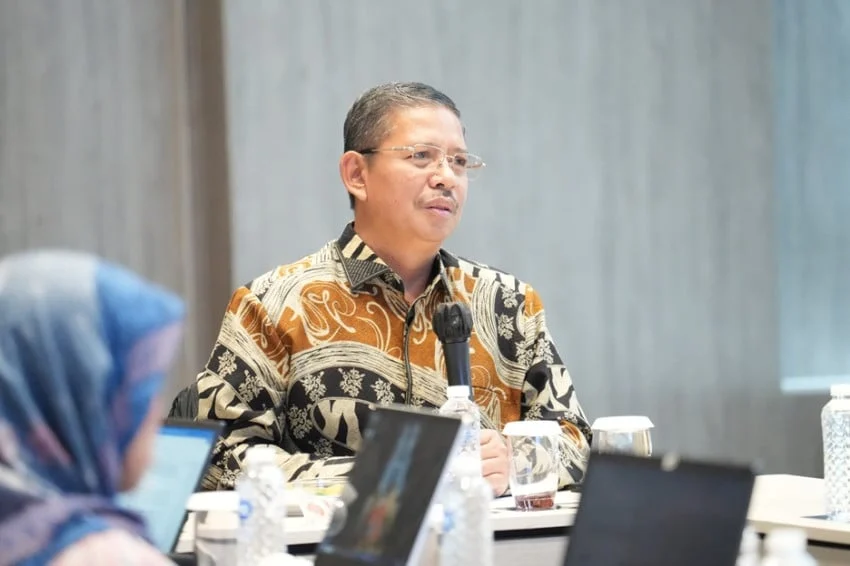
Reacting to the stellar achievements of the state religious campuses, the Director General of Islamic Education (Dirjen Pendis) at the Ministry of Religious Affairs, Prof. Dr. H. Amin Suyitno, M.Ag., expressed immense pride and deep appreciation for the hard work demonstrated by the leadership, faculty, students, and administrative staff of the winning universities.
According to analytical evaluations within the Ministry, the dominance of PTKIN institutions in the 2026 UI GreenMetric rankings carries profound implications for the future of higher education in Indonesia. For decades, public perception often stereotyped religious universities as focusing exclusively on theology, jurisprudence, and humanities, while technical and environmental innovation was viewed as the exclusive domain of general science and engineering institutes. The exceptional performance of UIN Raden Intan Lampung, UIN Syarif Hidayatullah Jakarta, and UIN Raden Fatah Palembang permanently shatters this outdated dichotomy.
Furthermore, these achievements align seamlessly with broader national and international frameworks, including the Indonesian government’s commitment to achieving Net Zero Emissions and the United Nations Sustainable Development Goals (SDGs). By embedding eco-friendly policies into campus infrastructure and academic syllabi, these Islamic universities are actively molding a new generation of environmentally conscious citizens and religious leaders who view ecological preservation as a core moral and religious obligation.
Broader Impact on National Higher Education Standards
The success of PTKIN institutions in the UI GreenMetric Sustainable University Rankings 2026 serves as a powerful catalyst for institutional reform across Indonesia’s higher education sector. As competition intensifies among the 217 participating national universities, institutions that previously lagged in environmental management are now compelled to overhaul their infrastructure, invest in renewable energy sources such as solar panels, upgrade waste management facilities, and expand green campus landscapes.
For the Ministry of Religious Affairs, these results validate ongoing policy reforms aimed at modernizing state Islamic universities. Financial allocations and infrastructural grants directed toward campus development have clearly yielded tangible results, transforming traditional lecture halls and administrative blocks into modern, eco-friendly learning environments. As universities look ahead to future ranking cycles, the benchmark set by UIN Raden Intan Lampung and its peers ensures that sustainability will remain a permanent cornerstone of strategic planning, academic excellence, and national prestige for years to come.