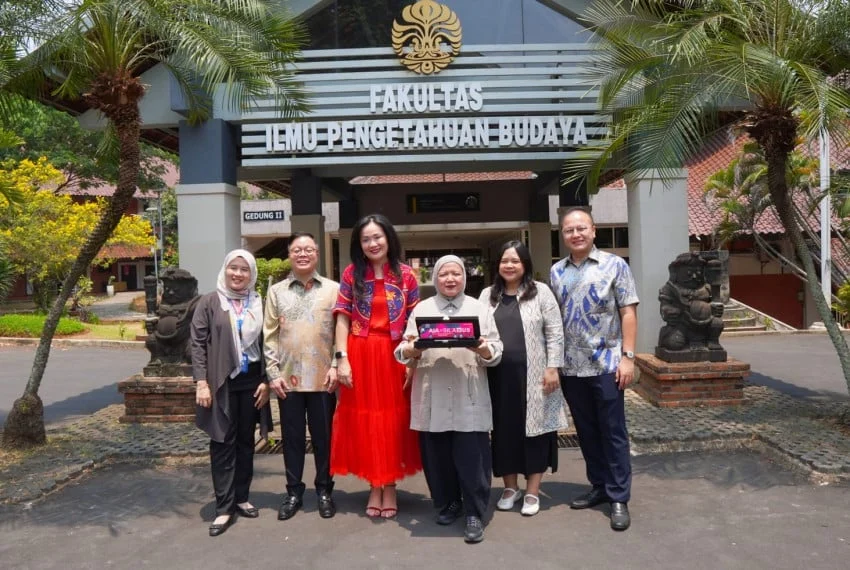
PT AIA Financial (AIA) has officially deployed its dedicated mobile education unit, the AIA Silabus bus, to the University of Indonesia (UI) campus, marking a strategic expansion of its national commitment to bolstering financial literacy among the Indonesian student population. This initiative, conducted in alignment with the Financial Services Authority’s (OJK) GENCARKAN (Gerakan Nasional Cerdas Keuangan) program, aims to bridge the gap between academic education and practical financial management skills. By bringing experiential learning directly to the campus, AIA seeks to empower the next generation of professionals to navigate complex financial landscapes with prudence, foresight, and a robust understanding of risk mitigation.
The Critical Need for Financial Literacy in Modern Indonesia
Financial literacy in Indonesia remains a top priority for national regulators. Recent data from the OJK’s National Survey on Financial Literacy and Inclusion (SNLIK) indicates that while financial inclusion—the access to financial products—has grown significantly, financial literacy—the knowledge and ability to use those products effectively—still lags behind. For university students, who are at the threshold of their professional lives, this knowledge gap can lead to long-term financial vulnerability, including high-interest debt, poor retirement planning, and an inability to manage unexpected health or economic crises.
The presence of the AIA Silabus bus at the University of Indonesia is designed to move beyond traditional classroom lectures. The program focuses on three core pillars: proactive budgeting, the psychology of saving, and the foundational importance of insurance as a risk-management tool. By integrating these concepts into the daily lives of students, AIA aims to normalize the culture of early financial planning.
AIA Silabus: A Pedagogical Approach to Finance
The AIA Silabus program is not merely a promotional endeavor; it is an educational ecosystem designed to provide students with actionable insights. Inside the bus, students are exposed to interactive simulations that mimic real-life financial scenarios, such as managing a monthly salary, allocating funds for emergencies, and selecting appropriate protection products.
"As part of our commitment to supporting the GENCARKAN program initiated by the OJK, through AIA Silabus, we want to encourage the younger generation to understand that sound financial planning begins with simple, consistent steps," stated Wong Chung Chiat, Chief Operating Officer of PT AIA Financial. "By cultivating habits such as disciplined expenditure tracking, building a consistent savings routine, and preparing for life’s inherent risks, students can secure their financial futures more effectively."
The initiative acknowledges that young adults today face a more complex financial environment than previous generations. With the rise of digital lending, peer-to-peer (P2P) platforms, and the proliferation of investment applications, students are exposed to high-risk financial decisions at a younger age. The AIA Silabus program provides the necessary guidance to discern between productive and unproductive financial behavior.
Contextualizing the GENCARKAN Movement
The GENCARKAN program is a nationwide initiative spearheaded by the OJK to create a financially literate society. Launched to address the disparities in financial knowledge across different demographics, the program emphasizes that financial literacy is a prerequisite for long-term economic prosperity. For corporations like AIA, aligning with this national mandate is part of their broader Environmental, Social, and Governance (ESG) commitments.
By targeting students at elite institutions like the University of Indonesia, AIA is focusing on "financial influencers"—students who are likely to share their knowledge with their peer groups, families, and future professional networks. This "multiplier effect" is a cornerstone of the program’s design, ensuring that the knowledge imparted does not end when the bus leaves the campus.
Supporting Data and Financial Trends
To understand the necessity of this initiative, one must look at the current financial behavior of Indonesian youth. Recent reports suggest that a significant portion of urban students lack a formal emergency fund, relying instead on family support or short-term credit solutions when faced with unexpected expenses. Furthermore, while the digital banking penetration rate is high among students, their understanding of interest rates, credit scores, and insurance premium structures remains fragmented.
The AIA Silabus initiative addresses these specific blind spots. For instance, the program emphasizes that insurance is not merely a product for the elderly or the wealthy, but a critical tool for protecting human capital during a person’s most productive years. By demystifying the complexity of financial products, AIA is attempting to shift the perception of financial planning from a daunting obligation to a vital life skill.
Expert Perspectives on Financial Education
Financial analysts suggest that interventions like those provided by the AIA Silabus bus are essential for the long-term stability of the Indonesian economy. When students understand how to manage risk, they are less likely to fall victim to fraudulent financial schemes, which have historically targeted young, inexperienced investors.
"Education is the best hedge against financial misfortune," says an analyst specializing in consumer finance. "By providing students with the tools to analyze their own financial positions, companies like AIA are performing a public service that extends far beyond their own product offerings. It is about creating a more resilient consumer base."
Moreover, the emphasis on "risk protection" is timely. As global economic volatility increases, the ability to manage personal risks—such as health issues or loss of income—has become a cornerstone of financial wellness. The program encourages students to consider these risks as part of their broader life planning, rather than as peripheral concerns to be addressed only in middle age.
The Role of Corporate Social Responsibility (CSR) in Finance
The move by PT AIA Financial underscores a broader shift in the insurance industry. Rather than acting solely as service providers, insurers are increasingly positioning themselves as partners in their clients’ financial health. This "wellness-first" approach is evident in the company’s recent activities, including their broader portfolio of health protection products like the AIA Nura Care, which offers substantial coverage options.
The integration of the AIA Silabus bus into the university campus environment serves to normalize the conversation around insurance and financial planning. By conducting these sessions in a neutral, educational space, AIA reduces the "sales pressure" typically associated with financial institutions, allowing for a more authentic and impactful exchange of knowledge.
Future Implications and Scaling the Initiative
The success of the program at the University of Indonesia sets a precedent for future rollouts at other major institutions across the archipelago. As the digital transformation of Indonesia’s economy continues, the need for a digitally literate and financially savvy workforce will only grow.
If this model proves successful, it could influence how financial institutions across Southeast Asia approach youth outreach. The transition from digital-only education to hybrid, experiential learning—as seen with the physical presence of the bus—has proven to be more effective in ensuring knowledge retention among university-aged students.
Conclusion
The presence of the AIA Silabus bus at the University of Indonesia represents a vital bridge between theoretical education and the practical requirements of adult financial life. By equipping students with the knowledge to manage their money, understand their risks, and protect their future, PT AIA Financial is contributing to a more stable and prosperous society.
As these students transition into the workforce, the lessons learned through this program will serve as a foundation for their personal and professional success. With the continued support of the OJK and the commitment of industry leaders like AIA, the landscape of financial literacy in Indonesia is poised for a significant transformation, ensuring that the next generation is not only financially included but truly financially capable.
The initiative serves as a reminder that financial freedom is not the result of luck or chance, but of deliberate planning, disciplined habits, and an early start. Through consistent engagement and education, the AIA Silabus program is helping ensure that students are prepared for the challenges and opportunities of an increasingly volatile global economy.