In a tense and delicate humanitarian operation, the Commander of the Joint Command of Operations (Pangkoops) TNI Habema, Brigadier General TNI Riyanto, personally ordered the emergency air evacuation of Sinta Bilolo, the widow of the late Aris Sanda. Sinta was trapped in the conflict-ridden Mbua District following the tragic killing of her husband by the Armed Criminal Group (KKB)—widely recognized locally as the Free Papua Movement (OPM) faction. The rescue mission, executed on Thursday, September 17, 2026, became an imperative necessity after relentless security threats and infrastructural paralysis completely severed overland transportation networks between Mbua and Wamena in Papua’s interior highlands.
The operation underscores the ongoing volatility of Papua’s security landscape, where civilians—particularly transport workers and their families—find themselves squarely in the crosshairs of separatist violence. As military forces work to stabilize the region, humanitarian logistics have increasingly relied on precarious air bridges to rescue stranded survivors and grieving families from deeply isolated conflict zones.
Chronology of the Emergency Air Evacuation
The crisis management protocol surrounding Sinta Bilolo’s evacuation began days after her husband, Aris Sanda, fell victim to violent KKB aggression. Aris Sanda, who worked as a regional transport driver, was brutally targeted in a shooting incident that sent shockwaves through local communities and transport unions alike. Investigators at the scene later recovered multiple 5.56 mm caliber bullet casings, confirming the tactical nature of the ambush and pointing to the increasing proliferation of military-grade weaponry among insurgent factions.
With the ground route connecting Mbua to Wamena rendered impassable due to active rebel blockades, active sabotage, and extreme terrain hazards, Sinta was left stranded and vulnerable. Recognizing the acute psychological trauma and physical danger she faced, Brigadier General TNI Riyanto authorized an immediate, multi-stage aerial extraction.
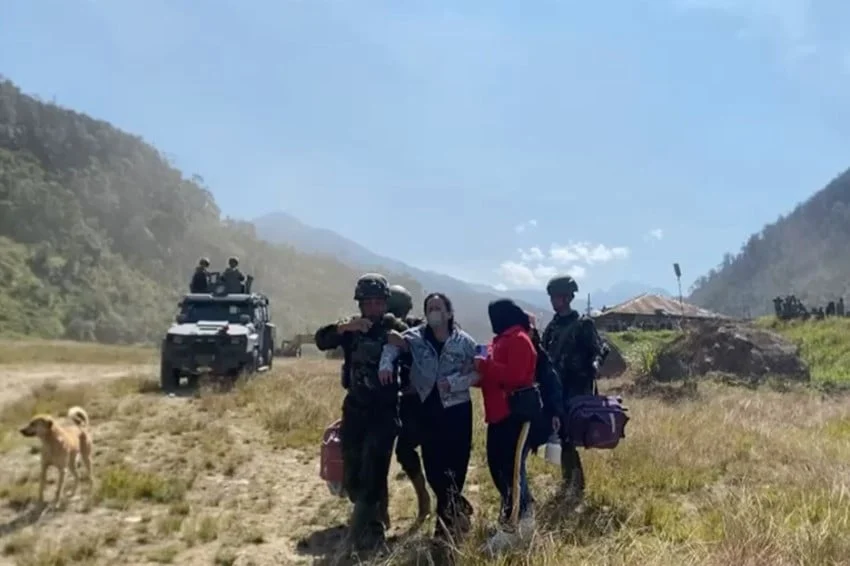
The operation required meticulous coordination between tactical aviation units and regional ground commanders. Sinta Bilolo, accompanied by two trusted companions, Haryati and Murni, was first retrieved from the remote highlands of Mbua District. The initial leg of the journey utilized a tactical deployment combining a Bell helicopter and a Fennec helicopter. These rotary-wing aircraft navigated treacherous weather patterns and mountainous topography to transport the trio safely to Kenyam, the administrative capital of Nduga Regency.
Upon touchdown in Kenyam, the evacuees were immediately transferred to a fixed-wing aircraft. A robust Caravan aircraft completed the final leg of the journey, safely ferrying Sinta and her companions to Wamena. Military officials confirmed that despite the logistical complexities and inherent risks of flying over hostile territory, the entire evacuation sequence proceeded without incident, prioritizing the safety and well-being of the grieving widow.
Humanitarian Imperatives Amid Rising Regional Tensions
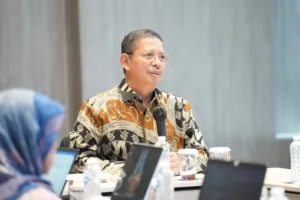
Speaking on the rationale behind the operation, Pangkoops TNI Habema Brigjen TNI Riyanto emphasized that the mission was executed strictly on humanitarian grounds. In environments plagued by asymmetric warfare, non-combatants—particularly women, children, and dependents of slain workers—frequently bear the brunt of localized insecurity.
"The decision to conduct an immediate aerial extraction was driven by undeniable humanitarian considerations and the absolute necessity of ensuring the safety of a family member undergoing profound trauma," stated military public relations representatives speaking on behalf of the command.
The security vacuum in the interior highlands has long complicated civilian transit. KKB factions routinely target infrastructure, bridges, and commercial transport vehicles to isolate government posts and terrorize local populations. By seizing control of critical routes like the Mbua-Wamena corridor, insurgents attempt to disrupt regional supply chains and challenge state authority. Consequently, the TNI’s intervention highlights the military’s dual role: conducting counter-insurgency operations while simultaneously stepping in as a primary provider of emergency humanitarian relief and civil protection.

Broader Implications: The Crisis of Regional Transport and Worker Safety
The tragic death of Aris Sanda and the subsequent evacuation of his wife shine a harsh spotlight on the systemic vulnerabilities facing civilian workers in Papua. Regional transport drivers serve as the economic lifeline of the highlands, moving essential goods, food supplies, and passengers across vast, underdeveloped expanses. However, they are increasingly targeted by separatist elements who accuse them of acting as intelligence informants for state security forces—an allegation repeatedly denied by civil unions and government authorities.
Recent security reports from the region indicate an alarming spike in violent incidents along key arterial routes. The discovery of 5.56 mm cartridge cases at the site of Aris Sanda’s murder points to the continuous smuggling and influx of high-caliber ammunition into the hands of criminal factions operating within the Nduga and Lanny Jaya regions. This tactical upgrade among insurgents has intensified the lethality of ambushes, forcing security apparatuses to reassess defensive postures and convoy protection protocols.
For transport workers and their families, the implications are stark. The temporary suspension of overland services forces vulnerable individuals to rely entirely on military protection or costly, limited charter flights. Industry associations have repeatedly called for enhanced security guarantees along vital trade routes, urging both regional governments and security forces to establish permanent checkpoints and rapid-response units along isolated stretches of highway.
The Psychological Toll on Surviving Families
Beyond the immediate physical dangers, operations like the evacuation of Sinta Bilolo underscore the deep psychological scars left by separatist violence in Papua. Widows and orphans of victims often find themselves displaced, economically destitute, and stranded in hostile territories with little local support.
The swift intervention by TNI Habema not only saved Sinta from potential captivity or further harm in a volatile zone but also provided a vital measure of psychological relief. By ensuring her safe transit to Wamena—where larger community support networks and family contacts reside—the military facilitated the first crucial steps toward healing and legal closure following her husband’s assassination.
Future Outlook for TNI Habema Operations in Papua
As TNI Habema continues its overarching mission to neutralize armed criminal groups and restore public order across Papua’s most troubled districts, humanitarian considerations remain central to operational planning. The command has reiterated its commitment to protecting civilian populations, maintaining open lines of communication, and ensuring that logistical lifelines are not permanently severed by rebel activity.
The successful execution of Sinta Bilolo’s evacuation demonstrates the tactical readiness and responsiveness of joint military forces in managing complex crises under adverse conditions. However, military analysts note that air evacuations, while effective as emergency measures, are symptomatic of a deeper, ongoing security deficit on the ground. Long-term stability in the highlands will ultimately require sustained civil-military cooperation, infrastructural hardening, and intelligence-driven operations to dismantle the logistics and supply networks sustaining KKB activities.
For now, Sinta Bilolo is safe in Wamena, shielded from the immediate perils of the Mbua highlands, even as regional authorities continue their pursuit of the perpetrators responsible for her husband’s death. The incident remains a poignant reminder of the heavy human cost exacted by ongoing conflict in the region, and the vital role played by security forces in safeguarding innocent lives amidst turmoil.