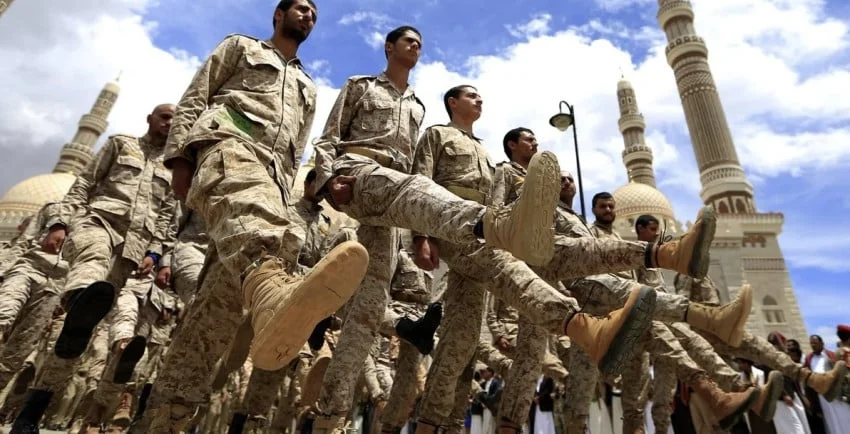
The geopolitical landscape of the Middle East is currently undergoing a profound transformation as the Houthi movement in Yemen increasingly asserts a degree of strategic autonomy that challenges the traditional narrative of the group as a mere proxy for the Islamic Republic of Iran. According to Lorenzo Kamel, a prominent analyst of Middle Eastern affairs, the Houthi movement—formally known as Ansar Allah—has evolved beyond the role of a subordinate satellite of Tehran. Instead, they are actively maneuvering to solidify their domestic sovereignty, capitalize on regional instability, and compel Saudi Arabia into significant political and territorial concessions. This shift in posture suggests that while tactical alignment with Iran persists, the group’s long-term objectives are increasingly defined by local power dynamics and a desire to dismantle the prevailing security architecture in the Arabian Peninsula.
The Evolution of the Houthi Strategy
For years, the international community, led by Saudi Arabia and the United States, has characterized the Houthi insurgency as a peripheral arm of Iran’s “Axis of Resistance.” However, observers note that this binary view ignores the internal logic of the movement. By exploiting the chaotic environment fostered by years of civil war and regional proxy competition, the Houthis have managed to transition from a guerrilla insurgent force into a de facto governing body in Northern Yemen.
Lorenzo Kamel argues that the Houthi resilience is not merely a product of Iranian weaponry or intelligence, but rather a direct response to the aggressive military intervention spearheaded by Riyadh. The Saudi-led coalition, which intervened in 2015 to restore the internationally recognized government, has faced criticism for its “criminal policies on the ground,” which have exacerbated the humanitarian crisis while failing to dislodge the Houthis from the capital, Sanaa. This strategic failure has, ironically, provided the Houthis with the domestic legitimacy they claim to represent as defenders of Yemeni sovereignty against foreign encroachment.
Historical Context and the Saudi Outsourcing of Security
To understand the current impasse, one must examine the historical reliance of the Saudi monarchy on external security guarantees. Kamel points to the 1916 Arab Revolt as a seminal moment, where the House of Saud opted for an alliance with the British Empire rather than fostering a coalition with local regional actors. This historical pattern—outsourcing security to global superpowers like the United States—has created a brittle security environment in the Gulf.
The reliance on U.S. military intervention to counter regional threats has, according to Kamel, failed to produce a lasting, formal peace. Instead, it has fostered a state of “militarized stabilization,” where peace is merely the absence of active combat rather than a genuine resolution of political grievances. By constantly looking to Washington to act as a security guarantor, Saudi Arabia has inadvertently left its own flank exposed, allowing groups like the Houthis to frame themselves as the only authentic actors in a landscape populated by “foreign-backed puppets.”
Chronology of the Conflict and Recent Escalations
The Houthi trajectory has been marked by a series of critical phases since the movement gained traction in the early 2000s:
- 2004–2010: The Saada Wars, a series of sporadic conflicts between the Houthis and the Yemeni government, which initially saw the group struggling for autonomy in the mountainous north.
- 2014–2015: The rapid expansion of Houthi control, leading to the capture of Sanaa and the subsequent flight of President Abdrabbuh Mansur Hadi, which triggered the Saudi-led military intervention.
- 2016–2021: A grueling stalemate characterized by aerial bombardments, blockades, and a catastrophic humanitarian crisis, during which the Houthis developed sophisticated drone and missile capabilities.
- 2022: A UN-brokered truce offered a brief respite, but the front lines remained largely frozen, allowing the Houthis to consolidate their grip on power and reorganize their military apparatus.
- 2024–Present: Following the regional turmoil sparked by the Israel-Hamas war, the Houthis have opened a new front by targeting international shipping in the Red Sea and the Bab al-Mandeb Strait, effectively linking their domestic struggle to the broader regional geopolitical conflict.
The Strategic Importance of the Red Sea
The Houthis’ recent push toward the Bab al-Mandeb Strait represents a significant shift in their operational reach. By controlling or threatening this vital maritime chokepoint, the group has successfully elevated its status from a localized insurgency to a regional power player. The strait is one of the world’s most important trade routes, through which a significant portion of global energy supplies and commercial goods pass daily.
By engaging in these activities, the Houthis are not just attacking the Saudi-led coalition; they are forcing global powers—including the U.S. and the EU—to recognize them as a party that must be negotiated with. This maneuver effectively bypasses the Saudi blockade by creating a new leverage point that affects the global economy, thereby compelling international stakeholders to consider the Houthi position in any future regional peace talks.
Implications of Autonomy for Regional Security
The realization that the Houthis are acting with increasing independence from Tehran poses a significant challenge for intelligence agencies and diplomats. If the group is no longer a “controlled” proxy, then traditional methods of de-escalation—such as pressuring Iran to rein in its allies—may become increasingly ineffective.
Analyses suggest that the Houthis are prioritizing the following:
- Legitimization: Seeking international recognition as the legitimate government of Yemen, or at least as a co-equal partner in any future governance structure.
- Territorial Sovereignty: Ensuring the total withdrawal of foreign coalition forces from Yemeni soil.
- Economic Autonomy: Gaining control over Yemen’s natural resources and the revenue generated from the Red Sea shipping lanes.
The implication for Saudi Arabia is stark. If the Houthis are indeed pursuing their own agenda, Riyadh can no longer rely on diplomatic channels with Tehran to guarantee the security of its southern border. Instead, the kingdom must pivot toward a direct, long-term political dialogue with a group that has spent nearly a decade framing the Saudi state as its primary existential enemy.
Official Responses and International Stance
While Saudi officials have largely remained cautious, the U.S. and its Western allies have continued to designate the Houthis as a threat to global navigation. However, the lack of a clear, coherent strategy—beyond periodic airstrikes—has drawn criticism from experts. The UN Special Envoy for Yemen has repeatedly urged for a comprehensive, inclusive political process, yet the Houthis’ recent military adventurism has complicated these efforts.
The Iranian government, for its part, maintains a policy of “strategic ambiguity.” While providing technical assistance and logistical support to the Houthis, Tehran often distances itself from the group’s more provocative actions, likely to avoid direct confrontation with the U.S. or further sanctions. This disconnect reinforces the view that the Houthis are, at the very least, a willing and capable partner that has outgrown its initial role as a client.
Conclusion: A New Reality in the Middle East
The transformation of the Houthi movement from a regional proxy to a sovereign-seeking actor is a defining development in the contemporary Middle East. As the group moves to leverage its control over strategic geography and internal politics, the old paradigms of proxy warfare are proving inadequate.
The challenge for the international community is to recognize this shifting reality without inadvertently granting legitimacy to a group that continues to employ violence as a primary political tool. For Saudi Arabia, the path forward likely involves a painful reckoning: the acknowledgement that security in the Gulf cannot be outsourced, and that peace will only come through a direct, complex, and potentially uncomfortable engagement with the actors on the ground. As the Houthis continue to challenge the status quo, the region enters an era where the lines between state, proxy, and insurgent are increasingly blurred, demanding a more nuanced and locally informed approach to diplomacy and conflict resolution.