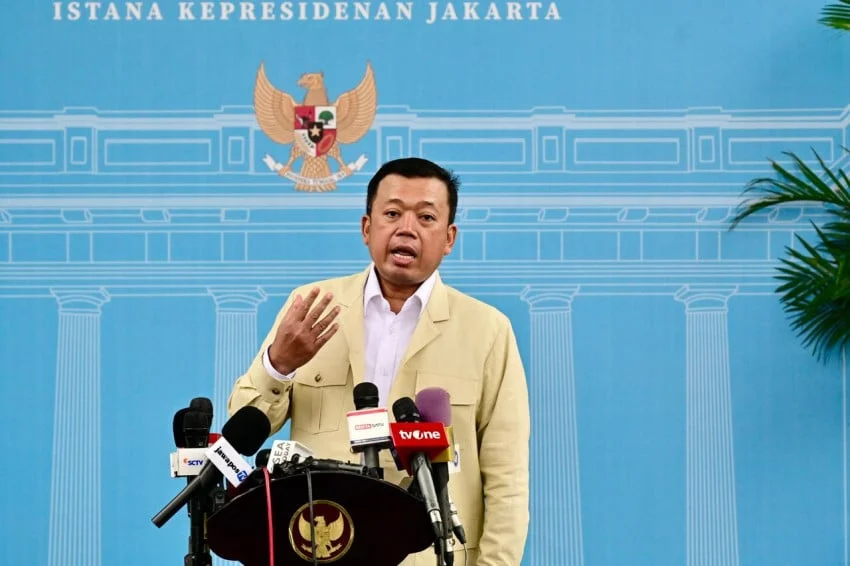
The Corruption Eradication Commission has officially addressed the potential summons of Minister of Agrarian Affairs and Spatial Planning/Head of the National Land Agency Nusron Wahid in an ongoing investigation into alleged bribery and gratification regarding the issuance of Building Exploitation Rights in Bogor Regency, West Java. The development follows a high-profile corruption sting and subsequent suspect designations involving four individuals closely tied to the minister’s inner circle, sending ripples through Indonesia’s bureaucratic and political landscapes.
Speaking to the press, Acting Director of Investigation at the Corruption Eradication Commission Achmad Taufik Husein explained that the trajectory of the investigation will dictate whether the newly appointed cabinet minister will be called in for formal questioning. Investigators, he noted, retain the absolute prerogative to summon any individual whose testimony is deemed critical to uncovering the full scope of the illicit network operating within the land sector.
The inquiry centers on systemic vulnerabilities within land administration processes, specifically concerning the lucrative and heavily regulated acquisition of land titles in rapidly developing satellite regions surrounding the capital. Bogor Regency, owing to its strategic geography and massive real estate expansion, has long been a hotspot for land-related administrative friction and speculative investments, making it uniquely vulnerable to regulatory capture and administrative corruption.
Background Context of the Bogor Land Dispute and Regulatory Vulnerabilities
Land administration in Indonesia has historically presented immense governance challenges. The Ministry of Agrarian Affairs and Spatial Planning, alongside the National Land Agency, holds monumental authority over land allocation, conversion, and titling across the archipelago. The issuance of Building Exploitation Rights, commonly known as Hak Guna Bangunan, represents a foundational legal instrument for commercial enterprises, developers, and industrial operators seeking to establish legal control over state-controlled or privately held land parcels.
However, the complexity of bureaucratic procedures, coupled with overlapping regulations and localized discretionary powers, has often created fertile ground for rent-seeking behavior. Brokers, intermediaries, and rogue internal bureaucrats frequently exploit these structural loopholes to expedite licensing, manipulate spatial planning zoning laws, or bypass mandatory environmental and administrative safeguards in exchange for illicit financial incentives.
In this specific case, the anti-corruption agency’s initial surveillance and intelligence operations uncovered a well-coordinated scheme designed to fast-track HGB applications for commercial plots in Bogor Regency. The syndicate allegedly bypassed standard regulatory evaluations, relying on the influence and internal access provided by key confidants of high-ranking ministry officials. The involvement of individuals closely associated with the ministry’s leadership has elevated the case from a standard localized bribery offense to a high-stakes institutional integrity test for the current administration.
Chronology of the Investigation and Suspect Designations
The investigation burst into the public sphere following a series of coordinated sting operations and evidentiary raids conducted across Jakarta and West Java. Investigators targeted key administrative nodes within local land offices and private developer headquarters, seizing extensive digital records, financial transaction histories, and physical documentation related to contested land titles in Bogor.
Following the initial operations, the anti-corruption commission formally announced the designation of four individuals as suspects. Crucially, these four suspects have been identified by investigators as close confidants and trusted associates of Minister Nusron Wahid. Their roles within the wider administrative apparatus involved interfacing between external corporate interests and internal bureaucratic decision-makers, effectively operating as a parallel channel for land title processing.
Subsequent to these designations, Minister Nusron Wahid took the proactive step of visiting the anti-corruption commission headquarters. During a closed-door meeting lasting approximately two hours, the minister reportedly engaged with senior investigators and leadership to discuss systemic vulnerabilities within his ministry. According to institutional statements released following the visit, the dialogue centered on identifying structural "diseases" within the ATR/BPN framework that perpetually create opportunities for corruption, bribery, and regulatory abuse. While the meeting was framed as an institutional cooperation initiative aimed at internal reform, legal analysts have pointed out that such engagements do not exempt public officials from being legally summoned should evidentiary trails point toward their direct or indirect knowledge of the illicit transactions.
Official Statements and Legal Parameters of the Investigation
The official stance of the anti-corruption body remains anchored in procedural necessity and evidence-based jurisprudence. When repeatedly pressed by journalists regarding whether Minister Nusron Wahid would be formally subpoenaed, Acting Director of Investigation Achmad Taufik Husein emphasized that operational requirements dictate investigative milestones.
"Whether Brother NW will be summoned later depends entirely on the needs of the ongoing investigation moving forward," Taufik stated during a media briefing. He reiterated that the investigative team retains the autonomy to evaluate witness requirements dynamically as new digital forensics and financial audit results materialize. "Whether it is genuinely needed or not, we will evaluate it based on the ongoing updates of the investigative process," he added.
Legal experts observing the case suggest that while the direct involvement of a minister’s inner circle does not automatically establish criminal liability for the principal officeholder, it places immense pressure on executive leadership to demonstrate radical transparency and uncompromising cooperation. Under Indonesian criminal law, proving administrative complicity requires establishing either direct receipt of illicit funds, explicit authorization of illegal acts, or gross administrative negligence in supervising subordinate personnel and appointed confidants.
Broader Implications for Public Administration and Anti-Corruption Reform
The unfolding scandal carries profound implications for the credibility of Indonesia’s land reform agenda. President Prabowo Subianto’s administration has repeatedly emphasized bureaucratic efficiency, legal certainty, and a zero-tolerance policy toward corruption within revenue-generating and resource-allocating ministries. The ATR/BPN ministry, tasked with executing a sweeping agrarian reform program and modernizing national land registration through digitalization, sits at the very heart of this governance pledge.
The exposure of an entrenched bribery ring involving senior associates of the sitting minister threatens to undermine public confidence in ongoing digitization efforts. Critics and civil society organizations specializing in governance reform, such as Indonesia Corruption Watch, have argued that administrative modernization alone cannot eradicate corruption unless accompanied by aggressive internal purges, transparent asset declarations, and strict enforcement of conflict-of-interest regulations.
Furthermore, the case highlights the persistent risks associated with the political appointment of confidants and loyalists to sensitive bureaucratic positions. When political appointees bring external associates into administrative ecosystems without rigorous vetting or institutional oversight, the vulnerability to regulatory capture multiplies exponentially. The ongoing investigation thus serves as a critical stress test for the integrity mechanisms established within civilian governance bodies.
Economic and Investment Fallout
Beyond the political and administrative fallout, the Bogor HGB bribery case introduces legal uncertainty for commercial entities operating within West Java’s booming property and industrial sectors. Real estate development, warehousing logistics, and manufacturing plants rely entirely on the absolute legal certainty of their land titles. When the regulatory processes governing the issuance of Building Exploitation Rights are compromised by criminal investigations, existing and prospective investments face potential legal limbo.
Corporate legal advisors have noted that financial institutions and foreign investors monitor such high-profile corruption probes closely. If courts or the anti-corruption agency determine that specific HGB titles were acquired through systemic bribery and administrative fraud, those titles could face administrative revocation or judicial annulment. Such an outcome would trigger cascading financial liabilities for developers, lenders, and commercial tenants alike, dampening investor confidence in regional infrastructure and real estate markets.
To mitigate broader economic fallout, the ministry faces the dual challenge of cooperating fully with criminal investigators while simultaneously assuring the business community that legitimate land administrative services will continue without disruption. Implementing transparent, automated tracking systems for land title applications has been cited by economic analysts as an urgent necessity to replace human discretion with algorithmic accountability.
Next Steps in the Judicial Process
As the anti-corruption commission continues its comprehensive examination of digital evidence, bank account flows, and witness testimonies, the timeline for potential high-level summonses remains fluid. Investigators are currently cross-referencing the digital footprints of the four detained suspects with internal ministry correspondence, meeting logs, and financial disbursement records.
Should forensic audits uncover financial trails connecting the illicit proceeds to broader political financing or personal enrichment within higher echelons of authority, the legal status of the investigation could shift dramatically. For now, the anti-corruption agency maintains a measured approach, prioritizing the consolidation of an airtight evidentiary foundation before determining the necessity of expanding its roster of high-profile interrogation subjects.
The case stands as a stark reminder of the enduring structural hurdles facing Indonesian public administration. As the investigation unfolds, both domestic stakeholders and international observers will be watching closely to see whether institutional accountability can prevail over entrenched patronage networks within the nation’s critical land governance apparatus.