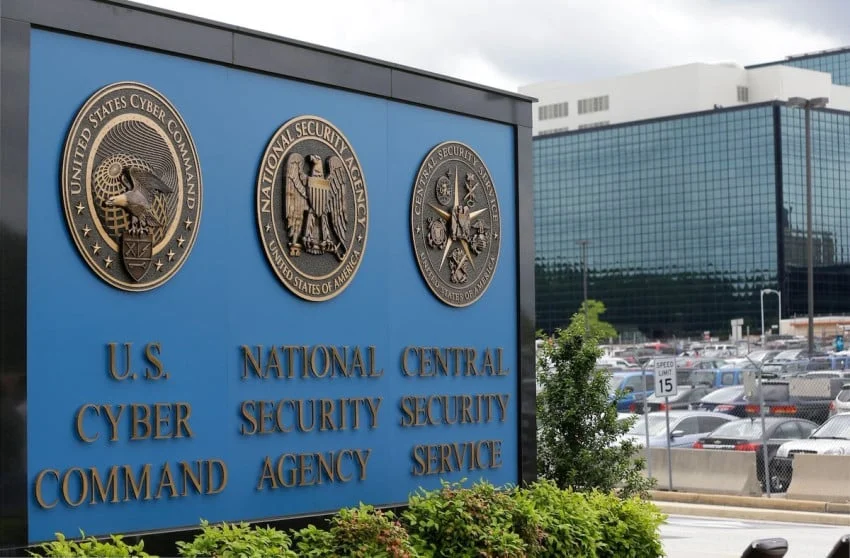
WASHINGTON — In what marks the most significant internal reorganization in at least ten years, the United States National Security Agency (NSA) is fundamentally restructuring its operations to confront the twin imperatives of rapid advancements in artificial intelligence and the expanding geopolitical and technological challenge posed by the People’s Republic of China. According to high-ranking current and former intelligence officials cited by major investigative reports, the sweeping overhaul is designed to transform the agency from a legacy signals intelligence apparatus into an agile, AI-driven digital warfare organization capable of dominating the modern information battlespace.
The initiative, spearheaded by top agency leadership including NSA Director General Joshua M. Rudd, reflects a profound strategic pivot. As Washington increasingly views Beijing as its primary pacing threat—spanning economic competition, cyber espionage, and military modernization—the intelligence community is racing to realign its institutional architecture. The restructuring aims to dismantle bureaucratic silos that have historically hampered cross-functional collaboration, replacing them with specialized directorates focused tightly on next-generation computing, advanced machine learning, and comprehensive global threat mitigation.
Main Facts of the Restructuring Initiative
Under the newly unveiled strategic blueprint, the NSA plans to establish five distinct organizational units within the agency. Internal timelines dictate that these entities must be formally established by mid-October, with an ambitious target to reach full operational capacity by early 2027.
These five specialized divisions are structured to address the most critical vulnerabilities and strategic priorities facing United States national security in the twenty-first century:
- Artificial Intelligence and Advanced Computing: Dedicated to weaponizing generative AI, machine learning models, and automated data processing to analyze petabytes of global communications in real time.
- Countering the Beijing Threat: A specialized directorate exclusively focused on neutralizing Chinese state-sponsored cyber espionage, technological theft, and strategic military communications.
- Cybersecurity and Critical Infrastructure Defense: Charged with hardening domestic and allied networks against sophisticated foreign cyber onslaughts, particularly from state actors like China, Russia, Iran, and North Korea.
- Combat Support and Information Operations: Designed to provide tactical, real-time intelligence and electronic warfare capabilities to forward-deployed United States military forces across global theaters.
- Global Intelligence Integration: Tasked with synthesizing traditional foreign signals intelligence (SIGINT) with open-source intelligence (OSINT) and human intelligence (HUMINT) streams to maintain predictive strategic warning capabilities.
The NSA, widely understood to be the largest intelligence agency in the United States, currently employs an estimated 30,000 military personnel and civilian contractors. Specializing primarily in foreign and domestic digital espionage, cryptographic security, and communications interception, the agency’s massive workforce has traditionally been organized around regional geographic desks and technological mediums. The upcoming restructuring represents a paradigm shift from geographic divisions to mission-centric, technology-first operations.
Chronology and Historical Context
To fully understand the weight of this organizational overhaul, it is necessary to examine the historical trajectory of the NSA over the past two decades. Established in 1952 during the height of the Cold War, the agency spent decades refining its craft as a master of signals interception, primarily tracking Soviet communications and monitoring foreign diplomatic cables.
The terrorist attacks of September 11, 2001, served as the catalyst for the agency’s first major modern expansion. In the name of counterterrorism, the NSA rapidly scaled up its domestic and international surveillance capabilities, vacuuming up digital metadata on an unprecedented global scale. However, this era of unchecked expansion hit a major wall in 2013, when NSA contractor and whistleblower Edward Snowden leaked tens of thousands of classified documents to international media outlets.
The Snowden disclosures exposed extensive, previously secret bulk surveillance programs targeting both foreign adversaries and ordinary American citizens, sparking a massive public debate over privacy, constitutional rights, and government overreach. In the aftermath, the agency faced severe congressional scrutiny, sweeping legal reforms, and a mandate to rebuild public trust while tightening internal security protocols.
Throughout the late 2010s, the agency slowly shifted its primary focus away from counterterrorism—which had dominated its operational bandwidth for nearly twenty years—toward "great power competition," specifically targeting the rising cyber and technological capabilities of Russia and China. By 2019, the establishment of the Cybersecurity Directorate marked an early step toward modernizing the agency’s defenses, but it was not enough to address the exponential rise of artificial intelligence and quantum computing. The current 2024–2027 restructuring plan represents the definitive culmination of this decade-long strategic transition.
Supporting Data and Technological Realities
The decision to pivot heavily toward AI is underpinned by staggering volumes of data and the changing nature of modern warfare. Modern global telecommunications infrastructure carries vast oceans of encrypted data, making manual analysis obsolete. According to defense analysts, the sheer volume of global internet traffic necessitates automated systems capable of discerning subtle patterns of hostile intent buried deep within routine communications.
China’s aggressive industrial policies, symbolized by initiatives like "Made in China 2025" and massive state-directed investments in artificial intelligence, quantum computing, and semiconductor manufacturing, have created intense urgency within the Pentagon and the Intelligence Community. Recent high-profile cyber campaigns attributed to Chinese state-sponsored hacking groups—such as Volt Typhoon, which systematically infiltrated critical American infrastructure including telecommunications, water systems, and transportation grids—have demonstrated that Beijing possesses the capability to preposition destructive cyber weapons inside Western networks.
Faced with these persistent threats, the NSA’s budget and technological acquisitions have increasingly prioritized machine learning algorithms capable of predicting cyber attacks before they execute. By streamlining operations into AI-centric units, the agency hopes to reduce the latency between raw data collection and actionable tactical intelligence.
Official Responses and Intelligence Community Perspectives
While the NSA has maintained tight operational security regarding the granular details of the reorganization, current and former intelligence officials have offered insights into the rationale behind the sweeping changes. Speaking on the condition of anonymity due to the classified nature of the discussions, officials emphasized that legacy intelligence structures are simply too slow to counter modern, agile adversaries.
"We are living in an era where the speed of technological change dictates the balance of global power," noted a former senior national security official familiar with the agency’s internal planning. "China is not merely a regional competitor; they are aiming for technological parity and, in some sectors, outright supremacy over the United States. An NSA designed for the twentieth century cannot successfully intercept twenty-first-century threats powered by algorithmic warfare."
Congressional oversight committees have generally expressed support for modernizing the intelligence apparatus, though lawmakers from both sides of the aisle continue to voice concerns regarding civil liberties and the oversight of AI tools deployed in intelligence gathering. Members of the House Permanent Select Committee on Intelligence and the Senate Select Committee on Intelligence are expected to press NSA leadership during upcoming closed-door hearings to ensure that the newly formed AI divisions operate with strict adherence to privacy laws and constitutional boundaries.
Broader Impact and Geopolitical Implications
The restructuring of the NSA carries profound implications for global geopolitics, international cybersecurity norms, and the broader commercial technology sector.
First, the institutional realignment signals to international allies and adversaries alike that the United States is permanently shifting its national security apparatus toward a posture of long-term strategic competition with China. This alignment will likely foster deeper intelligence-sharing partnerships through frameworks like the Five Eyes alliance (comprising the US, UK, Canada, Australia, and New Zealand), as all member states grapple with similar security challenges posed by Chinese cyber espionage and technological dominance.
Second, the intense focus on artificial intelligence will inevitably accelerate the blurring lines between commercial tech innovation and military intelligence capabilities. To maintain its competitive edge, the NSA will likely deepen its procurement partnerships with Silicon Valley defense-tech startups and major cloud computing providers, raising ongoing ethical debates within the broader tech industry regarding the militarization of artificial intelligence.
Finally, the success or failure of this restructuring will define the efficacy of American intelligence for the next generation. As General Rudd and his leadership team work toward achieving full operational capacity by 2027, the agency must successfully navigate the complex balancing act of aggressively deploying cutting-edge AI technologies to neutralize sophisticated foreign adversaries while maintaining public accountability and preserving the fundamental privacy rights of citizens.