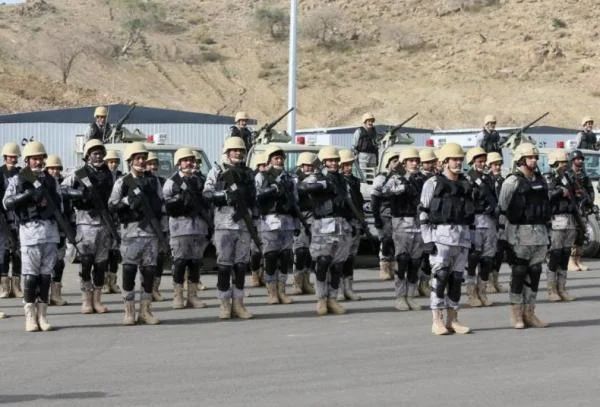
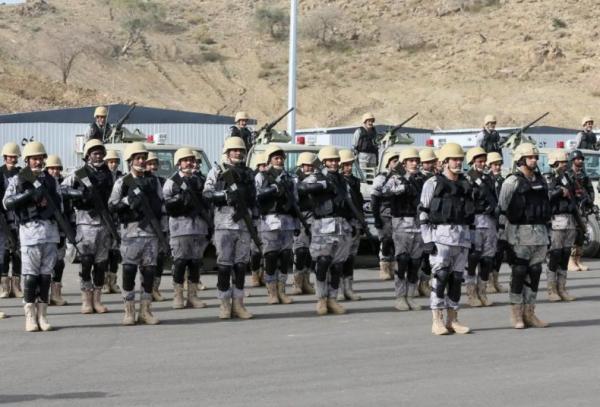
The United States has reportedly extended an offer of strategic assistance to the Kingdom of Saudi Arabia to bolster its defense capabilities against the Houthi movement in Yemen. This shift in security posture follows a dramatic surge in the intensity and frequency of attacks orchestrated by the Iran-aligned group, which have increasingly targeted regional infrastructure and threatened the sanctity of critical global maritime corridors. While American officials have clarified that the United States military will not be engaging in direct offensive combat operations against Houthi positions, the offer of support signifies a pivot toward deeper security coordination in the Middle East.
According to reports from ABC News, citing anonymous high-level officials, the proposed assistance is focused on intelligence sharing, logistical support, and defensive coordination. The move comes as the geopolitical situation in the Red Sea reaches a boiling point, with the Houthis demonstrating an emboldened capability to project power far beyond their traditional operational theaters.
A Critical Turning Point in Maritime Security
The strategic importance of the Red Sea cannot be overstated. It serves as one of the world’s most vital arteries for energy exports and global trade, linking the Indian Ocean to the Mediterranean via the Suez Canal. Recent intelligence indicates that the Houthis have begun establishing a physical foothold on islands surrounding the Bab el-Mandeb Strait. This narrow chokepoint is a critical maritime bottleneck; even a minor disruption here can have cascading effects on global supply chains, insurance premiums for commercial vessels, and the international price of crude oil.
The recent visit by Laksamana Brad Cooper, head of the United States Central Command (CENTCOM), to Riyadh on Friday, September 11, 2026, underscored the urgency of the situation. His meeting with Saudi defense counterparts was framed as a crisis coordination effort aimed at stabilizing the region. The proximity of these meetings to the escalation of attacks suggests that Washington is prioritizing the security of the maritime environment over its previous policy of restraint.
Historical Context and Policy Evolution
The current offer of assistance represents a significant evolution in the relationship between the Biden-era (and now Trump-led) foreign policy frameworks and the Saudi monarchy. Historically, the United States has navigated a complex path regarding the conflict in Yemen. Under various administrations, the White House has often balanced the desire to support regional partners like Saudi Arabia with a domestic imperative to avoid being drawn into the "forever wars" of the Middle East.
Earlier reports noted that President Donald Trump had previously resisted requests from Saudi Crown Prince Mohammed bin Salman (MBS) for direct United States military intervention against the Houthi rebels. The refusal was rooted in a strategic desire to prevent the United States from becoming the primary belligerent in a localized conflict that has, at various times, proven to be a logistical and humanitarian quagmire. However, the current escalation—characterized by more sophisticated weaponry, including long-range drones and ballistic missiles—has forced a recalibration of these strategic red lines. The White House, it appears, is now operating under the assumption that a collapse in Saudi defensive capabilities would be more costly to United States national interests than a policy of measured support.
The Dynamics of the Houthi-Iran Axis
To understand the current threat, one must analyze the role of the Houthis as a pro-Iranian proxy. For years, Western intelligence agencies have documented the transfer of advanced weaponry—from anti-ship cruise missiles to loitering munitions—from Tehran to the Houthi rebels. These weapons have transformed the Houthis from a localized insurgent group into a regional security menace.
The Houthi strategy appears designed to achieve three objectives:
- Leverage: Using maritime insecurity as a bargaining chip in regional negotiations.
- Asymmetry: Forcing Saudi Arabia and its allies to expend expensive interceptor missiles to neutralize low-cost drones.
- Symbolism: Asserting dominance over the Bab el-Mandeb to project influence across the Middle East.
The involvement of the United States, even in a non-combat capacity, serves as a signal to Tehran. It suggests that Washington is prepared to provide the necessary technological edge to ensure that the Saudis can detect and intercept Houthi threats before they reach critical infrastructure or maritime lanes.

Economic and Global Implications
The global economy remains highly sensitive to disruptions in the Red Sea. Approximately 12% of global trade and 30% of global container traffic pass through the Suez Canal. Any sustained campaign by the Houthis to target commercial shipping—or the energy infrastructure belonging to the world’s largest oil exporter, Saudi Arabia—inevitably leads to market volatility.
Financial analysts note that the mere perception of an insecure Red Sea increases insurance premiums for tankers and cargo ships. If these costs rise significantly, they are passed down to the consumer, contributing to inflationary pressures in Europe and Asia. By offering assistance to Saudi Arabia, the United States is effectively attempting to stabilize the "energy highway" of the world. The diplomatic and economic ramifications of a successful Houthi blockade would be catastrophic, likely triggering a sharp rise in energy costs that would ripple through the global economy.
Official Responses and Regional Stances
The international community has been largely vocal about the need for maritime security in the region. The Ambassador of Saudi Arabia to the Republic of Indonesia, Faisal Abdullah, recently emphasized that the attacks are not merely a bilateral issue between Riyadh and the Houthis, but a fundamental threat to "stabilitas dan keamanan global" (global stability and security).
The Saudi perspective is clear: they view the Houthi insurgency as an existential threat to the stability of the Arabian Peninsula, fueled by external interference. While the Saudi-led coalition has faced international scrutiny regarding the humanitarian impact of their operations in Yemen over the past decade, the current narrative focuses heavily on the defensive necessity of protecting sovereign territory and the freedom of navigation.
From Washington’s side, the official stance remains that the United States is committed to the security of its allies, but is equally determined to avoid "mission creep." The distinction between "defensive support" and "direct military engagement" is the tightrope the United States is currently walking. Should the situation deteriorate further, the definition of "defensive" may expand, but for now, the deployment of advisory and technical personnel seems to be the preferred course of action.

Future Outlook and Strategic Calculations
As the situation unfolds, observers are watching for two primary indicators:
- The Intelligence Gap: Will the United States provide real-time satellite and radar data to help Saudi Arabia track Houthi launch sites more effectively?
- The Escalation Threshold: At what point does the United States decide that the current "non-combat" role is insufficient to contain the threat?
The visit of Laksamana Cooper and the ongoing consultations between Riyadh and Washington suggest that a new security architecture for the Red Sea is being drafted in real-time. Whether this will lead to a de-escalation of Houthi aggression or provoke an even more reckless response remains to be seen.
Ultimately, the Houthi movement is operating in a high-stakes environment where their actions have moved beyond the borders of Yemen. By challenging the status quo in the Red Sea, they have forced the United States to re-evaluate its detachment from the conflict. The offer of help is a recognition that in the modern era, local conflicts in vital maritime regions cannot remain contained. The stability of the global energy market, the security of international shipping, and the defense of key regional allies are now inextricably linked to the outcome of the struggle in the waters off the coast of Yemen. As the United States and Saudi Arabia deepen their cooperation, the region braces for what could be a long period of heightened vigilance and complex maneuvering.