The Ministry of Youth and Sports of the Republic of Indonesia (Kemenpora RI) officially recognized three major corporate entities for their pivotal roles in advancing the national sports industry during the Indonesia Sports Summit 2026. Held at the Jakarta International Convention Centre (JICC) in Central Jakarta on Friday, September 11, 2026, the ceremony served as a strategic platform to celebrate the synergy between the government and the private sector in fostering athletic excellence. The award recipients, Djarum Foundation, PT Bank Rakyat Indonesia (BRI), and PT Indofood Sukses Makmur Tbk, were selected based on their long-standing commitments to grassroots development, tournament infrastructure, and talent scouting initiatives.
The Significance of the Indonesia Sports Summit 2026
The Indonesia Sports Summit 2026 was conceived as a high-level assembly aimed at mapping the future of the Indonesian sports economy. As the country positions itself to become a competitive powerhouse in the Southeast Asian region and beyond, the government has recognized that reliance on state funding alone is insufficient. The summit gathered policymakers, sports federation leaders, private sector investors, and international observers to discuss the professionalization of sports management.
The event, which ran over two days, focused on three core pillars: digital transformation in sports broadcasting, sustainable infrastructure development, and the integration of private capital into national athlete training programs. By awarding corporations that have demonstrated tangible impact, Kemenpora aims to incentivize further private sector investment, transforming the sports industry into a robust pillar of the national economy.
Corporate Excellence in Sports Development
The selection of Djarum Foundation, Bank Rakyat Indonesia, and Indofood Sukses Makmur Tbk reflects a strategic alignment with the ministry’s vision for comprehensive sports growth.
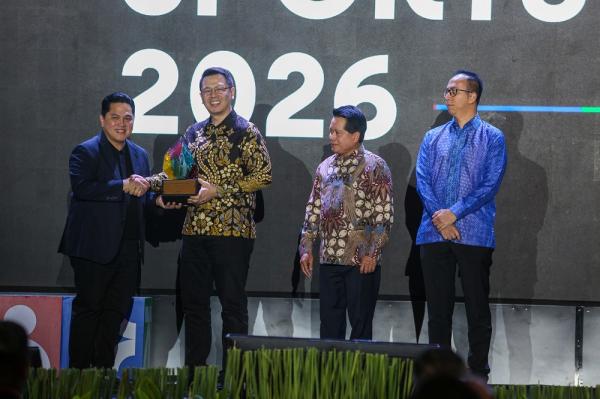
Djarum Foundation, in particular, has been a long-term architect of Indonesian sporting success, most notably in badminton and more recently in grassroots football. The presence of Roberto Hartono, Director of the Djarum Foundation, alongside Teddy Tjahjono—who oversees the MilkLife Soccer Challenge, the HYDROPLUS Soccer League, and the Caffino Srikandi Merdeka Cup—underscores a shift toward structured, long-term talent development pipelines. These programs provide a clear pathway for young athletes to transition from local competitions to professional leagues.
Bank Rakyat Indonesia (BRI) has played a crucial role in stabilizing the financial health of professional leagues, most notably through its title sponsorships and financial literacy programs for athletes. Their involvement goes beyond branding; it includes providing banking infrastructure that supports the sustainability of sports clubs and professional associations.
Similarly, Indofood Sukses Makmur Tbk has been instrumental in supporting nutrition-focused sports initiatives and sponsoring major national leagues. Their contribution is often cited by officials as a prime example of how consumer-goods giants can influence health awareness through sports engagement.
Official Recognition and Ministerial Perspective
During the formal ceremony, Minister of Youth and Sports Erick Thohir personally presented the awards. In his address, Thohir emphasized that the role of these corporations transcends traditional sponsorship. He described them as "stakeholders in the national dream," noting that their programs offer the continuity that is often lacking in government-only projects.
"When we talk about the future of Indonesian sports, we are not just talking about winning medals in the short term. We are talking about building an ecosystem," Thohir stated. He specifically lauded the Djarum Foundation for its commitment to multi-sport development, noting that their dedication to grassroots soccer—a sport of immense popularity but historically complex organizational challenges—is beginning to yield measurable results in player quality.

The Minister’s remarks highlight a shift in Kemenpora’s strategy under his tenure: moving from a model of reactive funding to one of collaborative partnership. By providing the institutional support and political backing for these corporate initiatives, the Ministry is essentially lowering the barrier for entry for private entities to contribute to national development.
Historical Context and Chronological Development
The push for private sector integration in sports is not a sudden policy shift but the result of a multi-year strategy. Since 2023, Kemenpora has been working to harmonize regulations that govern corporate social responsibility (CSR) investments in sports.
- 2023: The government initiated a review of the "National Sports System" law, specifically looking at tax incentives for companies that invest in athlete training centers and grassroots tournaments.
- 2024: The "Sports Industry Roadmap" was published, identifying football, badminton, and volleyball as primary targets for massive investment.
- 2025: Several pilot programs were launched, including the expansion of the MilkLife Soccer Challenge and professionalization of regional basketball leagues, which saw a 30% increase in viewership and youth participation.
- 2026 (September): The Indonesia Sports Summit 2026 serves as the culmination of these efforts, with the awards acting as a benchmark for successful public-private partnerships.
Supporting Data: The Economic Impact of Sports
Recent data from the Ministry’s economic analysis unit suggests that the sports industry in Indonesia has the potential to contribute up to 3% of the national GDP by 2030, provided that private sector engagement continues to grow.
In 2025, investment from the private sector in youth sports programs reached an estimated IDR 1.2 trillion. This investment is not limited to capital injection; it includes the provision of high-end training facilities, professional coaching staff, and the implementation of international-standard sports science. For instance, the soccer initiatives led by the Djarum Foundation have reportedly engaged over 50,000 young players across various provinces, creating a massive data pool that helps scouts identify talent at younger ages than ever before.
Furthermore, the surge in mass-participation events, such as the upcoming Jakarta International 10K, which is expected to host 25,000 runners, serves as a testament to the growing interest in sports as a lifestyle. This shift drives demand for sports apparel, nutrition products, and health-tech services—all of which are being bolstered by the corporate partners recognized at the summit.

Broader Implications for the Future
The implications of this collaborative model are significant. By fostering an environment where private corporations are rewarded for their contributions, the Ministry is creating a self-sustaining cycle.
- Professionalization of Clubs: With sustained corporate funding, local clubs are transitioning into professional businesses, which in turn leads to better management, higher wages for players, and more competitive leagues.
- Infrastructure Longevity: Unlike state-funded projects that may suffer from shifting political priorities, corporate-sponsored facilities tend to have longer operational lifespans due to the vested interest of the companies in maintaining their brand association with high-quality venues.
- Talent Scouting Efficiency: The systematic approach seen in the programs operated by the award winners allows for a more democratic scouting process. Rather than relying on sporadic trials, the existence of year-round leagues provides scouts with consistent performance data.
However, challenges remain. Critics of increased corporate influence in sports often cite the risk of "commercialization over character," where the interests of the sponsor may occasionally clash with the sporting integrity of the competition. To address this, Kemenpora has indicated that it will establish a monitoring board to ensure that all corporate programs adhere to the principles of fair play and ethical talent development.
Conclusion
The Indonesia Sports Summit 2026 and the subsequent awards for Djarum Foundation, BRI, and Indofood Sukses Makmur Tbk mark a milestone in the evolution of Indonesia’s sports landscape. By acknowledging that the path to international sporting success is paved with both athletic dedication and sound corporate investment, the Ministry of Youth and Sports has signaled a clear direction for the next decade.
As the country looks toward future Olympic cycles and international competitions, the synergy between public policy and private initiative will likely become the definitive factor in Indonesia’s ability to transition from a participant to a dominant force in the global sporting arena. The success of these programs in the coming years will be the ultimate litmus test for the sustainability of this partnership-driven approach. For now, the recognition of these three entities provides a template that other companies are encouraged to follow, ensuring that the momentum generated in Jakarta continues to ripple across the archipelago.