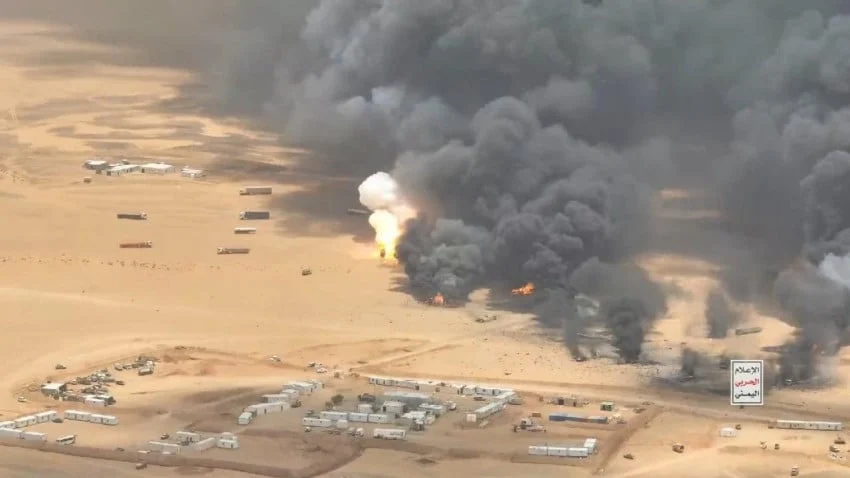
The Republic of Yemen has once again plunged into the abyss of active warfare, marking what military analysts and humanitarian organizations describe as the most ferocious outbreak of hostilities since the landmark United Nations-brokered truce of 2022. That cessation of hostilities had temporarily frozen an eight-year catastrophic conflict, which had previously reduced much of the nation’s infrastructure to rubble and triggered what the UN famously categorized as the world’s worst humanitarian crisis. Today, however, the fragile calm has shattered completely. Intensified skirmishes, heavy artillery barrages, and coordinated counter-offensives are reshaping the geopolitical landscape of the Arabian Peninsula, pitting the internationally recognized Yemeni government, bolstered by a Saudi-led coalition, against the resilient and heavily armed Houthi movement.
The renewed violence is not merely a localized flare-up; it represents a systemic unravelling of the post-2022 status quo. Ground engagements have intensified dramatically across multiple strategic provinces, notably Taiz, al-Bayda, and al-Jawf. The al-Jawf governorate, owing to its rugged terrain and geographic positioning, serves as a vital historical gateway toward the capital city of Sanaa, which has remained firmly under Houthi control since the outbreak of the civil war in late 2014. Simultaneously, the southern approaches to the Red Sea coastline have transformed into a primary theater of war, as both factions vie desperately for dominance over crucial maritime choke points.
This escalation unfolds against a backdrop of sweeping regional instability. The spillover effects of broader Middle Eastern conflicts, coupled with the persistent tensions surrounding international shipping lanes, have injected new energy and resources into the domestic factions. As international diplomats scramble to prevent total regional conflagration, the people of Yemen are left to bear the brunt of a revived war machine that shows no immediate signs of slowing down.
A Fractured Nation on the Brink: Historical Background and Context
To understand the gravity of the current offensive, one must examine the complex tapestry of Yemen’s modern history. The root causes of the current crisis stretch back decades, fueled by systemic economic marginalization, political corruption, and sectarian friction. The modern phase of the conflict erupted in late 2014 when the Houthi movement—formally known as Ansar Allah—swept down from their traditional northern stronghold of Saada and captured the capital Sanaa, forcing the internationally recognized government of President Abdrabbuh Mansur Hadi into temporary exile.
In March 2015, a coalition of Arab states led by Saudi Arabia and supported by the United Arab Emirates intervened militarily at the formal request of the Yemeni government to roll back the Houthi advance. What was initially envisioned as a swift military campaign morphed into a protracted, grinding war of attrition. Millions of Yemenis were displaced, famine stalked the countryside, and a near-total blockade crippled the nation’s economy.
The April 2022 truce brought a welcome, albeit tense, respite. Commercial flights partially resumed from Sanaa International Airport, fuel imports flowed more steadily through the vital western port of Hodeidah, and overall civilian casualties plummeted. However, the underlying political architecture of the country remained fundamentally unresolved. The truce created a prolonged stalemate, allowing both the government and the Houthi leadership to rearm, reorganize, and recalibrate their strategic objectives for the inevitable resumption of hostilities.
The Spark: July Escalations and the Battle for Strategic Corridors
The current phase of heightened military activity began in earnest in July, triggered by a series of assertive moves by the internationally recognized government. In a clear challenge to Houthi authority, government-aligned forces launched targeted kinetic operations aimed at disrupting air traffic into the Houthi-controlled Sanaa International Airport. The explicit objective of this operation was to intercept and prevent foreign logistical support, highlighted by a high-profile incident in which government forces successfully prevented an Iranian-flagged aircraft from landing.
These actions served as the opening salvos of a much broader campaign. The conflict rapidly cascaded outward, culminating in massive Houthi counter-offensives across the western districts of Taiz and the southern perimeters of Hodeidah. The strategic prize for the Houthi movement was clear: capture the vital port city of al-Makha (Mocha) and secure complete dominance over the southern approaches to the Red Sea, specifically the Bab al-Mandeb Strait.
The Bab al-Mandeb Strait is a maritime corridor of monumental global significance. Through its narrow waters pass millions of barrels of oil and vast quantities of global commercial cargo destined for Europe and Asia via the Suez Canal. The strategic importance of this waterway has multiplied exponentially in the wake of Iranian-backed disruptions in the Persian Gulf and the effective closure or severe restriction of transit through the Strait of Hormuz. Furthermore, the Houthi movement has demonstrated its capability to project power into these maritime lanes, having launched continuous drone and missile attacks against international commercial shipping since late 2023. By fighting for control of the adjacent mainland and coastline, both the Houthi forces and the pro-Saudi coalition are positioning themselves to dictate terms over one of the world’s most critical economic arteries.
Shifting Military Dynamics and the Consolidation of Anti-Houthi Forces
A critical variable in this renewed chapter of the war is the internal reorganization and consolidation of the anti-Houthi coalition. In the early months of the year, the internationally recognized government achieved significant strategic victories in southern Yemen, successfully sidelining or absorbing factions of the Southern Transitional Council (STC), a separatist movement previously backed by the United Arab Emirates.
By neutralizing the immediate internal threat posed by southern fragmentation, the central government has been able to streamline its military command structure. For the first time since the war began, various anti-Houthi militias, national army units, and regional brigades are operating under a more unified operational framework. Analysts note that government forces currently possess superior financial backing, improved logistical networks, and better-equipped ground units than at any previous point in the decade-long conflict.
This newfound capability has emboldened the leadership in Aden to shift its strategic posture from defensive containment to aggressive liberation. The stated goal of the government is now the total reclamation of national territory, beginning with the heartland provinces and culminating in the eventual liberation of Sanaa.
Expert Analyses and Regional Implications
Despite the optimism within government ranks regarding their improved military readiness, regional experts and risk analysts urge extreme caution, warning against the illusion of a swift or decisive military victory.
Mohammed al-Basha, a prominent Yemeni-American analyst and founder of the U.S.-based Basha Report risk consultancy, emphasized the gritty reality of ground combat in Yemen’s rugged terrain during an interview with international media. "This is likely to be a protracted war, not a short military campaign," al-Basha stated. He further underscored the enduring combat effectiveness of the Houthi forces, noting that they possess deep-rooted defensive fortifications, high ideological cohesion, and substantial stockpiles of asymmetric weaponry, including ballistic missiles and loitering munitions. "They will fight tooth and nail rather than simply surrender," he added.
Echoing this sentiment, Dr. Mahjoob Zweiri, a professor of Middle Eastern politics at Qatar University, highlighted the structural transformation of the anti-Houthi front. "The government is now able to control broader territory, and the number of autonomous militias on the ground has decreased," Professor Zweiri observed. By consolidating disparate armed factions into a single, cohesive military apparatus, the government has eliminated internal distractions, leaving the Houthi movement in Sanaa as the sole remaining adversary of consequence.
However, the broader regional implications of a prolonged war in Yemen are deeply concerning to the international community. The involvement of external actors—ranging from Saudi Arabia and the United Arab Emirates to Iran—ensures that the conflict remains vulnerable to regional escalation. Any sustained escalation along the Red Sea coastline threatens to further destabilize global energy markets, inflate shipping insurance premiums, and choke vital supply chains at a time of fragile global economic recovery.
Furthermore, the humanitarian cost of renewed warfare hangs heavily over the country. Aid agencies have repeatedly warned that a return to full-scale combat will immediately reverse the fragile gains achieved since 2022, cutting off access to vulnerable populations, destroying newly rebuilt infrastructure, and once again driving millions of Yemenis to the brink of starvation.
Conclusion: A Precarious Path Forward
As the dust settles over the initial clashes in Taiz, al-Bayda, and al-Jawf, the trajectory of the Yemeni conflict remains fraught with uncertainty. The internationally recognized government, galvanized by territorial gains in the south and bolstered by a more unified military command, has committed itself to a high-stakes campaign to wrest Sanaa from Houthi control and secure the strategic Red Sea maritime corridors.
Conversely, the Houthi movement remains a formidable, battle-hardened adversary, deeply entrenched in the northern highlands and fully capable of projecting asymmetric power across regional land and sea domains. With neither side willing to compromise on core political objectives, and with regional powers watching closely from the sidelines, Yemen stands at a dangerous crossroads. The choices made in the coming weeks by military commanders in Sanaa, Aden, and Riyadh will determine whether the nation slips backward into another decade of catastrophic bloodshed or whether diplomatic intervention can somehow arrest the momentum of war before the humanitarian toll becomes insurmountable once again.