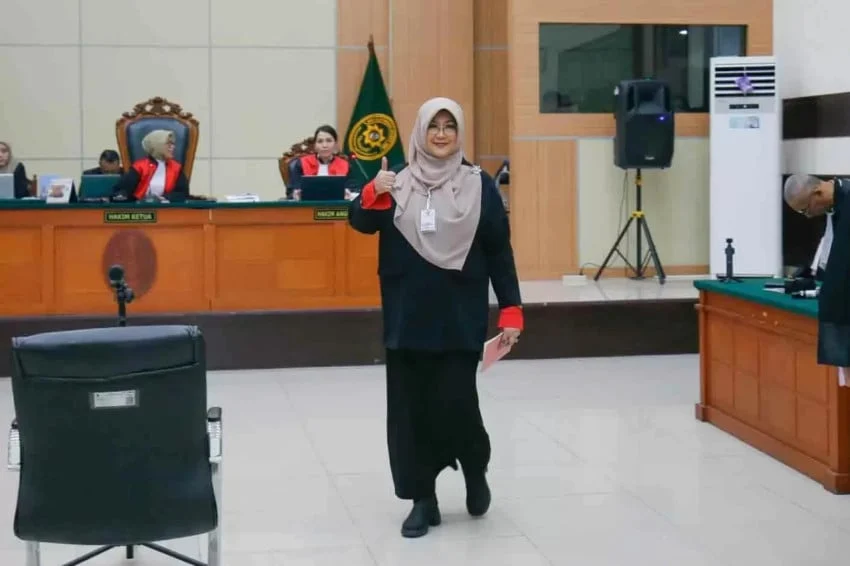
Tifauzia Tyassuma, widely known as Dokter Tifa, has announced her readiness to present an extensive list of 2,000 questions to President Joko Widodo (Jokowi) should the legal proceedings against her continue to a full trial. This declaration comes amidst her unwavering refusal to pursue a resolution through restorative justice (RJ), a stance she has maintained since her initial designation as a suspect. Despite a recent judicial decision granting her exception (eksepsi), signalling a procedural win for her defence, Dokter Tifa remains resolute, asserting that she has no grounds for apology and possesses substantial evidence to support her claims. Her defiance highlights a significant legal and political confrontation, bringing into sharp focus issues of free speech, defamation laws, and the unprecedented potential involvement of a sitting head of state in direct court testimony.
Background to the Controversy: Who is Dokter Tifa?
Tifauzia Tyassuma, or Dokter Tifa, first garnered significant public attention through her active and often controversial presence on social media platforms. Initially gaining prominence for her medical background and outspoken opinions on various social and political issues, she has become a polarizing figure in Indonesian public discourse. Her online activities have frequently involved critical commentary on government policies, public figures, and, notably, President Joko Widodo himself. These criticisms have, on several occasions, escalated into allegations that others deemed to be baseless or defamatory, leading to legal challenges.
Dokter Tifa’s public persona is characterized by her assertive communication style and a willingness to challenge established narratives. Her past controversies include claims regarding President Jokowi’s health, academic qualifications, and other aspects of his personal and public life, often circulated through her social media channels. While her supporters laud her as a courageous voice of dissent, critics accuse her of spreading misinformation and engaging in character assassination, contributing to a climate of online polarization. The current legal case against her is understood to stem from specific statements or posts she made that were deemed offensive or false by the President’s representatives, leading to the filing of a formal complaint. Such cases in Indonesia are often pursued under the controversial Law on Electronic Information and Transactions (Undang-Undang Informasi dan Transaksi Elektronik, or UU ITE), which has been widely criticized for its broad interpretation and potential to stifle legitimate criticism and freedom of expression.
The Legal Labyrinth: Charges and Procedural Developments
The specific charges against Dokter Tifa, though not explicitly detailed in the original report, are inferred to relate to defamation or spreading false information, likely under the aforementioned UU ITE. President Joko Widodo’s status as the "reporting witness" (saksi pelapor) indicates that the legal process was initiated based on a complaint filed on his behalf, or by him directly, alleging harm from Dokter Tifa’s statements. In the Indonesian legal system, a reporting witness is the party who first reports a criminal act to the authorities, thus setting the investigation in motion.
The judicial process has seen several key developments. Dokter Tifa was officially designated as a suspect, a crucial step indicating that law enforcement had found sufficient preliminary evidence to believe a crime had been committed. Subsequently, the case proceeded to the public prosecutor’s office, leading to the formulation of an indictment. However, Dokter Tifa’s legal team filed an eksepsi, or an exception, which is a preliminary defence challenging the prosecutor’s indictment on procedural or formal grounds, rather than the merits of the case itself. This could include arguments that the indictment is unclear, incomplete, or does not meet legal requirements.
Crucially, the judge in the case granted Dokter Tifa’s eksepsi. This decision does not absolve her of the alleged wrongdoing but signifies that the court found the prosecutor’s indictment to be flawed in some way, potentially requiring revision or even dismissal. While a significant procedural victory for the defence, it typically means the prosecution must refine or rewrite its indictment to address the issues raised by the court, potentially delaying but not necessarily ending the trial. It indicates a meticulous approach by the defence and a careful consideration by the judiciary of the formal aspects of the legal process.
The Unwavering Rejection of Restorative Justice
Central to Dokter Tifa’s stance is her categorical rejection of restorative justice (RJ). She explicitly stated, "Berkali-kali juga kami sampaikan menolak RJ, sebab apa, tidak ada yang perlu saya mintakan maaf. Karena apa? Bukti-bukti ini, 700 dokumen ini sudah kami pelajari." (We have repeatedly stated our refusal of RJ, because there is nothing I need to apologize for. Why? Because we have studied these 700 documents as evidence.) This unwavering position has been maintained despite offers for an RJ settlement from various stages of the legal process, including the prosecution and even the judiciary.
Restorative justice in Indonesia, as in many other jurisdictions, is an alternative dispute resolution mechanism aimed at repairing harm caused by criminal behavior, often through dialogue and negotiation between the victim, offender, and community, rather than solely through punitive measures. It is often encouraged for less serious offences, or where there is a strong potential for reconciliation and mutual agreement. For defamation cases, especially those initiated under UU ITE, RJ is frequently offered as a pathway to avoid lengthy and resource-intensive trials, allowing parties to reach an amicable resolution, which often involves an apology or retraction from the accused.
Dokter Tifa’s refusal is highly significant. It signals her absolute conviction in the veracity of her statements and her readiness to challenge the allegations in a full court setting. Her reference to "700 documents" suggests a comprehensive collection of materials she believes substantiates her claims or disproves the allegations against her. These documents could range from public records, official reports, news articles, academic papers, or even expert opinions she has consulted, all aimed at bolstering her defence and justifying her controversial statements. Her refusal to apologize is a direct challenge to the premise of the restorative justice framework, which often hinges on an acknowledgment of wrongdoing or harm by the accused.
The Specter of Presidential Testimony and 2,000 Questions
Perhaps the most dramatic aspect of Dokter Tifa’s declaration is her assertion that President Jokowi, as the reporting witness, would be compelled to appear in court if the case proceeds to trial. She further revealed her preparation of an astounding 2,000 questions for him. "Apabila perkara ini berlanjut ke persidangan, justru Jokowi yang akan menghadapi konsekuensinya. Sebab, kata dia, Jokowi berstatus sebagai saksi pelapor sehingga wajib hadir dalam setiap agenda persidangan," (If this case proceeds to trial, it is Jokowi who will face the consequences. Because, she said, Jokowi holds the status of a reporting witness and is therefore obliged to attend every court session.)
The prospect of a sitting President of Indonesia being called to testify in a public court, particularly in a case initiated by his own representatives, is highly unusual and potentially unprecedented. While any citizen, including a president, is subject to the law, the practicalities and implications of a head of state appearing in court are immense. Typically, in cases where a president’s testimony is required, mechanisms are often in place to protect the office’s dignity and operational continuity, such as written testimonies, testimony given at the presidential palace, or representation by legal counsel. Compelling a president to sit through potentially lengthy cross-examination, especially on 2,000 questions, would undoubtedly be a significant constitutional and political event.
The sheer volume of 2,000 questions indicates an exhaustive and meticulous preparation by Dokter Tifa’s legal team. These questions could potentially delve into various aspects of President Jokowi’s administration, policies, public statements, personal history, and even the specifics of the alleged defamation. Such an interrogation, if it were to occur, would transform the trial into a highly scrutinized public forum, potentially exposing the presidency to intense public and media examination on a scale rarely seen. This strategy suggests an intent not merely to defend against the charges but to also critically examine the actions and credibility of the reporting party, in this case, the President himself.
Statements and Reactions from Related Parties
Dokter Tifa’s Legal Team: Her lawyers undoubtedly support her decision to reject restorative justice, viewing it as a concession of guilt where they believe none exists. Their strategy is clearly to confront the charges head-on, leveraging the "700 documents" as their evidentiary bedrock. They would likely argue that their client’s statements were based on legitimate research or public information and fall within the bounds of freedom of expression, especially when scrutinizing a public official. The granting of the eksepsi has likely emboldened their position, reinforcing their belief in procedural flaws in the prosecution’s case.
President Jokowi’s Legal Team: Following the granting of Dokter Tifa’s eksepsi, President Jokowi’s lawyers reportedly reiterated their offer of restorative justice. This move suggests a preference to resolve the matter outside of a full trial, which could be a strategic decision to avoid the potential political spectacle and demands on the President’s time and office. A public trial involving the head of state, particularly one where the President might be called to answer thousands of questions, carries significant risks. It could divert presidential focus from national duties, create an avenue for political grandstanding, and potentially damage the dignity of the presidential office, regardless of the trial’s outcome. Their offer of RJ indicates a desire for a swift, less confrontational resolution. They would likely argue that their client, as a public figure, is still entitled to legal protection against defamation and that the allegations made by Dokter Tifa crossed the line into unlawful conduct.
Legal Experts and Analysts: The unfolding legal drama has drawn considerable attention from legal experts and political analysts. Many commentators acknowledge the rarity and potential complexities of a sitting president being involved in such direct court proceedings.
- On the Eksepsi: Legal scholars would explain that while a granted eksepsi is a setback for the prosecution, it is often surmountable. The prosecution typically has the opportunity to revise and resubmit the indictment, meaning the case can still proceed to trial. It highlights the importance of precise legal drafting in criminal proceedings.
- On Restorative Justice: Experts might discuss the suitability of RJ in high-profile defamation cases. While promoting reconciliation, its effectiveness depends on the willingness of both parties to compromise. Dokter Tifa’s firm refusal underscores the limitations of RJ when the accused believes they have committed no wrong.
- On Presidential Testimony: The potential for President Jokowi to testify is a topic of intense debate. Constitutional law experts would likely examine the provisions governing the President’s duties and privileges. While theoretically, everyone is equal before the law, practical considerations often lead to alternative arrangements for heads of state, such as written affidavits or testimony delivered remotely or in a non-public setting. Compelling a direct, public appearance, especially for extensive questioning, would be seen as an extraordinary measure with significant implications for the functioning of the state.
Broader Implications and Context
This case transcends the immediate legal dispute between Dokter Tifa and President Jokowi, touching upon several critical aspects of Indonesian society and governance.
Freedom of Speech vs. Defamation: At its core, the case reignites the ongoing debate about the balance between freedom of expression, particularly online, and the legal frameworks designed to prevent defamation and the spread of false information. The UU ITE, under which Dokter Tifa is likely charged, has been a contentious piece of legislation, frequently criticized by human rights organizations for its broad scope, vague definitions, and potential for abuse to silence critics and political opponents. This case, involving a high-profile critic and the President, will inevitably become a touchstone for discussions on the boundaries of online commentary and the extent to which public officials should be immune from public scrutiny, even when it is harsh or controversial.
Political Climate and Polarization: The legal battle also reflects Indonesia’s often polarized political landscape, particularly in the digital realm. Social media platforms have become battlegrounds for ideological and political contests, where information, misinformation, and personal attacks often intertwine. Dokter Tifa’s case exemplifies how online rhetoric can quickly escalate into legal action, highlighting the challenges of managing public discourse in a highly connected but also deeply divided society.
Precedent Setting: Should the case proceed to a full trial and particularly if President Jokowi is indeed compelled to testify, it would set a significant precedent in Indonesian legal and political history. It would redefine the expectations and obligations of a sitting head of state in legal proceedings and could influence how future cases involving high-ranking officials and public critics are handled. The outcome could either strengthen the legal protection for public officials against perceived defamation or reinforce the right of citizens to critically examine their leaders, even through contentious means.
Timeline of Events (Inferred and Hypothetical):
- Initial Controversial Statements: Dokter Tifa makes several statements or social media posts critical of President Joko Widodo, which are later deemed defamatory or false by his representatives.
- Complaint Filed: Representatives of President Jokowi file a formal complaint with law enforcement authorities, initiating an investigation.
- Investigation and Suspect Designation: Police investigate the complaint, gather evidence, and subsequently designate Dokter Tifa as a suspect, indicating sufficient preliminary evidence of a crime.
- Case to Prosecution: The investigation concludes, and the case file is handed over to the public prosecutor’s office.
- Prosecution’s Indictment: The public prosecutor drafts and submits an indictment (dakwaan) to the court, formally charging Dokter Tifa.
- Defence Files Eksepsi: Dokter Tifa’s legal team files an exception (eksepsi), challenging the procedural or formal validity of the prosecutor’s indictment.
- Judge Grants Eksepsi: The court rules in favour of Dokter Tifa’s eksepsi, finding flaws in the prosecutor’s indictment.
- Offer of Restorative Justice: Despite the eksepsi ruling, offers for restorative justice continue from both the prosecution and President Jokowi’s legal team.
- Dokter Tifa’s Rejection and Declaration: Dokter Tifa publicly rejects restorative justice, reiterates her belief in her innocence, cites 700 documents as evidence, and declares her readiness with 2,000 questions for President Jokowi if the trial proceeds.
- (Future) Potential for Revised Indictment: The prosecution may revise and resubmit its indictment, potentially leading to the continuation of the trial.
- (Future) Potential Full Trial: If the revised indictment is accepted, the case could proceed to a full trial, potentially involving the unprecedented testimony of President Joko Widodo.
Conclusion
The ongoing legal saga involving Dokter Tifa and President Joko Widodo is a compelling case study in the intersection of law, politics, and public discourse in modern Indonesia. Dokter Tifa’s unwavering rejection of restorative justice and her audacious preparation of 2,000 questions for the President signify a profound commitment to her defence and a willingness to challenge the state at its highest level. While the granting of her eksepsi offers a procedural reprieve, the core dispute remains unresolved. The potential for a sitting President to be directly involved in a public trial, answering extensive questions, would be an extraordinary event with far-reaching implications for the presidency, the judiciary, and the future of free speech in Indonesia. As the legal process unfolds, all eyes will be on how these complex issues are navigated, setting potential precedents for how similar high-stakes cases are handled in the future.