The landscape of Indonesian constitutional law and post-election dispute resolution witnessed a notable development at the Constitutional Court (Mahkamah Konstitusi or MK) in Jakarta. Refly Harun, serving as the legal counsel for the petitioners challenging the validity of Vice President Gibran Rakabuming Raka’s academic credentials through a General Election Results Dispute (Perselisihan Hasil Pemilihan Umum or PHPU) mechanism, formally questioned the legal standing of a volunteer organization that has intervened in the proceedings. The organization in question, Militan Gibran 08 Nusantara, officially registered itself as a relevant party (pihak terkait) to participate in the ongoing litigation. This legal maneuver has opened a new debate regarding who holds legitimate status to defend a contested public office within the country’s highest judicial arbiter.
The core of the legal challenge centers on the academic qualifications and educational background of Vice President Gibran Rakabuming Raka, a cornerstone requirement for eligibility under the Indonesian electoral laws overseen by the General Elections Commission (KPU). While the petitioners, represented by prominent legal figures such as Denny Indrayana and Refly Harun, argue that substantial administrative discrepancies warrant judicial scrutiny, the entry of mass volunteer groups into the courtroom has complicated the procedural dynamics. Refly Harun expressed public skepticism outside the courtroom regarding the legal appropriateness of civic volunteer groups joining as formal litigants, asserting that only the individual officeholder whose qualifications are directly challenged—namely, Vice President Gibran Rakabuming Raka—represents the ideal and logical relevant party to defend the case. Despite these procedural reservations, the Constitutional Court opted to accept the application submitted by Militan Gibran 08 Nusantara, allowing them a formal platform in the upcoming hearings.
Background Context of the Constitutional Court PHPU Proceedings
To fully understand the weight of the current legal battle at the Constitutional Court, it is essential to examine the background of the 2024 presidential election cycle and the subsequent legal challenges that have persisted well into the legislative and executive terms. The eligibility of Gibran Rakabuming Raka as a vice-presidential candidate has been a focal point of intense political and legal friction since the candidate registration phase. While initial challenges primarily targeted the controversial Constitutional Court ruling regarding age limit requirements, subsequent legal petitions expanded to scrutinize administrative qualifications, including educational history, institutional accreditations, and the authenticity of graduation documents.
Under the Indonesian legal framework, the Constitutional Court holds the authority to adjudicate disputes concerning election results, which occasionally intersects with eligibility disputes if candidates are argued to have secured their positions through fraudulent or non-compliant administrative processes. Petitioners led by legal scholars and practitioners like Denny Indrayana and Refly Harun have systematically brought forward motions seeking judicial reviews and formal inquiries into these credentials. The inclusion of volunteer organizations as relevant parties introduces a complex sociopolitical dynamic into a predominantly legal proceeding, blurring the lines between formal state representation and grassroots political mobilization inside a court of law.
Chronology of the Intervention by Militan Gibran 08 Nusantara
The procedural timeline leading up to Refly Harun’s recent statements involves several critical milestones at the Constitutional Court in Jakarta:
- Initial Filing of the Petition: The legal team representing the petitioners, including Denny Indrayana and Refly Harun, formally registered the PHPU petition challenging aspects of the vice-presidential election administration, specifically focusing on educational requirements and document verification standards.
- Application for Intervention: Recognizing the potential implications of the lawsuit on the legitimacy of the sitting Vice President, various sympathetic civilian groups mobilized. Militan Gibran 08 Nusantara formally submitted their application to the Constitutional Court to be recognized as a relevant party (pihak terkait).
- Court Acceptance: The Constitutional Court reviewed the application submitted by the volunteer organization and officially granted them standing to participate in the hearings, noting that interested groups with a stake in the outcome may present arguments to protect the interests of the contested mandate.
- Scheduled Hearings: Following the acceptance of the relawan (volunteer) group, the court scheduled subsequent sessions to hear preliminary arguments, examine submitted evidence, and establish the calendar for witness and expert testimonies.
Legal Arguments and Refly Harun’s Perspective
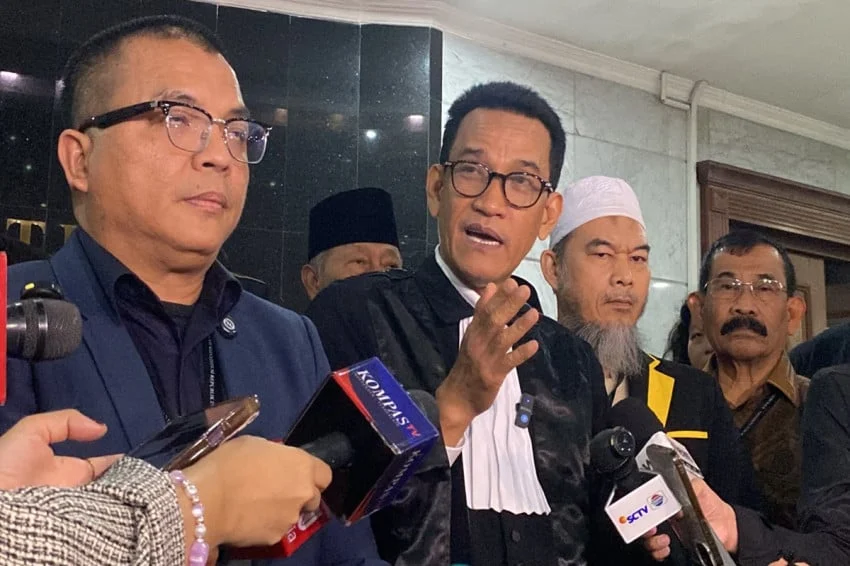
Addressing reporters at the complex of the Constitutional Court in Central Jakarta, Refly Harun articulated his primary critique regarding the court’s acceptance of Militan Gibran 08 Nusantara as a formal party to the dispute. From a strict procedural standpoint, Refly argued that the inclusion of third-party volunteer groups lacks clear legal necessity when the primary respondent or directly affected official is already capable of mounting a defense.
"The step taken is unclear because ideally, only Gibran himself should act as the relevant party in this case," Refly stated to the press.
However, Refly acknowledged the reality of the court’s administrative decision. He indicated that while his team questions the necessity and structural logic of allowing grassroots volunteer organizations to attain formal litigant status in a constitutional dispute, they do not intend to launch a protracted procedural war over the matter. "We don’t have a major problem with it. But whether volunteers are suddenly allowed or not, it turns out they are permitted. So be it. Because we know these individuals are active as volunteers everywhere," he added with resignation regarding the fluid nature of administrative approvals in high-profile political litigation.
The legal philosophy underpinning Refly’s argument touches upon the boundaries of "legal standing" (legal stand) in public law. In standard civil and constitutional litigation, a relevant party is generally defined as an entity that holds a direct, legally protected interest that can be materially affected by the court’s decision. While individual candidates clearly possess this standing, the extension of this principle to mass volunteer organizations raises questions about the proliferation of participants in constitutional hearings, potentially transforming judicial proceedings into forums for political symbolism rather than strict legal adjudication.
Official Responses and Court Proceedings
The Constitutional Court, operating under strict procedural guidelines, maintains that applications for intervention from relevant parties are evaluated based on their demonstrated interest in the outcome of the election results dispute. By admitting Militan Gibran 08 Nusantara, the bench has signaled a broad interpretation of who may be affected by challenges to the executive branch’s legitimacy.
Representatives of Militan Gibran 08 Nusantara defended their intervention by emphasizing their role as civil society stakeholders who campaigned for the ticket and therefore have a vested interest in defending the legality and democratic mandate of the Vice President against what they characterize as politically motivated or legally meritless challenges. Their legal representatives argued that broad public participation in defense of institutional stability is fully compatible with the openness of the Indonesian constitutional system.
Meanwhile, the court has confirmed that the schedule for the ongoing PHPU proceedings will proceed without interruption, with upcoming sessions dedicated to evaluating the substantive arguments presented by Denny Indrayana’s legal team, the responses from the KPU, and the counter-arguments from both the official defense and the newly admitted volunteer intervenors.
Broader Implications for Indonesian Constitutional Law and Electoral Politics
The admission of political volunteers as formal litigants in a high-stakes constitutional dispute carries profound implications for the future of election law in Indonesia. Several key analytical dimensions emerge from this case:
1. The Proliferation of Third-Party Interventions
The ease with which mass organizations and volunteer networks can integrate themselves into formal Constitutional Court proceedings could set a precedent for future election cycles. While democratic transparency benefits from open courts, an excessive number of intervening parties risks overwhelming the judicial process with redundant arguments, partisan rhetoric, and logistical complexities.
2. Differentiating Political Mobilization from Legal Standing
There is an ongoing philosophical debate within the Indonesian legal community regarding the separation between political movements and judicial actors. Volunteer groups are inherently political instruments designed for electoral campaigns. Granting them formal standing in judicial bodies that evaluate constitutional and administrative legality may inadvertently politicize the courtroom, shifting public perception from an objective arbiter of law to an arena of competing political fandoms.
3. Stability of Executive Mandates
Challenges targeting the foundational qualifications of elected officials—such as presidential and vice-presidential credentials—pose a direct threat to institutional continuity. While legal challenges are a legitimate component of a constitutional democracy, repeated or prolonged administrative disputes can create unnecessary political uncertainty. The active defense mounted by both official representatives and grassroots supporters reflects the high emotional and political stakes attached to the legitimacy of the nation’s leadership.
As the Constitutional Court prepares for the continuation of the hearings, legal observers across the archipelago will be watching closely to see how the panel of constitutional justices balances procedural rigor with the expansive participation of civil society groups. Regardless of the final verdict on the core administrative questions regarding academic credentials, the case has already enriched the jurisprudence surrounding legal standing, the role of volunteer networks in formal litigation, and the boundaries of democratic accountability in modern Indonesia.