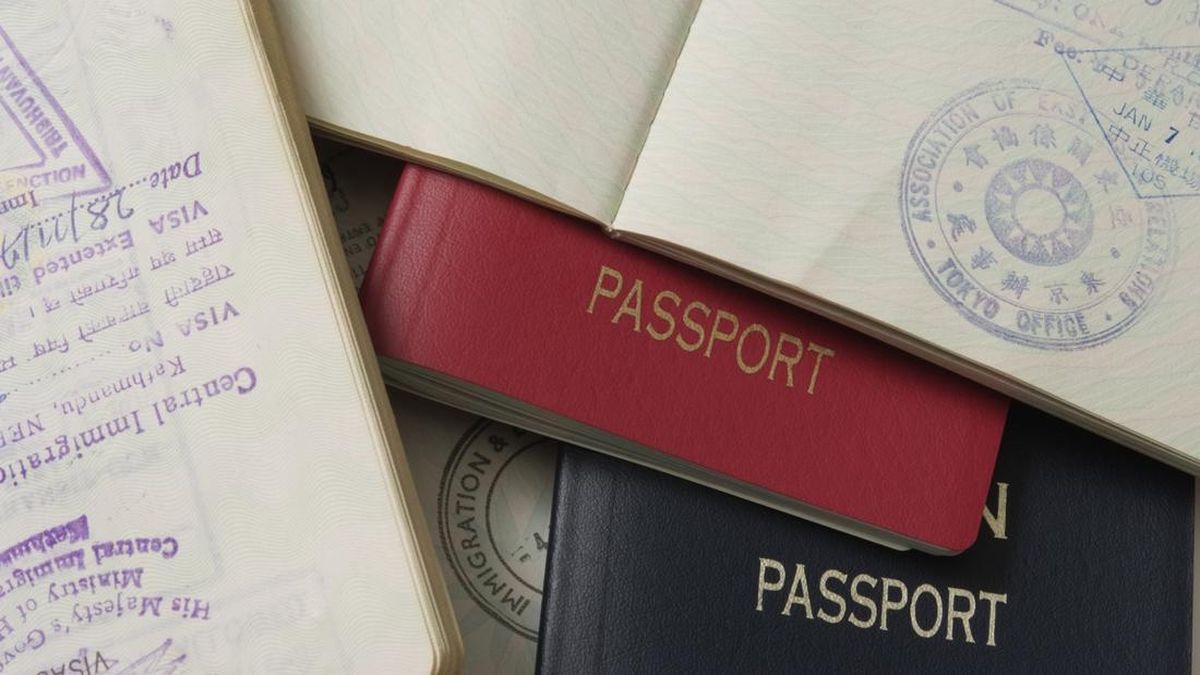
The common traveler’s woes of lost passports, lengthy renewal processes, and the dreaded six-month validity rule at immigration checkpoints are familiar frustrations. However, for a select few individuals on the planet, these bureaucratic hurdles simply do not exist. Three extraordinary figures possess the unique privilege of traversing the globe without ever needing to present a passport at an immigration counter. This exceptional status is rooted not in personal favor, but in fundamental principles of sovereignty and state representation.
The Sovereign’s Exemption: The British Monarch
At the pinnacle of this exclusive group is the reigning British monarch, King Charles III. Unlike ordinary citizens or even most members of the royal family, His Majesty does not carry a passport when traveling abroad. This is not a matter of royal prerogative in the conventional sense, but rather a logical consequence of the very system by which British passports are issued.
British passports are, in essence, issued in the name of the reigning monarch. The official wording found within the inner cover of a British passport, on behalf of "His Britannic Majesty’s Secretary of State," is a formal request to foreign authorities for the passport holder’s unhindered passage. It would be a logical paradox for the King, as the ultimate authority under whose name these documents are issued, to then require a document that bears his own authority.
This tradition is deeply entrenched in British constitutional history. The late Queen Elizabeth II, who reigned for over seven decades and visited more than 100 countries, also never possessed a personal passport throughout her life. The rationale remains consistent: the monarch embodies the sovereignty of the United Kingdom, and therefore, the state’s declaration of passage is made in their name.
It is crucial to note the specific scope of this exemption. This privilege is strictly limited to the reigning monarch. While other members of the royal family, such as Queen Camilla, Prince William, and Kate Middleton, may travel with diplomatic passports, they are still required to carry official documentation. The King’s exemption is personal and tied to his position as the sovereign.
Furthermore, the principle extends beyond passports. In a similar vein, the King technically does not require a British driving license, as such licenses are also issued under his authority as the sovereign.
In practice, when the King undertakes state visits or international travel, his private secretary will liaunt with the host nation through established diplomatic channels, providing official notification of the visit. This diplomatic coordination serves as the formal clearance, negating the need for a physical passport. This system, refined over centuries, ensures the smooth conduct of royal international engagements while upholding the symbolic power of the monarchy.
The Emperor of Japan: A Symbol Above Bureaucracy
Echoing this unique status is His Imperial Majesty, Emperor Naruhito of Japan. The Japanese Foreign Ministry, through an official directive established on May 10, 1971, determined that it is inappropriate for the Emperor to hold a regular passport or undergo the standard immigration and visa procedures applicable to ordinary citizens.
As the highest head of state in Japan, the Emperor is symbolically placed above the administrative processes of immigration. This exemption reflects the profound respect and unique standing afforded to the Imperial family in Japanese society and international relations. When the Emperor embarks on international journeys, the Japanese government provides prior official notification to the receiving nation. Upon arrival, a special ministerial document is presented as a substitute for a passport, facilitating seamless entry.
This 1971 directive from the Japanese Ministry of Foreign Affairs also extends to the Empress, currently Empress Masako. Like her husband, Empress Masako can undertake international travel without a personal passport, relying on intergovernmental diplomatic coordination. Similar to the British system, this exception is narrowly defined. Crown Princes, Crown Princesses, and other members of the Imperial family are indeed required to carry diplomatic passports when traveling abroad, underscoring the specific nature of the Emperor and Empress’s unique status. The Japanese system, therefore, reinforces the Emperor’s role as a living embodiment of the Japanese nation and its international standing.
The Underlying Principle: Sovereignty as the Key
The common thread that binds these remarkable exemptions is the concept of sovereignty, not mere popularity or influence. Passports, at their core, are official requests from one nation to another, made in the name of the head of state or the sovereign authority of the issuing country. When an individual is that head of state or sovereign authority, the necessity for a document that requests passage on their own behalf becomes redundant.
This fundamental principle of state representation is why such exceptions are strictly limited to reigning monarchs and, in specific constitutional frameworks, to heads of state. It does not extend to prime ministers, presidents in republican systems (who typically act as elected representatives and thus require official documentation), or even other members of royal or imperial families who do not hold the ultimate sovereign position. The distinction is not arbitrary; it is a direct reflection of who, in legal and constitutional terms, embodies the state itself.
The historical context for such traditions can be traced back to ancient diplomatic practices where the person of the ruler was often considered sacrosanct and above the mundane requirements of inter-state protocol. Modern passport systems, while designed for universal application, retain these vestiges of sovereign prerogative.
A Brief Timeline of Diplomatic Immunity and Travel Documents
The evolution of travel documents and diplomatic immunity provides a backdrop to these unique exemptions:
- Ancient Times: Rulers often sent envoys with letters of safe conduct, essentially early forms of diplomatic credentials. The person of the ruler and their representatives were considered under the protection of the receiving sovereign.
- Medieval Period: As kingdoms and empires solidified, formal treaties and agreements began to govern the passage of envoys. The concept of state representation became more formalized.
- 19th Century: The standardization of travel documents began to emerge, though passports were not always universally required for all international travel. Diplomatic passports, as a distinct category, started to gain prominence.
- Early 20th Century: Following World War I, the League of Nations attempted to standardize passport regulations, leading to a more widespread requirement for passports for international travel. However, exceptions for heads of state and diplomatic personnel remained.
- Mid-20th Century: The establishment of the United Nations and the codification of international law further refined the practices surrounding diplomatic immunity and state representation. The directives for Japanese Imperial travel in 1971 and the long-standing practice for the British monarch are manifestations of these evolving, yet enduring, principles.
Data and Implications
While specific statistics on the number of international trips taken by King Charles III or Emperor Naruhito without passports are not publicly available due to the nature of their roles, the implications of their exemptions are significant:
- Symbolic Representation: The lack of a passport reinforces their status as embodiments of their nations, transcending ordinary administrative processes. This can be a powerful tool in diplomatic engagements, signaling a unique level of state recognition.
- Efficiency in Diplomacy: For heads of state undertaking frequent or unscheduled international travel, the absence of passport renewal or validation requirements streamlines logistical processes, allowing for greater flexibility and responsiveness in foreign policy.
- Upholding Constitutional Order: These exemptions are not personal privileges but are intrinsically linked to the constitutional frameworks of their respective countries. They serve to uphold the symbolic and actual power vested in the sovereign or head of state.
- Precedent and Distinction: The existence of these exemptions highlights the distinct category of individuals who, by virtue of their supreme office, operate under different protocols. This distinction is crucial for understanding the nuances of international relations and diplomatic protocol.
Official Statements and Interpretations
Official statements regarding these exemptions are typically brief and matter-of-fact, focusing on the legal and constitutional basis. For instance, Buckingham Palace has historically confirmed that the monarch does not require a passport. Similarly, the Japanese Ministry of Foreign Affairs has articulated the rationale behind the Emperor’s exemption based on his unique position.
These interpretations consistently emphasize that the exemption is not a personal perk but a reflection of the sovereign’s inherent authority and the state’s representation through its highest office. The practice is a testament to the enduring legacy of monarchical traditions and the symbolic power of heads of state in the international arena.
In conclusion, the ability of King Charles III and Emperor Naruhito to travel the world without passports is a fascinating illustration of how sovereignty is expressed and upheld in international affairs. It underscores a fundamental principle: when one personifies the state, the documents that represent the state’s authority become a formality that does not apply to them. This unique privilege, rooted in history and constitutional law, sets them apart from all other travelers, serving as a potent symbol of their exalted positions.