Routine maintenance stands as a cornerstone for ensuring the optimal performance and longevity of automatic scooters, commonly known as "motor matic" in many parts of Asia. Beyond the essential tasks of engine oil changes and periodic overall servicing, scooter owners often overlook a critical component: the Continuously Variable Transmission (CVT). This sophisticated automatic transmission system is the very heart of an automatic scooter, dictating how power is delivered and how smoothly the vehicle operates. Neglecting its upkeep can lead to a cascade of performance issues, compromise rider safety, and ultimately result in costly repairs. Therefore, understanding the tell-tale signs that your CVT needs professional attention is paramount for every automatic scooter owner.
The Ingenious Mechanism of a Continuously Variable Transmission (CVT)
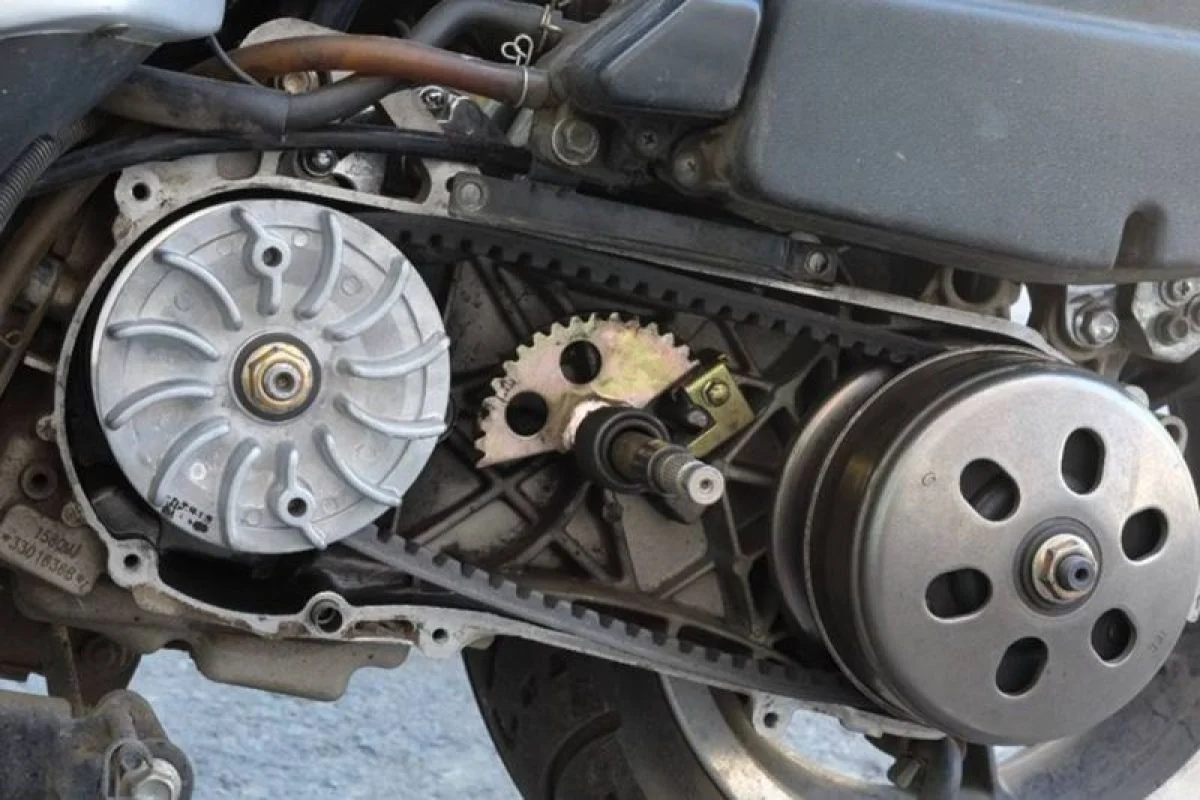
At its core, a CVT is designed to provide a seamless and efficient power delivery system without the need for manual gear shifting. Unlike traditional geared transmissions, a CVT operates using a V-belt that runs between two variable-width pulleys: a drive pulley (connected to the engine) and a driven pulley (connected to the rear wheel). These pulleys consist of conical halves that move closer together or further apart, effectively changing the diameter at which the belt runs. This continuous adjustment allows the transmission to maintain an optimal engine RPM for any given speed, resulting in smooth acceleration, improved fuel efficiency, and a more comfortable riding experience.
The primary components within a scooter’s CVT include the V-belt, rollers (also known as centrifugal weights), clutch shoes, clutch bell, and the primary and secondary pulleys. As the engine RPM increases, the rollers in the drive pulley move outwards due to centrifugal force, pushing the pulley halves closer and forcing the V-belt to a larger diameter. Simultaneously, the driven pulley adjusts to allow the belt to run on a smaller diameter. This dynamic interplay effectively creates an infinite number of gear ratios, ensuring power is transmitted efficiently to the rear wheel, allowing the scooter to accelerate smoothly without any noticeable shifts or power interruptions. The simplicity and efficiency of this design have made automatic scooters immensely popular, particularly in urban environments where stop-and-go traffic is common.
Why CVT Maintenance is Non-Negotiable for Scooter Longevity
Given its continuous operation and reliance on moving parts that undergo friction and heat, the components within a CVT are inherently subject to wear and tear. The V-belt can stretch or crack, rollers can become flattened or worn unevenly, clutch shoes can glaze or thin out, and pulleys can develop grooves or become misaligned. These changes, though gradual, significantly impair the CVT’s ability to transmit power efficiently.
Neglecting regular CVT maintenance can lead to a host of problems. A worn CVT translates directly into reduced performance, manifesting as sluggish acceleration, decreased top speed, and poor fuel economy. More critically, it can compromise riding safety; a failing CVT might cause unexpected loss of power, erratic acceleration, or even complete transmission failure in extreme cases. Furthermore, delaying maintenance often results in a snowball effect, where minor issues escalate into major, expensive repairs. For instance, a worn V-belt, if not replaced, could snap, leaving the rider stranded and potentially damaging other CVT components. Similarly, worn rollers can lead to excessive vibration and premature wear on the pulley faces. Proactive maintenance, therefore, is not merely about preserving performance but also about ensuring safety and economic viability for the scooter owner.
Identifying the Warning Signs: When Your CVT Demands Attention
Recognizing the early indicators of CVT issues is crucial for preventative action. Drawing insights from automotive experts and manufacturers like Wahana Honda, here are eight critical signs that signal your automatic scooter’s CVT is due for inspection and servicing:
1. Adhering to Manufacturer Service Schedules
The most fundamental indicator for CVT servicing is simply reaching the recommended mileage interval. Motorcycle manufacturers, through extensive research and testing, establish specific service schedules to ensure optimal component lifespan and performance. For most automatic scooters, a CVT service is generally recommended every 8,000 to 10,000 kilometers. During this scheduled service, technicians typically perform a thorough cleaning of the CVT housing, removing accumulated dust and debris that can hinder component movement. More importantly, they inspect the condition of key components such as the V-belt, rollers, clutch shoes, clutch bell, and pulleys for any signs of wear, cracks, or deformation.
It is vital to note that these intervals can vary between different scooter brands and models. Therefore, owners should always consult their scooter’s owner’s manual or service book for the precise maintenance schedule. Adhering strictly to these manufacturer guidelines is the simplest yet most effective way to prevent premature wear and detect potential issues before they escalate, ensuring the CVT system operates within its optimal parameters throughout the vehicle’s lifespan.
2. Understanding the Impact of High-Intensity Usage
While mileage serves as a primary guide, the intensity of vehicle usage is an equally significant factor in determining CVT service frequency. Scooters subjected to daily, long-distance commutes, frequent stop-and-go traffic, or regular carrying of heavy loads experience significantly higher stress and accelerated wear on their CVT components compared to those used for occasional, light riding. The constant acceleration and deceleration in dense urban environments cause the V-belt to flex and the pulleys to adjust more frequently, leading to faster degradation of materials.
In such high-intensity usage scenarios, it is advisable to consider more frequent CVT inspections, potentially every 5,000 kilometers, or even sooner based on the recommendations of a trusted mechanic or the manufacturer. For instance, a delivery rider whose scooter covers hundreds of kilometers daily will need more diligent and frequent CVT checks than someone who uses their scooter only on weekends for short trips. Recognizing and adjusting maintenance schedules based on individual riding patterns can significantly extend the life of the CVT and prevent unexpected breakdowns.
3. Decoding Unusual Noises from the Transmission Area
A healthy CVT operates with a relatively smooth and quiet hum. The emergence of unusual noises from the transmission area is a strong indicator that something is amiss. These noises can manifest in various forms:
- Squealing or Chirping: Often suggests a worn, stretched, or glazed V-belt that is slipping on the pulleys. It could also indicate dry or worn bearings.
- Grinding or Rattling: Might point to severely worn rollers that have become flat-spotted or broken, rattling around in their tracks. It could also be a sign of worn clutch shoes making irregular contact with the clutch bell, or even worn out bearings in the pulleys.
- Whirring or Humming: Can sometimes indicate issues with the pulley bearings or the belt itself.
These sounds are not just irritating; they are symptoms of components that have degraded beyond their optimal operating condition. Ignoring them will invariably lead to further damage, potentially affecting other parts of the CVT or even causing the transmission to seize. A prompt inspection by a qualified technician can pinpoint the source of the noise and address the underlying issue, preventing more severe complications.
4. Recognizing Vibrations During Acceleration
Experiencing abnormal vibrations when twisting the throttle, especially during initial acceleration from a standstill or at low speeds, is another common symptom of CVT trouble. This unsettling shudder or jerking sensation often indicates uneven power transmission. Common culprits for this issue include:
- Flat-spotted or Worn Rollers: If the rollers are not perfectly round, they will not move smoothly within the drive pulley, leading to erratic belt movement and vibration.
- Glazed or Uneven Clutch Shoes: Over time, the friction material on the clutch shoes can become hardened or unevenly worn. When these shoes engage the clutch bell, they may grab erratically instead of smoothly, causing judder or vibration.
- Stretched or Damaged V-Belt: A V-belt that has stretched or developed minor cracks can cause inconsistent power transfer and vibrations.
- Worn or Damaged Clutch Bell: If the inner surface of the clutch bell is grooved or warped, the clutch shoes will not engage smoothly.
If left unaddressed, these vibrations can intensify, making the ride increasingly uncomfortable and potentially leading to fatigue for the rider. More importantly, sustained vibrations can accelerate wear on other engine and chassis components, highlighting the necessity of timely intervention.
5. Addressing Sluggish Performance and Reduced Power
A noticeable decline in the scooter’s overall performance is a clear signal that the CVT system may not be functioning optimally. Symptoms include:
- Sluggish Acceleration: The scooter feels hesitant or slow to pick up speed when the throttle is applied.
- Reduced Top Speed: The scooter struggles to reach its usual maximum speed, or takes significantly longer to do so.
- Lack of Responsiveness: The engine revs, but the power doesn’t seem to translate efficiently to the rear wheel, resulting in a disconnected feeling between the throttle and acceleration.
These issues typically arise when the CVT components are too worn to transmit engine power effectively. A stretched V-belt might be slipping, preventing the full transfer of torque. Worn rollers might not be allowing the pulleys to shift ratios correctly, keeping the engine from operating at its peak power band. Glazed clutch shoes might be slipping excessively, dissipating power as heat rather than transferring it to the drivetrain. When the engine’s power output is not optimally channeled to the rear wheel, the riding experience becomes frustrating, and the scooter feels underpowered. This directly impacts both the joy of riding and the efficiency of daily commutes.
6. Investigating Difficulty Starting (and its CVT Link)
While difficulty starting a scooter is often associated with issues related to the battery, spark plug, or fuel system, a severely compromised CVT can also contribute to this problem, albeit indirectly. If the CVT’s components, particularly the clutch or pulley system, are excessively worn, seized, or generating significant drag, they can impose an additional load on the engine during startup. This extra resistance forces the starter motor and battery to work much harder, leading to a weak or labored cranking sound, and potentially preventing the engine from firing up easily.
For example, if the clutch shoes are partially engaged or stuck within the clutch bell even when the engine is off, or if the pulley bearings are severely seized, the engine will encounter resistance from the transmission system right from the moment the starter button is pressed. While it is prudent to first check the more common starting culprits like the battery or spark plug, if these are ruled out, an examination of the CVT system should be included in the diagnostic process to ensure all components are moving freely and not creating unnecessary drag on the engine.
7. Noticing Increased Fuel Consumption
An unexpected increase in fuel consumption, without any apparent changes in riding habits or other engine-related issues, can also point towards a struggling CVT. The primary function of a CVT is to keep the engine operating at its most efficient RPM range for any given speed. When the CVT components wear out – such as a stretched V-belt, worn rollers, or slipping clutch – the system loses its efficiency.
An inefficient CVT forces the engine to work harder to achieve the desired speed and acceleration. The engine might rev higher than necessary for a given speed, or struggle to maintain momentum, requiring more throttle input. This continuous overexertion directly translates to burning more fuel to produce the same level of performance, making the scooter noticeably less fuel-efficient than before. If you observe a significant drop in your scooter’s mileage per liter without any other clear cause, a thorough inspection of the CVT system is a logical next step to restore both performance and economy.
8. Heeding the CVT Indicator Light
Modern automatic scooters are increasingly equipped with sophisticated onboard diagnostic systems, which include dedicated indicator lights for various critical components. Some newer models feature a specific CVT indicator light on the instrument panel. If this light illuminates, it signifies that the scooter’s electronic control unit (ECU) has detected an anomaly or malfunction within the CVT system. This could range from sensor readings indicating unusual wear, abnormal operating temperatures, or a component failure.
Such a warning light should never be ignored. It is an explicit signal from the vehicle’s diagnostic system that professional attention is required. Continuing to ride with an illuminated CVT indicator light risks exacerbating the problem, potentially leading to more severe damage or a complete breakdown. The immediate course of action should be to take the scooter to an authorized service center or a reputable workshop where technicians can connect diagnostic tools to identify the specific error code and perform the necessary repairs according to manufacturer protocols. This proactive response can save significant repair costs and ensure the longevity of the transmission system.
The Broader Implications of Neglecting CVT Health
The implications of neglecting CVT maintenance extend far beyond mere inconvenience.
- Economic Impact: Ignoring the signs of a failing CVT inevitably leads to higher repair costs. What might have been a simple and affordable replacement of a V-belt or rollers can quickly escalate into the need for an entirely new pulley assembly or clutch system, costing several times more. Furthermore, reduced fuel efficiency directly impacts the owner’s wallet through increased fuel expenditure.
- Safety Risks: A malfunctioning CVT can compromise rider safety. Erratic power delivery, sudden loss of acceleration, or unexpected vibrations can distract the rider, making control difficult, especially in traffic. A completely failed CVT can leave a rider stranded in potentially dangerous locations.
- Environmental Impact: An inefficient CVT forces the engine to work harder, which can lead to incomplete combustion and higher emissions of pollutants. Maintaining the CVT in optimal condition contributes to better fuel economy and reduced environmental footprint.
- Reduced Resale Value: A scooter with a history of neglected maintenance, especially concerning critical components like the CVT, will inevitably fetch a lower resale value. Potential buyers will be wary of hidden problems and future repair costs.
Proactive Care: The Undeniable Benefits of Regular CVT Servicing
Regular CVT servicing offers a multitude of benefits that far outweigh the minor cost and time investment. Beyond simply cleaning dust and debris from the transmission housing, routine inspections and timely component replacements are critical.
- Sustained Performance: A well-maintained CVT ensures smooth, responsive acceleration and consistent power delivery, preserving the scooter’s factory-intended performance characteristics.
- Enhanced Fuel Efficiency: By allowing the engine to operate within its optimal RPM range, a healthy CVT maximizes fuel economy, leading to lower running costs.
- Extended Component Lifespan: Regular checks allow technicians to identify and replace worn components before they can cause cascading damage to other parts, thereby extending the overall lifespan of the entire CVT system and associated engine components.
- Improved Safety: A properly functioning CVT ensures predictable and reliable power transmission, significantly contributing to a safer riding experience by preventing unexpected mechanical failures.
- Prevention of Costly Repairs: Proactive maintenance is always more cost-effective than reactive repairs. Addressing minor wear early prevents the need for major overhauls or complete component replacements later on.
Beyond the CVT: A Holistic Approach to Scooter Longevity
While CVT maintenance is critical, it is part of a larger ecosystem of vehicle care. For comprehensive scooter health and optimal longevity, owners are strongly advised to adhere to a holistic maintenance schedule that encompasses all major systems. This includes regular engine oil changes, inspection and replacement of brake pads, tire pressure checks and rotation, and ensuring the electrical system (battery, lights, wiring) is in perfect working order.
A well-rounded maintenance regimen not only ensures that every component, from the engine to the braking system and tires, operates at its peak efficiency but also contributes significantly to the overall safety, reliability, and enjoyment of riding an automatic scooter. By being attentive to both the specific needs of the CVT and the general requirements of the entire vehicle, scooter owners can ensure their beloved "motor matic" continues to provide a smooth, efficient, and reliable mode of transport for years to come.
Copyright © ANTARA 2026