WASHINGTON – Warfare, throughout history, has been punctuated by complex missions, many of which involve elite special forces units. While these units are designed for high-stakes operations requiring precision and extraordinary skill, history also records numerous instances where even the most powerful nations and their most capable forces have faced unforeseen challenges, leading to catastrophic outcomes. These miscalculations and tactical failures have, at times, profoundly embarrassed superpowers and great powers, forcing them to re-evaluate military doctrine, intelligence gathering, and strategic planning. This analysis delves into six such missions, illustrating how hubris, flawed intelligence, and underestimation of adversaries can turn a planned triumph into a devastating defeat.
The Peril of Military Hubris: A Recurring Theme
The annals of military history are replete with cautionary tales where overwhelming technological or numerical superiority did not guarantee victory. Instead, a combination of overconfidence, inadequate reconnaissance, logistical shortcomings, and underestimation of the adversary’s will or ingenuity has often led to significant military blunders. These incidents underscore the unpredictable nature of conflict and the continuous learning curve inherent in military strategy.
1. The Battle of Isandlwana (1879): British Imperial Overreach
The Battle of Isandlwana stands as one of the most profound military disasters ever suffered by the British Empire, a stark reminder of the perils of underestimating an indigenous force. Occurring during the initial stages of the Anglo-Zulu War, this engagement saw a technologically superior British expeditionary force decisively routed by the Zulu army.
Background and Context:
In January 1879, Lord Chelmsford, commander-in-chief of British forces in South Africa, initiated an invasion of the independent Zulu Kingdom. The British, confident in their disciplined infantry, modern Martini-Henry rifles, and artillery, believed they would quickly subdue the Zulu warriors, who were primarily armed with traditional weapons like assegais (short spears) and cowhide shields. The invasion was partly driven by imperial expansionist policies and a desire to consolidate British control over southern Africa. However, this confidence bordered on hubris, leading to critical tactical errors.
Chronology of Disaster:
On January 20, 1879, Chelmsford established a camp at the base of Isandlwana Hill. Critically, the camp was not fortified with defensive earthworks or a laager of wagons, a standard practice for British forces operating in hostile territory. Believing the main Zulu force to be elsewhere, Chelmsford divided his command, taking a significant portion of his troops to search for the perceived enemy. Unbeknownst to the British, a massive Zulu impi (regiment) of approximately 20,000 warriors had concealed themselves nearby.
On January 22, the Zulu army, led by chiefs Ntshingwayo kaMahole Khoza and Mavumengwana kaNdlela Ntuli, launched a surprise attack. Employing their famed "horns of the buffalo" encircling maneuver, they rapidly enveloped the remaining British and colonial forces in the unfortified camp. Initially, the British volleys from their Martini-Henry rifles inflicted heavy casualties on the advancing Zulus. However, logistical failures soon emerged, as ammunition boxes, screwed shut to prevent tampering, proved difficult to open quickly under intense pressure. This created critical gaps in the British firing lines. As ammunition dwindled and the Zulu warriors pressed their attack, they breached the British perimeter, engaging in fierce hand-to-hand combat. The disciplined British formations disintegrated, and the battle quickly turned into a rout.
Supporting Data and Casualties:
Out of approximately 1,800 British and colonial troops present at the camp, over 1,300 were killed, including 858 regular British soldiers. The Zulu losses were also significant, estimated to be between 1,000 and 2,500 killed. The Zulus captured valuable British equipment, including rifles, ammunition, and artillery.
Impact and Analysis:
The Battle of Isandlwana sent shockwaves across the British Empire. It was an unprecedented defeat for a modern European army against an indigenous force, severely damaging British prestige. The immediate aftermath saw a desperate defense at Rorke’s Drift, which, though a British victory, did little to mitigate the strategic humiliation. The disaster forced a fundamental re-evaluation of British military practices, emphasizing the critical importance of reconnaissance, logistics, field fortifications, and, crucially, never underestimating an opponent, regardless of their technological standing. While Britain ultimately won the Anglo-Zulu War, Isandlwana became a permanent scar on its military record, reshaping British imperial military thought for decades.
2. Operation Anaconda (2002): Flawed Intelligence in Afghanistan
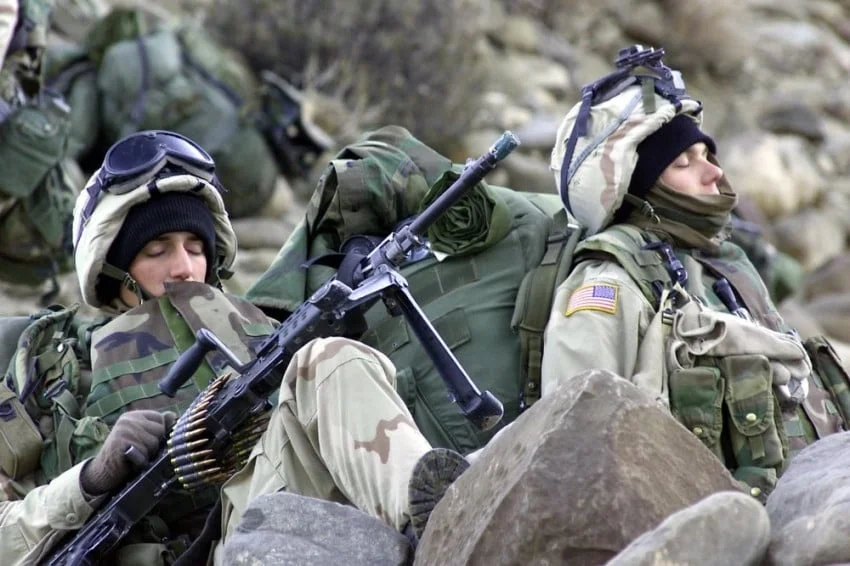
Launched during the early stages of the War in Afghanistan, Operation Anaconda aimed to destroy a significant concentration of al-Qaeda and Taliban fighters. However, the mission quickly exposed critical intelligence failures and the brutal realities of asymmetric warfare in treacherous terrain.
Background and Context:
In March 2002, coalition forces, primarily American and Afghan, targeted the Shah-i-Kot Valley in Afghanistan’s Paktia Province. Intelligence estimates suggested a relatively small force of a few hundred al-Qaeda and Taliban fighters were entrenched there, expected to retreat once confronted by overwhelming American firepower and coordinated ground forces. The objective was to eliminate these remnants, preventing them from regrouping and launching further attacks. The mission was designed as a hammer-and-anvil operation, with Afghan forces blocking escape routes while American forces conducted air assaults into the valley.
Chronology of Disaster:
The operation commenced on March 1, 2002. From the outset, the coalition encountered a far more formidable and prepared enemy than anticipated. Instead of a few hundred fighters, an estimated 1,000 al-Qaeda and Taliban combatants occupied heavily fortified bunkers, caves, and elevated firing positions overlooking the planned helicopter landing zones. These positions had been prepared over months, offering a significant tactical advantage.
As US Army helicopters, carrying infantry and special operations forces, began inserting troops into the valley, they were met with a torrent of machine-gun fire, mortars, and rocket-propelled grenades (RPGs). Several aircraft were severely damaged, forcing some to abort their landings or execute aggressive evasive maneuvers under heavy attack. The difficult high-altitude terrain and adverse weather conditions further complicated air operations.
One particularly intense engagement occurred on a ridge that became known as "Roberts Ridge." A US Navy SEAL team, inserted to establish an observation post, came under heavy fire, and one of their members, Petty Officer 1st Class Neil Roberts, fell from his helicopter. A desperate and prolonged battle ensued as coalition forces attempted to rescue Roberts and later recover his body, resulting in intense fighting and additional casualties, including seven US servicemen killed in action during the subsequent rescue attempts. The battle raged for over two weeks, characterized by fierce close-quarters combat, heavy artillery barrages, and extensive air support.
Supporting Data and Casualties:
Operation Anaconda involved approximately 2,000 coalition troops, including 1,200 US soldiers and 800 Afghan and other international forces. Coalition casualties totaled 8 US servicemen killed and over 80 wounded. Afghan forces also suffered casualties. Taliban and al-Qaeda casualties were estimated to be in the hundreds, though precise figures are difficult to ascertain.
Impact and Analysis:
Operation Anaconda starkly highlighted significant flaws in intelligence gathering and pre-mission planning. The severe underestimation of enemy strength, resolve, and preparedness underscored the challenges of intelligence in remote, hostile environments. It also demonstrated the resilience and adaptability of US forces under fire, but at a significant cost. The operation led to a re-evaluation of intelligence-sharing protocols and the importance of robust ground reconnaissance before committing air assault forces. While tactically successful in disrupting al-Qaeda and Taliban operations in the region, the high number of coalition casualties and the protracted nature of the fighting served as a harsh lesson in the complexities of counter-insurgency warfare.
3. The Bay of Pigs Invasion (1961): A Superpower’s Covert Blunder
The Bay of Pigs Invasion represents one of the most significant foreign policy humiliations for the United States, demonstrating the dangers of flawed intelligence, inadequate planning, and wavering political support in covert operations against a determined adversary.
Background and Context:
In the aftermath of Fidel Castro’s communist revolution in Cuba in 1959, the US government, under President Dwight D. Eisenhower, grew increasingly concerned about a Soviet-aligned state just 90 miles from its shores. The Central Intelligence Agency (CIA) initiated a covert plan to overthrow Castro’s regime, training and equipping a force of Cuban exiles, known as Brigade 2506. The plan assumed that the invasion would spark a popular uprising against Castro, which would be supported by limited US air cover. When John F. Kennedy assumed the presidency in 1961, he inherited the plan, albeit with significant reservations about its scale and potential for exposure.
Chronology of Disaster:
The invasion commenced on April 17, 1961, with approximately 1,400 Cuban exiles landing at Playa Girón (Bay of Pigs) on Cuba’s southern coast. Critical to the CIA’s plan was a series of preparatory air strikes against Cuban airfields. However, at the last minute, President Kennedy, fearing overt US involvement, significantly scaled back the promised air support, canceling crucial follow-up strikes.
This decision proved catastrophic. Castro’s small but effective air force, consisting of T-33 jets and B-26 bombers, was able to launch counter-attacks, sinking supply ships carrying vital ammunition and equipment for the invaders. This effectively cut off the exiles’ resupply and escape routes. Contrary to CIA predictions, there was no spontaneous popular uprising to support the invasion. Instead, Castro’s Revolutionary Armed Forces rapidly mobilized, with Castro himself personally overseeing the defense.
The Brigade 2506 found itself isolated, outnumbered, and outgunned. Trapped between the Cuban military and the swampy terrain, they quickly became surrounded. Within 72 hours, by April 19, 1961, the invasion had completely collapsed.
Supporting Data and Casualties:
Of the approximately 1,400 Cuban exiles in Brigade 2506, about 114 were killed in action, and nearly 1,200 were captured. These prisoners were later exchanged for $53 million worth of food and medicine. Cuban forces sustained approximately 2,200 casualties (killed and wounded).
Impact and Analysis:
The Bay of Pigs Invasion was a devastating foreign policy debacle for the United States. It severely damaged President Kennedy’s international credibility and strengthened Fidel Castro’s position, cementing his rule and pushing Cuba further into the Soviet Union’s orbit. The event contributed directly to increased Soviet military aid to Cuba, setting the stage for the Cuban Missile Crisis just over a year later. The mission exposed significant intelligence failures within the CIA, particularly the misjudgment of popular support for Castro and the effectiveness of his military. It also highlighted the inherent risks of covert operations without clear political backing and a robust contingency plan. The failure served as a powerful lesson in the limitations of clandestine warfare and the importance of rigorous assessment before committing to regime change operations.
4. Operation Eagle Claw (1980): A Special Forces Fiasco
Operation Eagle Claw was a highly ambitious and ultimately tragic attempt by the United States to rescue 52 American hostages held in Tehran, Iran. Its spectacular failure underscored the immense difficulties of complex special operations missions, particularly those involving multiple military branches and operating under extreme political pressure.
Background and Context:
On November 4, 1979, Iranian student militants stormed the US Embassy in Tehran, taking 52 American diplomats and citizens hostage. The crisis dragged on for months, creating immense political pressure on President Jimmy Carter’s administration. With diplomatic efforts failing, a daring military rescue mission was conceived. The plan involved a highly complex, multi-stage operation requiring close coordination between various branches of the US military, specifically the Army’s Delta Force and Rangers, and the Navy’s helicopter crews. The mission aimed to infiltrate Iran, secure the hostages, and extract them by air, all while minimizing casualties and avoiding direct military confrontation with Iranian forces.
Chronology of Disaster:
The mission was launched on April 24, 1980. Eight RH-53D Sea Stallion helicopters from the US Navy aircraft carrier USS Nimitz were to fly deep into Iran to a remote desert staging area called "Desert One." There, they would refuel from C-130 transport aircraft, pick up Delta Force operators, and then proceed to a second staging area closer to Tehran for the final assault.
From the outset, the mission encountered severe difficulties. En route to Desert One, two of the eight helicopters experienced critical mechanical failures in a dust storm (a "haboob"). One helicopter was forced to return to the Nimitz, and another was abandoned in the desert. This reduced the number of operational helicopters to six, the absolute minimum deemed necessary for the mission to proceed.
Upon arrival at Desert One, a third helicopter developed a hydraulic system failure, rendering it inoperable. With only five functioning helicopters, commanders on the ground and in Washington determined that the mission could not proceed safely or effectively, and President Carter reluctantly ordered its abortion.
During the chaotic withdrawal from Desert One, tragedy struck. One of the RH-53D helicopters, maneuvering to refuel, collided with a C-130 transport aircraft on the ground. The resulting fiery explosion killed eight US servicemen (five Air Force and three Marines) and injured several others. The remaining forces were forced to hastily evacuate, leaving behind critically damaged aircraft, classified documents, and the bodies of their fallen comrades.
Supporting Data and Casualties:
The mission resulted in the deaths of 8 US servicemen. Three RH-53D helicopters and one C-130 transport aircraft were destroyed or abandoned. No hostages were rescued.
Impact and Analysis:
Operation Eagle Claw was an unmitigated disaster that profoundly damaged US military prestige and exacerbated the Iran Hostage Crisis. The public display of abandoned equipment and the loss of life were a severe blow to American morale and contributed to President Carter’s electoral defeat later that year. The failure led to a comprehensive review of US special operations capabilities, revealing significant deficiencies in inter-service cooperation, joint planning, equipment standardization, and dedicated special operations command structures. In response, major reforms were implemented, including the establishment of the US Special Operations Command (USSOCOM) and the Joint Special Operations Command (JSOC), dedicated to overseeing and coordinating all special operations forces. The painful lessons of Eagle Claw ultimately led to the development of the highly integrated and effective special operations forces that the US commands today.
5. The Battle of Dien Bien Phu (1954): The Fall of French Indochina
The Battle of Dien Bien Phu represents a watershed moment in colonial history, where a major European power, France, suffered a decisive military defeat at the hands of an indigenous liberation movement, the Viet Minh, effectively ending French colonial rule in Indochina and setting the stage for the Vietnam War.
Background and Context:
By 1953, the First Indochina War between France and the Viet Minh (League for the Independence of Vietnam), led by Ho Chi Minh and General Vo Nguyen Giap, had been raging for nearly a decade. French forces, seeking to break the Viet Minh’s momentum and force them into a decisive conventional battle, established a heavily fortified airbase at Dien Bien Phu, a remote valley in northwestern Vietnam. The French believed the Viet Minh would be unable to transport heavy artillery through the dense jungle terrain surrounding the valley and that French air superiority would negate any ground threat. The strategy was to lure Giap’s forces into a conventional engagement where superior French firepower would decimate them.
Chronology of Disaster:
In November 1953, French paratroopers occupied Dien Bien Phu, establishing a series of strongpoints and an airstrip. However, the French severely underestimated the Viet Minh’s logistical capabilities and determination. General Giap orchestrated an astonishing feat of engineering and human effort, moving thousands of heavy artillery pieces, anti-aircraft guns, and supplies by bicycle and sheer manpower through seemingly impenetrable jungle and over mountainous terrain. These weapons were then dug into concealed, fortified positions overlooking the French base.
On March 13, 1954, the Viet Minh launched a massive artillery barrage, signaling the start of the battle. The French airstrip was quickly rendered unusable, cutting off the garrison’s primary means of resupply and evacuation. French artillery, despite initial confidence, proved largely ineffective against the well-camouflaged Viet Minh positions. The battle evolved into a brutal siege, with the Viet Minh employing trench warfare tactics, slowly encircling and strangling the French strongpoints.
Despite heroic resistance and several waves of paratrooper reinforcements dropped into the besieged base, the French position steadily deteriorated. Monsoon rains turned the valley into a quagmire, further hampering French movements and supply efforts. On May 7, 1954, after 57 days of relentless fighting, the last remaining French strongpoints were overrun, and the garrison surrendered.
Supporting Data and Casualties:
Approximately 11,000 French and colonial soldiers were killed, wounded, or captured at Dien Bien Phu. Over 3,000 were killed during the battle, and nearly 8,000 were taken prisoner, many of whom perished during forced marches or in Viet Minh prison camps. Viet Minh casualties were estimated to be around 8,000 killed and 15,000 wounded.
Impact and Analysis:
The Battle of Dien Bien Phu was a catastrophic defeat for France, marking the end of its colonial empire in Indochina. It directly led to the 1954 Geneva Accords, which formally divided Vietnam and paved the way for American involvement in what would become the Vietnam War. The battle became a powerful symbol of anti-colonial resistance and demonstrated that a determined, well-led, and adaptable indigenous force could overcome a technologically superior Western army. It forced military strategists worldwide to reconsider conventional warfare doctrines, the importance of logistics in challenging environments, and the critical error of underestimating an adversary’s will and ingenuity. For France, it was a profound national humiliation that reshaped its foreign policy and military outlook for decades.
6. The Battle of Mogadishu (1993): The "Mogadishu Line"
The Battle of Mogadishu, infamously known as "Black Hawk Down," stands as a grim testament to the complexities of urban warfare and the unforeseen consequences of humanitarian interventions, significantly shaping US foreign policy for years to come.
Background and Context:
In 1993, the United States, as part of a UN-mandated humanitarian mission, intervened in Somalia to stabilize the country, provide aid, and counter powerful warlords. One of the primary targets was Mohamed Farrah Aidid, whose militia was actively undermining relief efforts and engaging in violent clashes. Task Force Ranger, an elite US military unit comprising Army Delta Force operators, Army Rangers, and 160th Special Operations Aviation Regiment (SOAR) aviators, was deployed to capture Aidid and his top lieutenants. The mission aimed to be a swift, surgical strike, leveraging the superior training and technology of US special forces.
Chronology of Disaster:
On October 3, 1993, Task Force Ranger launched "Operation Gothic Serpent" to capture two of Aidid’s key lieutenants during a meeting in central Mogadishu. The mission initially proceeded as planned, with ground forces being fast-roped