JAKARTA – Deputy Minister of Hajj and Umrah (Wamenhaj) Dahnil Anzar Simanjuntak has issued a directive calling on all civil servants (ASN) within the Ministry of Hajj and Umrah (Kemenhaj) to cultivate robust engagement and intensive communication with prospective Hajj pilgrims from the earliest stages of their journey. The mandate comes as Kemenhaj recently unveiled the comprehensive waiting list for prospective pilgrims slated to depart for the Hajj season of 1448 Hijri, corresponding to 2027 M. This proactive approach underscores a fundamental shift in the ministry’s philosophy, moving beyond mere logistical facilitation to foster a profound spiritual and emotional connection with the nation’s pilgrims.
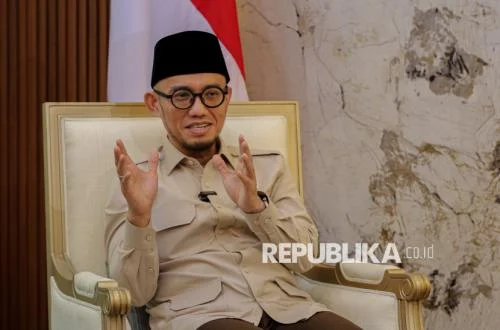
Simanjuntak articulated this vision during a statement released in Jakarta on Monday, July 20, 2026, following an interview with Republika at the Ministry of Hajj and Umrah office on July 8, 2026. "The first thing that must be prepared is for all of you, Bapak and Ibu, to have strong engagement with the pilgrims. That is what we want to build. Starting from the ASN, the Regional Office Heads (Kakanwil), later the Hajj officers, everyone involved in managing Hajj must have strong engagement with the pilgrims," he emphasized. This focus on engagement is deemed critical, particularly given the extensive waiting periods many Indonesian pilgrims endure, often spanning decades.
The Philosophy of ‘Ta’limul Qulub’: A Deepened Connection
The Deputy Minister further elaborated on this concept, referencing a profound religious principle: ta’limul qulub, which translates to "the bonding of hearts" or "the teaching of hearts." In simpler terms, he described it as a deep silaturahim (bond of kinship and friendship) that gives rise to a profound heart-to-heart connection between officers and Hajj pilgrims. This spiritual dimension is central to the ministry’s reformed approach, aiming to transform the administrative process into a journey of shared spiritual preparation and understanding.
This emphasis on ta’limul qulub signals a departure from a purely transactional relationship, positioning Hajj officers not merely as administrators but as spiritual companions and guides. The intention is to imbue every interaction with empathy, understanding, and a shared sense of purpose, recognizing the immense spiritual significance of the Hajj pilgrimage for each individual. For many Indonesian Muslims, Hajj represents a once-in-a-lifetime spiritual aspiration, often realized after years of saving and waiting. The emotional and psychological support provided by deeply engaged officers can significantly enhance the pilgrim’s preparedness and overall experience.
Beyond Logistics: Kemenhaj’s Elevated Mandate
Simanjuntak firmly asserted that Kemenhaj is not merely a travel agency or a Special Hajj Organiser (PIHK) that simply gathers individuals and dispatches them for pilgrimage. Instead, he highlighted its elevated status as a state institution, established under the administration of President Prabowo Subianto, entrusted with a monumental mandate. This mandate extends beyond mere operational execution to encompass the fostering, safeguarding, and ensuring the transformation of noble values throughout the entire Hajj process.
The distinction is crucial. A travel agency’s primary function is to facilitate travel logistics. Kemenhaj, by contrast, is tasked with upholding national interests, ensuring the spiritual integrity of the pilgrimage, and fostering positive societal values. This broader scope necessitates a holistic approach that integrates administrative efficiency with spiritual guidance and moral development. The ministry’s role, therefore, becomes one of a comprehensive custodian of the Hajj experience, from the initial registration to the pilgrim’s return home.
The ‘Tri Sukses’ Program: A Holistic Vision for Hajj
Central to this transformative vision is the "Tri Sukses" (Three Successes) program, an overarching framework designed to guide the entire Hajj management process. This program, as outlined by Dahnil Anzar Simanjuntak, aims for success in three critical dimensions: Sukses Ritual (Ritual Success), Sukses Ekonomi (Economic Success), and Sukses Peradaban dan Keadaban (Civilizational and Ethical Success). This multi-faceted approach reflects a comprehensive understanding of the Hajj’s profound impact on individuals and society.
-
Sukses Ritual (Ritual Success): This dimension focuses on ensuring that every pilgrim can perform the Hajj rituals correctly, completely, and with full understanding of their spiritual significance. It encompasses providing adequate religious guidance, educational materials, and support systems to help pilgrims navigate the complex rites of Hajj. This includes pre-departure training, on-site guidance from religious scholars, and access to resources that clarify Islamic jurisprudence related to the pilgrimage. The goal is not just mechanical completion of rituals but a deep, meaningful spiritual experience that adheres to Islamic tenets.
-
Sukses Ekonomi (Economic Success): This aspect aims to leverage the vast Hajj ecosystem for national economic benefit, particularly for the pilgrims themselves and the broader community. This could involve promoting halal tourism, supporting local industries that provide Hajj-related products and services, and empowering small and medium-sized enterprises (SMEs) within the Hajj supply chain. Furthermore, it seeks to ensure transparency and efficiency in the financial management of Hajj funds, ensuring that pilgrims’ contributions are managed prudently and invested ethically to provide the best possible services. This also extends to empowering pilgrims to become economic agents upon their return, sharing knowledge and resources gained during their journey.
-
Sukses Peradaban dan Keadaban (Civilizational and Ethical Success): This is perhaps the most ambitious dimension, focusing on the transformative power of Hajj to cultivate noble values, build character, and contribute to a more civilized and ethical society. The pilgrimage, by bringing together millions from diverse backgrounds, inherently fosters unity, patience, humility, and solidarity. Kemenhaj aims to consciously nurture these values, promoting a sense of national identity, moral rectitude, and global citizenship among pilgrims. Upon their return, these pilgrims are expected to embody these values, becoming agents of positive change, contributing to community development, interfaith harmony, and national cohesion. This dimension also emphasizes the importance of respecting diverse cultures and promoting peaceful coexistence, aligning with Indonesia’s pluralistic identity.
The Indonesian Hajj Phenomenon: A Context of Scale and Aspiration
Indonesia, with the world’s largest Muslim population, consistently sends the largest contingent of pilgrims to Hajj annually. In recent years, Indonesia’s Hajj quota has typically ranged between 221,000 and 241,000 pilgrims. However, the number of registered prospective pilgrims far exceeds this quota, leading to notoriously long waiting lists. As of 2026, the average waiting time for an Indonesian pilgrim can range from 20 to over 47 years, depending on the province of registration. This extraordinary duration underscores the immense spiritual aspiration of Indonesian Muslims and simultaneously highlights the logistical and administrative challenges faced by Kemenhaj.
The announcement of the 1448 H/2027 M waiting list marks another milestone in this ongoing process. Pilgrims who registered decades ago are now seeing their turn approach, necessitating intensified preparation and communication from Kemenhaj. This long waiting period makes the "heart-to-heart connection" even more vital. Pilgrims often register in their youth, or even have their children registered, dreaming of this sacred journey for their entire lives. The ministry’s engagement, therefore, needs to span across generations, providing consistent support and information.
Chronology and Preparations for 2027
The directive from Deputy Minister Simanjuntak comes at a critical juncture in the planning cycle for the 2027 Hajj season. While the Hajj journey itself occurs in mid-2027, the preparatory phases begin years in advance.
- Mid-2026: Kemenhaj finalizes and announces the waiting list for the 1448 H/2027 M season. This is a crucial step, allowing prospective pilgrims and their families to begin definitive preparations.
- July 8, 2026: Deputy Minister Dahnil Anzar Simanjuntak conducts an interview with Republika, laying the groundwork for the forthcoming policy announcement.
- July 20, 2026: Simanjuntak issues the formal statement to Kemenhaj staff, emphasizing the importance of strong engagement and ta’limul qulub.
- Late 2026 – Early 2027: Intensive training programs for Hajj officers (petugas haji) and regional office staff (Kakanwil) are expected to commence, focusing not only on logistical competencies but also on interpersonal skills, cultural sensitivity, and the principles of ta’limul qulub.
- Early 2027: Pilgrims on the 2027 list will begin receiving detailed information regarding payments, health checks, visa processing, and mandatory pre-departure orientation programs. These programs are vital for educating pilgrims on rituals, health precautions, and the logistical aspects of their journey.
- Mid-2027: The actual departure of pilgrims for the 1448 H/2027 M Hajj season.
This extensive timeline underscores the need for continuous, empathetic engagement throughout the entire process, not just in the immediate lead-up to departure.
Statements and Inferred Reactions from Related Parties
The directive from Deputy Minister Simanjuntak is expected to resonate across various levels of Kemenhaj and related stakeholders:
- Regional Office Heads (Kakanwil): The Kakanwil, responsible for Hajj affairs in their respective provinces, will be tasked with implementing this directive at the grassroots level. This implies a need for enhanced training for their staff, a review of existing communication protocols with pilgrims, and potentially the development of new programs to foster deeper engagement. They will likely focus on community outreach, regular informational sessions, and personalized support for pilgrims.
- Hajj Officers (Petugas Haji): These frontline officers, who accompany pilgrims to Saudi Arabia, are crucial to the success of ta’limul qulub. Their role will evolve from purely administrative and logistical support to include significant pastoral and emotional care. This will require not only linguistic and cultural competence but also strong interpersonal skills, empathy, and a deep understanding of the spiritual journey. Training modules for these officers will likely be revised to include components on psychological support, conflict resolution, and fostering spiritual well-being.
- Pilgrim Associations and Religious Councils: Organizations such as the Indonesian Ulema Council (MUI) and various Hajj and Umrah associations are likely to welcome this human-centric approach. They have long advocated for holistic pilgrim welfare that extends beyond mere physical arrangements. Their input could be sought in developing training materials and ensuring the spiritual guidance provided is aligned with mainstream Islamic teachings and Indonesian cultural contexts.
- Pilgrims Themselves: The ultimate beneficiaries, pilgrims, are expected to experience a more supportive and reassuring journey. Knowing that the government’s institutions are deeply invested in their spiritual and emotional well-being can alleviate anxieties and enhance their focus on the sanctity of the pilgrimage. This proactive engagement can also build greater trust and confidence in Kemenhaj’s services.
Broader Impact and Implications
The Deputy Minister’s emphasis on ta’limul qulub and the "Tri Sukses" program carries several significant implications for the future of Hajj management in Indonesia:
- Enhanced Pilgrim Satisfaction and Welfare: A human-centric approach is likely to significantly improve the overall experience for pilgrims, leading to higher satisfaction levels and a greater sense of fulfillment from their spiritual journey. This extends beyond the physical comforts to their emotional and spiritual well-being.
- Cultural Shift in Bureaucracy: Implementing ta’limul qulub across a vast bureaucracy like Kemenhaj requires a substantial cultural shift. It challenges civil servants to move beyond routine administrative tasks and embrace a more empathetic, service-oriented mindset. This could serve as a model for other public service sectors.
- Strengthening National Values: By integrating "Nilai Kebangsaan, nilai moral, nilai peradaban, nilai keadaban" (national values, moral values, civilizational values, ethical values) into the Hajj process, Kemenhaj aims to leverage the pilgrimage as a vehicle for national character building. Pilgrims returning with enhanced moral and ethical compasses can contribute positively to Indonesian society.
- Economic Empowerment: The "Sukses Ekonomi" component could stimulate growth in the domestic halal industry, create jobs, and foster entrepreneurship among communities linked to the Hajj ecosystem. This aligns with broader government initiatives to diversify the economy and empower local businesses.
- International Recognition: Indonesia’s innovative approach to Hajj management, particularly its focus on holistic pilgrim welfare and value transformation, could set a new benchmark globally. This could enhance Indonesia’s standing as a leader in Islamic affairs and effective governance of religious pilgrimages.
- Challenges of Implementation: The success of this vision will depend heavily on effective training, sufficient resources, and consistent leadership. Ensuring that all ASN and Hajj officers genuinely internalize and apply the principles of ta’limul qulub across diverse regions and operational complexities will be a significant undertaking. Sustained monitoring and evaluation will be crucial to measure the impact and make necessary adjustments.
In conclusion, Deputy Minister Dahnil Anzar Simanjuntak’s directive marks a pivotal moment in Indonesia’s approach to Hajj management. By championing a profound "heart-to-heart connection" and embedding the comprehensive "Tri Sukses" program, Kemenhaj is not merely organizing a logistical feat but endeavoring to transform the Hajj into a deeply personal, spiritually enriching, and nationally empowering journey for every Indonesian pilgrim. This ambitious vision, backed by the President Prabowo Subianto administration, seeks to redefine the role of a state institution in safeguarding not just the mechanics but also the soul of one of the world’s most significant religious pilgrimages.