The legal landscape surrounding the rights and status of Lesbian, Gay, Bisexual, and Transgender (LGBT) individuals in Indonesia has long been a subject of intense national and international debate. As the world’s third-largest democracy and the nation with the largest Muslim population, Indonesia navigates a complex intersection of constitutional rights, religious values, and evolving legal frameworks. Under the current and forthcoming legal statutes, the fundamental principle remains that an individual’s sexual orientation or gender identity is not, in itself, a criminal offense. However, the application of specific laws regarding conduct, privacy, and regional autonomy creates a multifaceted environment for the LGBT community.
The Foundation of the New Penal Code (Law No. 1 of 2023)
The primary reference for criminal law in Indonesia is undergoing a historic transition. On January 2, 2023, the government enacted Law Number 1 of 2023 concerning the Criminal Code (KUHP), which is set to become fully effective on January 2, 2026. This new code replaces the colonial-era Wetboek van Strafrecht, which had been in place since the Dutch era. A critical takeaway from this new legislation is that it does not contain any articles that explicitly criminalize an individual based solely on their status as an LGBT person.
According to the principle of legality enshrined in Article 1, Paragraph (1) of Law No. 1 of 2023, no act can be punished unless it is governed by existing legislation prior to the act being committed. Because the new KUHP does not categorize non-heteronormative sexual orientation as a crime, the state maintains a distinction between personal identity and criminal behavior. The law focuses on specific "acts" (perbuatan) rather than "status" or "identity."
Distinguishing Identity from Conduct: Articles 411 and 412
While orientation is not criminalized, the new KUHP introduces and refines articles related to "crimes against decency" or morality, which apply to all citizens regardless of their sexual orientation. Two of the most discussed provisions are Article 411 and Article 412.
Article 411 addresses the issue of adultery (perzinaan). It stipulates that any person who engages in sexual intercourse with someone who is not their spouse can face a maximum prison sentence of one year or a Category II fine. However, this is categorized as an "absolute complaint offense" (delik aduan absolut). This means the police cannot initiate an investigation or prosecution unless a formal complaint is filed by a highly specific group of people: the legal spouse of the accused, or, if the person is unmarried, their parents or children.
Similarly, Article 412 governs "cohabitation" (kohabitasi) or living together as husband and wife outside of marriage. The penalty for this offense is a maximum of six months in prison or a Category II fine. Like the adultery clause, this is also an absolute complaint offense. Legal experts note that these articles are designed to protect the sanctity of marriage and the rights of the family unit while preventing "vigilante justice" by the general public or morality groups. Because same-sex marriage is not recognized in Indonesia, any sexual activity or cohabitation between same-sex partners could theoretically fall under these articles if a parent or child chooses to file a legal complaint.
The Historical Evolution of the Law and the 2017 Constitutional Court Ruling
The journey toward the new KUHP was marked by decades of legislative drafting and public protests. A pivotal moment in the chronology of LGBT legal status occurred in 2017. A conservative group known as the Family Love Alliance (AILA) petitioned the Constitutional Court (Mahkamah Konstitusi) to judicialize and criminalize private, consensual same-sex relations and extramarital sex by amending the old Penal Code.
In a landmark 5-4 ruling, the Constitutional Court rejected the petition. The majority of the justices argued that the court did not have the authority to create new crimes, as that responsibility lies solely with the People’s Representative Council (DPR) and the government. The court emphasized that expanding the definition of crimes against decency to include private consensual acts would be an overreach of judicial power. This ruling effectively preserved the legal status quo, confirming that consensual same-sex conduct between adults in private is not a criminal act under national law.
The Exception of Aceh: Regional Autonomy and Sharia Law
While national law does not criminalize LGBT status, the province of Aceh presents a unique legal exception due to its special autonomy status. Under the 2005 Helsinki Peace Agreement and the Law on the Governing of Aceh (Law No. 11 of 2006), Aceh is permitted to implement Sharia-based ordinances, known as Qanun.
Qanun Aceh Number 6 of 2014 concerning Jinayat (Islamic Criminal Law) explicitly prohibits same-sex relations. Article 63 (liwath/male homosexuality) and Article 64 (musahaqah/female homosexuality) classify these acts as "jarimah" (crimes). Those found guilty in Aceh can face "uqubat" (punishment) in the form of public caning, fines, or imprisonment. It is important to note that these regulations apply only within the geographical jurisdiction of Aceh and do not reflect the national legal framework of the Republic of Indonesia.
Law No. 12 of 2022: Protection Against Sexual Violence
A significant advancement in the Indonesian legal system that impacts all citizens is Law Number 12 of 2022 concerning Sexual Violence Crimes (TPKS). This law was designed to provide a comprehensive legal framework for the prevention, prosecution, and recovery of victims of sexual violence.
Crucially, the TPKS Law provides protection to all individuals regardless of their gender or sexual orientation. It addresses various forms of violence, including physical sexual harassment, non-physical harassment, and forced contraception. By focusing on the lack of consent and the harm caused to victims, the TPKS Law ensures that members of the LGBT community who are victims of violence have the same legal standing to seek justice as any other citizen. This law represents a shift toward a more victim-centric and rights-based approach in the Indonesian judiciary.
Social and Political Reactions: From Education to Administrative Sanctions
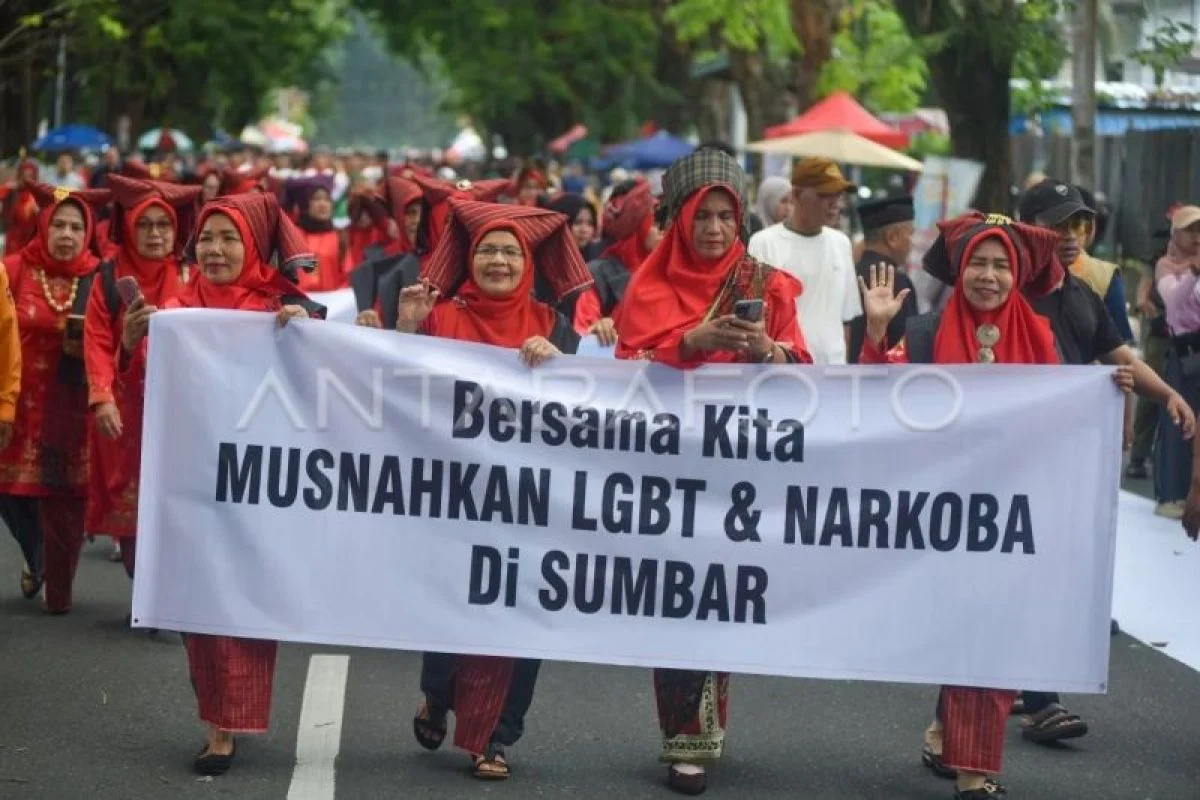
The legal neutrality toward LGBT identity in the KUHP has not silenced the broader sociopolitical debate. Various state institutions and local governments have taken stances that reflect the prevailing traditional and religious values of the country.
The Ministry of Religious Affairs (Kemenag) has actively worked on educational materials aimed at "preventing the spread of LGBTQ behavior." These initiatives often frame the issue as a matter of religious guidance and the preservation of national character. In 2023, Kemenag officials emphasized that while the law may not criminalize the status, the state has a duty to provide moral and religious education based on the principles of "Pancasila" (the state philosophy).
Furthermore, some local government leaders have taken administrative measures. For example, the former Vice Governor of West Java once issued a stern warning that Civil Servants (ASN) found to be involved in "LGBT networks" could face dismissal. Such administrative threats highlight the gap between criminal law (which does not punish orientation) and administrative or social regulations that may impose sanctions based on "breach of conduct" or "public ethics" codes for government employees.
International Implications and the "Middle Way" Analysis
Indonesia’s legal approach to LGBT issues is often described by analysts as a "Middle Way." On one hand, the government resists international pressure to fully legalize same-sex marriage or provide specific anti-discrimination protections based on sexual orientation. On the other hand, it has resisted domestic pressure from hardline groups to implement a national ban on LGBT identity.
This balance is critical for Indonesia’s international relations and its economy, particularly the tourism sector. When the new KUHP was first passed, international headlines suggested that "sex outside of marriage" would lead to the arrest of tourists in places like Bali. The government was quick to clarify that because the law requires a complaint from a direct family member (spouse, parent, or child), the privacy of tourists and citizens remains largely protected from state intervention.
From a human rights perspective, organizations like Amnesty International and Human Rights Watch continue to express concern over the "morality clauses" in the new KUHP. They argue that while the law requires a complaint, it still provides a legal tool that could be used to harass marginalized groups or invade the privacy of individuals. Conversely, proponents of the law argue that it successfully decolonizes Indonesian law by incorporating local values while maintaining the "absolute complaint" safeguard to prevent abuse of power.
Conclusion: The Future of the Legal Landscape
As Indonesia moves toward the full implementation of the new Penal Code in 2026, the legal status of LGBT individuals remains defined by a strict adherence to the principle of legality. The law remains clear: being LGBT is not a crime. Criminality is strictly tied to specific actions that violate the rights of others or the legally defined sanctity of the family unit, as initiated by family members themselves.
However, the legal reality for the LGBT community in Indonesia is not solely defined by the Penal Code. It is a mosaic of national laws, regional autonomy in Aceh, administrative regulations for civil servants, and the protective umbrella of the TPKS Law. While the state maintains its "Middle Way" stance—balancing religious-cultural norms with modern legal principles—the ongoing dialogue between the judiciary, the legislature, and civil society will continue to shape how these laws are interpreted and enforced in the years to come. For now, the focus of the Indonesian justice system remains on the "perbuatan" (act) rather than the "identitas" (identity), ensuring that the criminal law is not used as a tool for status-based prosecution.