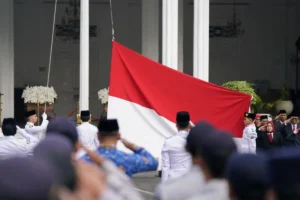
The National Awakening Party (Partai Kebangkitan Bangsa, or PKB) has officially announced its intention to hold a high-level meeting with former Jakarta Governor and 2024 presidential candidate Anies Baswedan next week to discuss the upcoming 2024 Jakarta Gubernatorial Election (Pilkada). This strategic move, confirmed by party officials on Wednesday, signals a potential continuation of the political partnership established during the recent presidential cycle, where Anies Baswedan ran alongside PKB Chairman Muhaimin Iskandar. The decision to approach Anies is driven primarily by his sustained popularity and dominant position in various electability surveys, suggesting that the former governor remains the most formidable contender for the leadership of Indonesia’s economic and political epicenter.
Ahmad Iman Sukri, the Treasurer of PKB’s Pilkada Desk, revealed during a press conference at the PKB Central Executive Board (DPP) office in Central Jakarta that the party’s leadership has issued a specific mandate to engage Anies. According to Sukri, the Chairman of the Pilkada Desk, Abdul Halim Iskandar—who also serves as the Minister of Villages, Development of Disadvantaged Regions, and Transmigration—is scheduled to lead the delegation. The meeting is expected to serve as a formal platform to gauge Anies’s readiness to return to the Jakarta executive seat and to align the party’s regional objectives with his political vision.
The Strategic Rationale Behind the PKB-Anies Dialogue
The decision by PKB to prioritize Anies Baswedan is rooted in a pragmatic assessment of the current political landscape in Jakarta. Despite his defeat in the February 2024 Presidential Election, Anies’s performance in the capital city remained robust. Data from the General Elections Commission (KPU) indicated that the Anies-Muhaimin (AMIN) pair secured a significant portion of the vote in Jakarta, reflecting a loyal base that transcends national-level dynamics. PKB leadership views this existing support as a vital foundation for the November 2024 regional elections.
Furthermore, PKB’s internal data and various independent polling agencies, such as Indikator Politik Indonesia and Lembaga Survei Indonesia (LSI), consistently place Anies at the top of potential gubernatorial candidates. In a city where incumbency and public recognition are paramount, Anies’s five-year track record (2017–2022) provides a tangible portfolio that PKB believes can be effectively marketed to the electorate once again. The party’s interest is also bolstered by its own rising influence in the Jakarta Regional House of Representatives (DPRD DKI), where PKB saw an increase in seats during the 2024 legislative elections, jumping from 5 seats to 10 seats. This growth gives the party more leverage in coalition-building and candidate nomination.
Chronology of the 2024 Jakarta Political Shift
The road to the 2024 Jakarta Gubernatorial Election has been marked by significant shifts following the conclusion of the presidential race. After the Constitutional Court (MK) upheld the presidential election results in late April 2024, political parties immediately pivoted their focus to the regional level.
- February 14, 2024: The Presidential Election takes place. Anies Baswedan and Muhaimin Iskandar finish second nationally but maintain high visibility in Jakarta.
- April 2024: Following the resolution of election disputes at the Constitutional Court, the "Coalition for Change" (NasDem, PKB, and PKS) begins internal discussions regarding the future of their alliance at the regional level.
- Early May 2024: PKB opens registration for the Pilkada across Indonesia. Several figures express interest in the Jakarta seat, but internal party sentiment leans toward a high-profile candidate.
- May 22-25, 2024: Reports emerge of informal communications between Anies Baswedan and various party leaders, including figures from the Prosperous Justice Party (PKS) and the National Democrat Party (NasDem).
- May 29, 2024: PKB officially announces the upcoming meeting between Abdul Halim Iskandar and Anies Baswedan, formalizing their intent to explore a candidacy.
This timeline illustrates a rapid transition from national competition to regional consolidation. For Anies, the Jakarta governorship represents a path to political "re-entry," allowing him to maintain a public platform and executive authority through 2029.
Evaluating Potential Partnerships: The Role of Ida Fauziyah
A critical component of the upcoming discussions will be the selection of a vice-gubernatorial candidate. PKB has already floated the name of Ida Fauziyah, the current Minister of Manpower and a senior PKB cadre, as a potential running mate for Anies. Ahmad Iman Sukri noted that while the primary focus is on securing Anies’s commitment, the configuration of the ticket remains open for negotiation.
"Regarding the deputy and other matters, it will all be communicated," Sukri stated, emphasizing the party’s flexibility. The inclusion of Ida Fauziyah would offer several strategic advantages. As a female leader with ministerial experience and a strong background in labor and social issues, she could broaden the ticket’s appeal among women and the working-class demographic in Jakarta. Additionally, her presence would ensure that PKB’s institutional interests are directly represented within the provincial government.
However, the vice-gubernatorial slot is likely to be a point of contention among potential coalition partners. Other parties, such as PKS—which holds the most seats in the Jakarta DPRD—will almost certainly demand a say in the ticket’s composition. The upcoming meeting between PKB and Anies is expected to touch upon these delicate power-sharing arrangements.
Comparative Data and the Competitive Landscape
The 2024 Jakarta race is expected to be one of the most contested in Indonesia’s history, partly due to Jakarta’s evolving status. With the national capital moving to Nusantara (IKN) in East Kalimantan, Jakarta is transitioning into a "Global City" and a Special Autonomous Region focused on trade and finance. The governor who oversees this transition will hold immense influence.
Current polling suggests that if the election were held today, Anies Baswedan would face competition from several high-profile figures:
- Ridwan Kamil: The former Governor of West Java and a Golkar Party politician has been frequently mentioned as a top contender, though he has yet to declare his intention for Jakarta versus a second term in West Java.
- Basuki Tjahaja Purnama (Ahok): Despite his previous loss to Anies in 2017, the former governor remains popular among a specific segment of the Jakarta electorate, though legal and political hurdles remain.
- Sudirman Said: A close ally of Anies who has also been linked to the race, potentially creating a complicated dynamic within the "Change" camp.
According to a May 2024 survey by a leading research institute, Anies Baswedan holds an electability rating of approximately 35-40% in a multi-candidate field, significantly ahead of other names. His approval rating regarding his previous handling of Jakarta’s infrastructure and social programs remains a key driver of these numbers.
Official Responses and Coalition Dynamics
The reaction to PKB’s move has been one of cautious observation from other political blocs. The "Kuala Koalisi Indonesia Maju" (KIM), which supported the Prabowo-Gibran ticket, is reportedly still finalizing its strategy for Jakarta. Figures within Gerindra and Golkar have suggested that they prefer a "unity" candidate who can bridge the gap between national and regional priorities.
Muhaimin Iskandar’s directive to his party’s Pilkada Desk underscores a desire for PKB to be a "kingmaker" in the Jakarta race. By being the first to formally approach Anies, PKB is positioning itself as the anchor of a potential coalition, forcing other parties like PKS and NasDem to respond to their initiative.
Political analysts suggest that PKB’s move is also a defensive strategy to ensure they are not marginalized in the formation of the Jakarta ticket. By pairing Anies with a PKB cadre like Ida Fauziyah, the party aims to secure a more prominent role than it had in previous Jakarta cycles.
Implications for the Future of Jakarta and National Politics
The outcome of the PKB-Anies dialogue will have far-reaching implications. For Jakarta, an Anies return could mean a continuation of his "collaborative city" policies, focusing on urban renewal, public transportation integration, and social welfare programs. However, it would also likely reignite the political polarization that characterized the 2017 election, as opposition parties seek to challenge his narrative.
On a national level, the 2024 Jakarta Pilkada is widely seen as a precursor to the 2029 Presidential Election. If Anies wins and serves a successful second term as Governor of Jakarta, he will undoubtedly remain the primary challenger to the incumbent administration’s successor. For PKB, a successful partnership with Anies in Jakarta would solidify its status as a major political force capable of winning in urban, cosmopolitan environments, moving beyond its traditional base in East and Central Java.
As the meeting scheduled for next week approaches, all eyes are on Anies Baswedan. His decision to accept PKB’s overtures or seek a different path will determine the trajectory of the race. For now, PKB is moving full steam ahead, confident that the man who once led Jakarta can do so again, this time with a stronger legislative mandate and a refined political alliance. The "fix" for Jakarta, as Sukri described it, depends on whether the interests of the party and the former governor can once again find common ground in the pursuit of regional power.