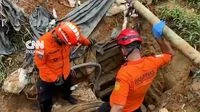
The search and rescue (SAR) operation to locate and extract 14 miners trapped inside an illegal gold mining shaft in Pongkor, Bogor Regency, West Java, was officially terminated on Friday, November 27. The definitive decision to halt all rescue efforts was reached after a comprehensive technical assessment and evaluation conducted by a panel of engineering, geological, and disaster-response experts. The conclusive findings strongly advised against the continuation of the search due to an unacceptably high risk to the safety of the SAR personnel, volunteers, and supporting units operating at the hazardous site.
The closure marks a tragic conclusion to a disaster that highlights the persistent dangers of unregulated mineral extraction in Indonesia. With the formal suspension of operations, authorities confirmed that a total of 13 victims had previously been recovered deceased and subsequently identified by the Disaster Victim Identification (DVI) unit. Meanwhile, the remaining 14 miners believed to be trapped inside the subterranean network are officially declared missing and presumed dead, given the catastrophic geological conditions inside the tunnels.
Technical Hazards and Expert Recommendations
The decision to shutter the rescue mission was not made lightly, but it was necessitated by compounding environmental hazards observed deep within the shafts. Desiana Kartika Bahari, Head of the Jakarta SAR Office, detailed the gravity of the situation during a formal debriefing session held with the joint SAR task force.
"At 20.00 Western Indonesia Time, Basarnas [National Search and Rescue Agency] conducted a debriefing and evaluation of the SAR operation alongside joint SAR elements, and it was decided—based on official recommendations from the experts—that the SAR operation is officially closed," Desiana stated in an official release.
According to the specialized geological observations presented during the evaluation, several critical factors rendered the subterranean environment lethally unstable. The surrounding soil and rock formations were found to be critically weakened, highly susceptible to sudden collapses induced by ongoing water seepage, and suffering from rapidly deteriorating material strength.
Furthermore, engineers warned that active intervention could exacerbate the instability of the mine. Operations such as active water pumping risked drastically altering internal hydrostatic pressure within the soil layers. Simultaneously, attempts at vertical victim extraction threatened to erode the surrounding earthen material, potentially triggering massive secondary cave-ins that could trap or crush rescue workers.
Compounding these structural perils were severe environmental and logistical obstacles. Thick, shifting mud severely narrowed the underground corridors, while breathable oxygen levels plummeted to dangerous lows, particularly deeper within the labyrinthine shafts. Operating in such confined, oxygen-depleted spaces without structural shoring presented an insurmountable hazard to the rescue teams.
Despite the formal closure of active field operations, Desiana noted that the Jakarta SAR Office would maintain situational awareness. Authorities will continue monitoring the area for any structural shifts or new developments reported by local communities and field intelligence.
Chronology of the Disaster: Nature’s Fury Meets Illicit Mining
The catastrophic incident traces back to a severe weather event that struck the mountainous terrain of West Java earlier in the week. The disaster began unfolding on Monday, November 23, at approximately 18.00 local time, when torrential rains battered the region surrounding Mount Butak, located in Bantar Karet Village, Nanggung Subdistrict, Bogor Regency.
The area is notorious for illegal small-scale gold mining operations, locally known as pertambangan emas tanpa izin (PETI) or operated by independent wildcat miners locally referred to as gurandil.
According to Bogor Police Chief AKBP Arfan Zulkan Sipayung, the disaster was triggered by extreme precipitation concentrated around the Ciseureuh River basin. The relentless downpour caused the river to swell rapidly, overflowing its banks and surging directly toward the vulnerable valley floors where unauthorized mining portals were established.
"At approximately 23.00 WIB, the overflowing water of the Ciseureuh River, heavily mixed with thick mud and debris, began to seep and pour massively into two active illegal mining shafts," AKBP Arfan explained.
The sudden influx of mud and water caught the underground workers completely off guard. Due to the clandestine nature of the operations, the shafts lacked basic industrial safety infrastructure, early-warning systems, or regulated ventilation and drainage networks, leaving the miners with virtually no means of escape as the tunnels rapidly flooded and sealed shut.
Legal Enforcement and Criminal Investigation
In the wake of the disaster, Indonesian law enforcement agencies have intensified their crackdown on the financiers and organizers behind the illicit extraction network. Local authorities have formally named two individuals, identified by the initials DE and UL, as primary suspects in connection with the illegal mining operations at the disaster site.
The suspects face severe legal consequences under Indonesian jurisprudence. Investigators have charged DE and UL under Law Number 3 of 2020 concerning Amendments to Law Number 4 of 2009 on Mineral and Coal Mining, alongside Article 474 paragraphs 2 and/or 3 of the Criminal Code (KUHP) in conjunction with Article 20 of the KUHP, and/or Article 21 of Law Number 1 of 2023. If convicted, the suspects face lengthy prison sentences and substantial financial penalties for their roles in organizing and profiting from the unauthorized extraction activities that led to the mass casualty event.
Broader Socio-Economic and Environmental Implications
The tragedy in Pongkor is far from an isolated occurrence; rather, it reflects a systemic crisis deeply rooted in Indonesia’s mining sector. Across resource-rich regions of Java, Sumatra, Kalimantan, and Sulawesi, thousands of impoverished rural residents turn to illegal mining as a primary source of livelihood. Driven by economic hardship, individuals willingly subject themselves to extreme physical dangers in wildcat tunnels, often working under the control of clandestine syndicates that bypass environmental regulations, labor standards, and safety protocols.
Environmental experts point out that illegal gold mining inflicts devastating ecological damage. The widespread use of toxic chemicals—such as mercury and cyanide—to amalgamate gold poisons local river systems, agricultural lands, and groundwater supplies, posing long-term public health risks to surrounding communities. Furthermore, unmitigated tunneling destabilizes hillsides, drastically increasing the frequency and severity of landslides and flash floods during the tropical rainy season.
Government authorities and industry analysts argue that solving the recurring crisis of mining accidents requires a multi-pronged approach. Enforcement alone, through police raids and arrests, has historically proven insufficient because poverty and lack of formal employment opportunities continue to drive vulnerable populations back into the informal mining sector. Observers emphasize the urgent need for comprehensive government intervention, which must include providing sustainable alternative livelihoods, formalizing artisanal mining cooperatives under strict environmental and safety oversight, and increasing economic support for rural communities in mountainous regions.
As grieving families mourn the loss of their loved ones in Bantar Karet Village, the tragedy serves as a grim reminder of the human cost associated with unregulated resource extraction, leaving behind profound questions regarding safety, regulation, and socioeconomic equity in Indonesia’s mining regions.