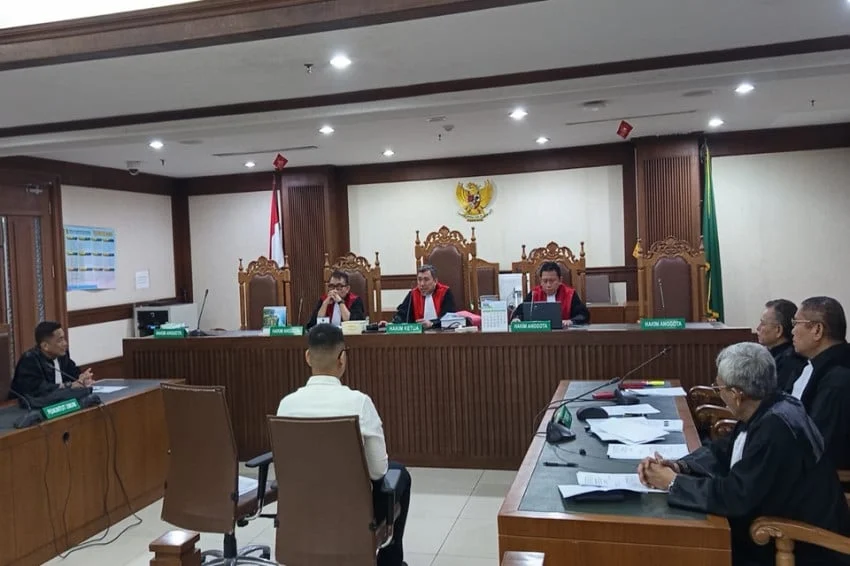
The legal proceedings surrounding a high-profile criminal threat case at the Central Jakarta District Court have reached a critical juncture as prosecutors officially reiterate their call for a definitive conviction. Following months of courtroom arguments, evidence presentations, and legal maneuverings, the Public Prosecutor (JPU) has formally expressed expectations that the presiding panel of judges will deliver a verdict aligning precisely with the initial sentencing demands. The case, which centers on the actions and legal accountability of the defendant identified as Bangun Paulus Tudungta, has drawn significant public attention due to the intricate legal interpretations surrounding criminal intimidation and the rigorous standards required to satisfy specific statutory elements under Indonesian law.
As the judicial calendar moves closer to its ultimate conclusion, legal observers, victims, and defense counsels alike are closely monitoring the developments. The anticipation highlights the broader implications of how courts handle threats and intimidation, ensuring that statutory provisions serve as a reliable deterrent against aggressive behavior in public and private interactions. With the final arguments concluded, the courtroom drama now shifts focus entirely to the deliberation room, where the judges will weigh the arguments of both the state prosecution and the defense team before rendering a final judgment.
Prosecution Stands Firm on 1.5-Year Sentence Recommendation
During the latest phase of the trial at the Central Jakarta District Court on Friday, November 27, 2026, Public Prosecutor Andri Saputra reaffirmed the state’s position following the presentation of the defense’s duplik, or the final response to the prosecution’s reply. In the state’s formal sentencing demand presented earlier in the proceedings, Prosecutor Andri urged the honorable panel of judges to sentence Bangun Paulus Tudungta to one year and six months—equivalent to 1.8 years—of imprisonment.
The prosecution’s stance is rooted in a thorough examination of the statutory framework governing criminal threats. According to the prosecuting team, every single legal and material element required to prove the charge under Article 483 paragraph (1) letter a of the Indonesian Criminal Code (KUHP) has been completely and unequivocally fulfilled. Throughout the trial, the state presented a series of testimonies, documentary evidence, and circumstantial proofs designed to demonstrate that the defendant’s actions crossed the legal boundary from heated verbal disputes into the realm of punishable criminal threats.
Prosecutor Andri emphasized that the demand was formulated only after a meticulous review of both the aggravating and mitigating circumstances surrounding the incident. The state maintains that a custodial sentence of one and a half years is proportional to the gravity of the offense, serving not only as a punishment for the specific actions committed by the defendant but also as a necessary message regarding the rule of law and public safety.
Chronology and Case Background
The legal journey that led to the Central Jakarta District Court began months prior, stemming from an escalating conflict that eventually prompted the intervention of law enforcement authorities. While the initial dispute may have arisen from personal or professional frictions between the parties involved, the situation escalated to a degree that legal boundaries were allegedly breached, prompting the victim to lodge an official criminal complaint.
Following the initial report, investigators from the local police force gathered preliminary evidence, conducted witness interviews, and established a formal dossier that was subsequently transferred to the Attorney General’s office. Upon reviewing the case file, the public prosecutors determined that sufficient probable cause existed to elevate the matter to a full judicial trial, filing formal charges under the relevant provisions of the KUHP.
The trial phase saw a standard progression of criminal proceedings in the Indonesian legal system:
- Arraignment and Indictment: The reading of formal charges by the Public Prosecutor, outlining the specific legal violations allegedly committed by Bangun Paulus Tudungta.
- Evidentiary Hearing: A series of sessions where the prosecution presented witnesses, expert opinions, and physical evidence to substantiate the claim of criminal intimidation.
- Defense Examination: Opportunities for the defendant and his legal counsel to present counter-arguments, present exculpatory witnesses, and challenge the validity or interpretation of the state’s evidence.
- Requisition (Tuntutan): The official announcement by the prosecution detailing the proposed sentence based on the proven facts of the trial.
- Pleas and Responses (Pledoi and Duplik): The legal counter-measures by the defense team arguing for acquittal or a lighter sentence, followed by the prosecution’s final rebuttal and the defense’s duplik.
The culmination of this structured timeline arrived on the November 27 hearing, marking the official closure of the verbal debate phase of the trial and paving the way for the judicial verdict.
Legal Arguments and the Defense’s Position
Throughout the trial, the legal defense team representing Bangun Paulus Tudungta actively contested the validity of the charges, arguing that the elements of the crime had not been sufficiently met by the prosecution. In criminal cases involving intimidation under Indonesian law, the defense frequently focuses on proving the absence of intent (mens rea), contextual misunderstandings, or the lack of immediate danger or capacity to execute the alleged threat.
In their submitted duplik—read during the Friday session—the defense counsel reiterated their points, seeking to dismantle the prosecution’s interpretation of Article 483 paragraph (1) letter a of the KUHP. They argued that the interactions between the parties were heavily distorted and that the statements or actions in question did not constitute a willful, unlawful threat designed to instill genuine fear or coerce the victim unlawfully.
However, Prosecutor Andri responded by asserting that the submission of a duplik is a standard procedural right granted to every defendant and their legal counsel under the Criminal Procedure Code (KUHAP). Rather than viewing the duplik as a disruption to the state’s case, the prosecution welcomed it as part of a transparent and robust due process. Andri noted that the defense’s final arguments had already been anticipated and addressed during the earlier phases of the trial, leaving the foundational strength of the state’s indictment intact.
Broader Implications of the Judiciary’s Upcoming Decision
As the Central Jakarta District Court prepares to announce its verdict, the implications of the ruling extend beyond the individual parties involved in the courtroom. Cases involving threats and intimidation are frequently scrutinized by legal experts for how they balance freedom of expression, emotional disputes, and the absolute protection of individuals from psychological and physical harm.
A verdict that aligns with the prosecution’s request would reinforce the legal principle that aggressive intimidatory behavior carries tangible penal consequences, regardless of whether a physical altercation ultimately took place. Conversely, any deviation by the judges—whether resulting in an acquittal, a lighter sentence, or a different legal interpretation—would rely strictly on the specific evidentiary nuances uncovered during the trial sessions.
For the public and observers of the Indonesian judicial system, the case serves as a reminder of the mechanisms available for resolving severe interpersonal conflicts through institutional channels rather than extrajudicial escalation. The reliance on documented evidence, witness testimonies, and structured procedural defenses underscores the ongoing efforts to maintain judicial integrity and predictability in urban district courts.
Next Steps in the Judicial Process
With the reading of the duplik now officially completed, the trial enters its final procedural phase. The presiding panel of judges will utilize the intervening days or weeks to review all trial transcripts, examine the submitted physical and documentary evidence, and deliberate privately on the guilt or innocence of Bangun Paulus Tudungta.
Once the deliberations are finalized, the court will reconvene for the sentencing hearing (Putusan), where the judges will read out their official legal considerations, state whether the defendant is proven legally and convincingly guilty of the charges, and announce the final verdict along with any mandated penalties. Until that gavel falls, both the prosecution and the defense remain bound by the records established in the courtroom, awaiting the definitive resolution of a case that has tested the boundaries of criminal law and personal accountability.