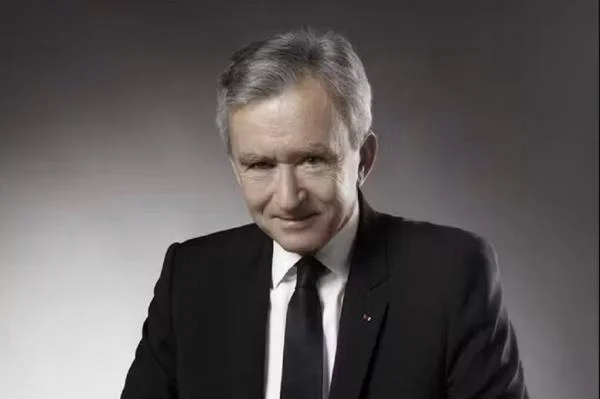
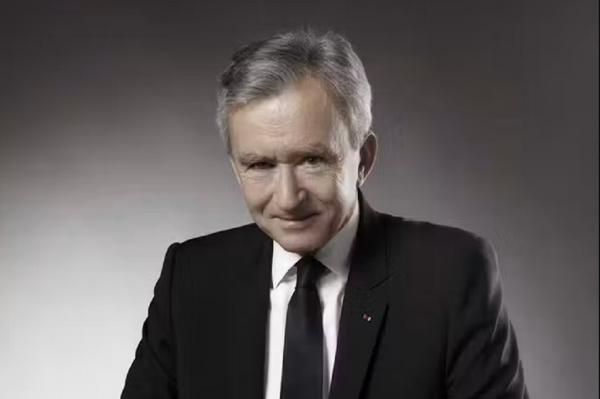
The landscape of global luxury retail witnessed a significant shift this week as billionaire tycoon Bernard Arnault formalized a strategic move to cement his authority over his sprawling business empire. According to regulatory filings submitted in Paris, the 77-year-old chairman and CEO of LVMH Moët Hennessy Louis Vuitton has officially extended the age limit for his role as the Managing General Partner of Agache SCA, the family holding company that acts as the cornerstone of his corporate dominion. Under the new provisions, Arnault is eligible to remain at the helm until he reaches the age of 95, effectively securing his influence over the world’s largest luxury goods conglomerate until the year 2044.
This administrative adjustment serves as a critical pillar in a broader, long-term succession and consolidation strategy. By anchoring his leadership tenure to a later date, Arnault is signaling a deliberate intention to oversee the next two decades of the group’s evolution, ensuring that the transition of power remains within the family and aligned with his long-term vision for the brands under his purview.
The Anatomy of the Agache Restructuring
The decision to extend the age mandate is not an isolated event but rather the final piece of a complex corporate puzzle. Agache SCA, which functions as the primary vehicle for the Arnault family’s control, has been undergoing a series of structural modifications designed to tighten the grip of the next generation while preserving the patriarch’s oversight.
Central to this effort is the ongoing merger of Agache with Christian Dior SE, another key holding company within the Arnault ecosystem. This consolidation is a masterclass in corporate architecture. By merging these entities, the family significantly simplifies the ownership structure, reducing the layers between the family and their crown jewel, LVMH. Once the merger process is finalized, the resulting entity is projected to hold 49.76 percent of the share capital of LVMH and, perhaps more importantly, 65.55 percent of the voting rights. This majority control ensures that the Arnault family maintains an insurmountable lead in corporate governance, making the group largely immune to hostile takeovers or shifts in investor sentiment that might threaten the family’s strategic direction.
Contextualizing the Succession Strategy
To understand the weight of this decision, one must look at the historical trajectory of LVMH. Bernard Arnault, often referred to as the "Wolf in Cashmere," built his empire through a series of aggressive acquisitions throughout the 1980s and 1990s. Today, LVMH oversees a portfolio of more than 70 "Maisons," ranging from the iconic leather goods of Louis Vuitton and the fashion prestige of Christian Dior to the high-end spirits of Dom Pérignon and the jewelry craftsmanship of Tiffany & Co.
For decades, the question of "what happens after Arnault" has been a staple of discussion among analysts and investors. By extending his age limit, Arnault is effectively buying time—not just for himself, but for his five children. His children, Delphine, Antoine, Alexandre, Frédéric, and Jean, are all actively involved in the day-to-day operations of various LVMH brands. Delphine, for example, leads Christian Dior Couture, while Frédéric has taken on increasingly prominent roles within the group’s watchmaking and broader brand strategy. The extension provides a stable, predictable environment in which the siblings can gain further experience and demonstrate their leadership capabilities under the watchful eye of their father, rather than forcing a rushed handover of power during a period of market volatility.
Implications for Investors and the Market
The immediate reaction from the financial markets has been one of cautious approval. For long-term investors, the stability provided by Arnault’s continued presence is a significant value proposition. LVMH shares have historically been a proxy for the resilience of the luxury sector, and the market generally views Arnault as the indispensable architect of this success.
However, the move also invites a degree of debate regarding corporate governance. Critics of long-tenured leadership in family-controlled conglomerates often point to the potential for stagnation or the limitation of new perspectives. Yet, in the case of LVMH, the argument for continuity is strong. The luxury industry relies heavily on heritage, brand equity, and a singular vision—qualities that Arnault has mastered. By locking in his leadership until 2044, the company is effectively signaling to the market that the "Arnault era" is not yet over, and that the long-term roadmap for the company remains anchored in the same strategic philosophy that turned a French textile manufacturer into a global titan.
A Timeline of Control
The timeline leading to this decision reflects a steady, calculated approach to power retention:

- 1984: Bernard Arnault acquires the Financière Agache, effectively beginning his journey into the luxury sector.
- 1989: Arnault gains control of LVMH, initiating a rapid expansion of the group.
- 2022: The Arnault family begins a major restructuring of their holding companies, notably the reorganization of Agache SCA to mirror the structure of the family’s control over Dior.
- 2024: Regulatory documents reveal the formal extension of the age limit for the Managing General Partner to 95, solidifying control through the mid-2040s.
Official Perspectives and Market Reaction
While the Arnault family has maintained a degree of privacy regarding the personal motivations behind this decision, the regulatory filings speak to a clear mandate: professional continuity. Spokespeople for the conglomerate have historically emphasized that these changes are administrative in nature, intended to provide a robust legal framework for the long-term management of the group’s assets.
Financial analysts from firms such as HSBC and Morgan Stanley have noted that the market rarely punishes companies for stability. In an era of economic uncertainty, rising interest rates, and shifting consumer trends in key markets like China and the United States, having a seasoned leader who has weathered every major market cycle since the 1980s is seen as an asset. The extension of the age limit should be viewed as a vote of confidence in the current business model and a clear signal to shareholders that the status quo is the preferred path forward.
The Broader Impact on the Luxury Industry
The implications of this move extend beyond the boardroom of LVMH. As the luxury sector faces challenges related to sustainability, the digitalization of retail, and the need to attract younger demographics, the pressure on top-tier management is immense. The "Arnault Model" of centralized, family-led control is being tested against the more decentralized or professionally managed models of competitors like Kering or Richemont.
By ensuring his continued presence, Arnault is essentially insulating his brands from the risks associated with rapid leadership changes. He is providing his children with a "training ground" that is perhaps the most exclusive in the world. As the industry evolves, the stability of LVMH serves as a benchmark for what investors expect in terms of consistency, brand protection, and long-term capital appreciation.
Looking Toward 2044
As Bernard Arnault looks toward the future, the environment in which LVMH operates will undoubtedly change. The rise of e-commerce, the shifting preferences of the Gen Z consumer, and the increasing focus on ESG (Environmental, Social, and Governance) criteria will require the company to be as nimble as it is prestigious.

The decision to remain in power until 95 is a testament to the founder’s personal commitment to the brands he has nurtured. It is not merely a legal or financial maneuver; it is a declaration that the Arnault family views LVMH not just as a business, but as a multigenerational legacy. Whether this extended tenure will facilitate a seamless transition to the next generation remains to be seen, but for the time being, the captain of the world’s largest luxury ship has made it clear that he has no intention of leaving the bridge.
In conclusion, the extension of Bernard Arnault’s leadership mandate is a landmark event in the history of European corporate governance. It underscores the dominance of family-led conglomerates in the luxury space and highlights the extreme lengths to which such dynasties will go to protect their legacy. For the market, it provides the certainty of continued strategic direction; for the Arnault family, it provides the time required to groom the next generation to carry the torch of the LVMH empire. As the company moves forward, the eyes of the global financial world will remain fixed on Paris, watching to see how this long-term strategy unfolds in an ever-changing global economy.