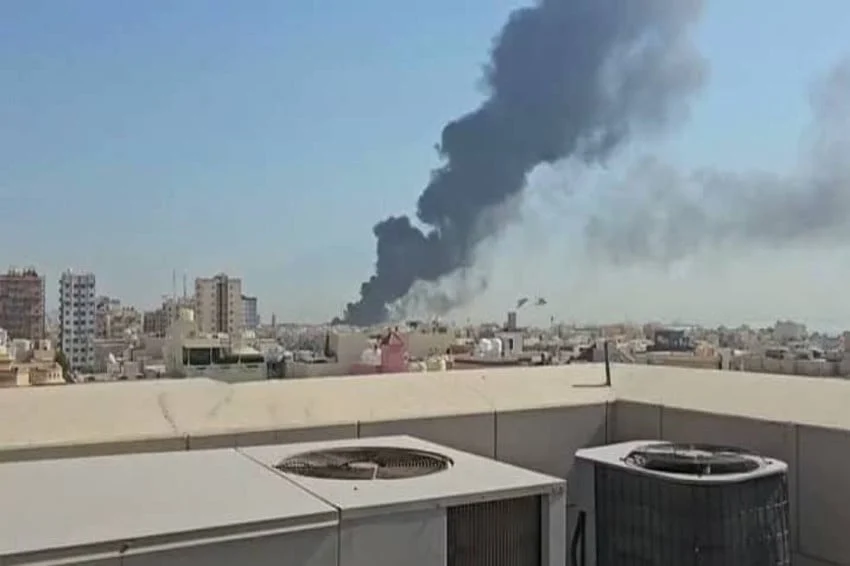
The geopolitical landscape of the Middle East experienced a sharp and dangerous escalation following a confirmed lethal drone strike on vital infrastructure within the State of Kuwait. Military authorities in Kuwait City officially announced that two Italian nationals succumbed to critical injuries sustained during the aerial assault, which targeted a strategic energy and logistics installation in the oil-rich Gulf nation. The incident, which has sent shockwaves through European and Middle Eastern capitals alike, marks a grim milestone in the expanding theater of regional cross-border hostilities, drawing foreign nationals directly into the line of fire.
While Kuwaiti defense officials and international verification agencies have pointed toward Iranian military hardware as the source of the provocation, Tehran has issued a vehement denial, flatly rejecting any institutional responsibility for the strike. The conflicting accounts have created a diplomatic crisis, prompting urgent behind-the-scenes negotiations, calls for independent investigations, and heightened alert statuses across diplomatic missions throughout the Persian Gulf. As intelligence analysts sift through radar telemetry and debris recovery data, the international community is left grappling with the immediate human toll and the ominous implications for regional stability.
Casualty Confirmation and Consular Response
The confirmation of the fatalities came from both domestic Kuwaiti authorities and Italian state media. According to official briefings released by the Kuwaiti Ministry of Defense, the aerial attack initially left four individuals with varying degrees of trauma. The initial casualty list comprised one Kuwaiti national, one citizen of Pakistan, and two Italian expatriates who were working on-site at the targeted facility. Despite immediate emergency medical intervention and subsequent transfer to specialized critical care units, the two Italian citizens ultimately succumbed to their wounds.
The Italian news agency ANSA confirmed the deaths, triggering an immediate consular response from Rome. The Italian Ministry of Foreign Affairs activated its crisis unit, coordinating closely with local authorities in Kuwait City to facilitate the repatriation of the remains and to provide consular assistance to the families of the victims. The involvement of European citizens in a kinetic strike on Gulf infrastructure elevates the incident from a localized bilateral dispute to a multi-national security concern, potentially drawing the European Union into broader diplomatic alignment with Gulf Cooperation Council (GCC) security frameworks.
Chronology of the Incident
According to detailed operational timelines pieced together by defense analysts and official military disclosures, the sequence of events unfolded rapidly in the early hours of the operational cycle.
Phase One: Detection and Tracking
Kuwaiti early-warning radar systems first detected anomalous low-altitude radar returns originating from the southeastern sector of the regional airspace. Military command centers classified the incoming signatures as unmanned aerial vehicles (UAVs) flying on pre-programmed trajectories designed to evade primary radar horizons by utilizing terrain-masking techniques.
Phase Two: Engagement and Impact
Despite counter-measures deployed by the Kuwaiti Air Defense Force—which successfully intercepted a portion of the incoming swarm—at least one projectile breached the defensive perimeter. The drone impacted a critical industrial facility, triggering a localized explosion and subsequent structural fires. Emergency protocols were activated instantly, deploying fire-suppression units and hazardous material containment teams to the scene.
Phase Three: Initial Medical Response and Triage
First responders evacuated four injured personnel from the blast radius. Triage assessments categorized the injuries as severe polytrauma resulting from shrapnel and blast overpressure. Over the subsequent 24-hour monitoring period, the condition of the two Italian nationals deteriorated rapidly, culminating in their pronouncement of death by attending medical professionals.
Phase Four: Diplomatic Fallout
As casualty figures were verified, high-level diplomatic channels between Kuwait, Italy, and Iran were immediately activated, leading to urgent telephonic exchanges between foreign ministers to defuse potential miscalculations.
Geopolitical Background and Regional Context
The kinetic strike on Kuwaiti soil does not occur in a vacuum; rather, it represents the latest manifestation of a protracted, multi-dimensional shadow war playing out across the Middle East. Over the past several years, the proliferation of long-range loitering munitions—commonly referred to as suicide drones—has fundamentally altered the defensive calculus of energy-producing nations in the Gulf.
Kuwait, traditionally pursuing a balanced and neutral diplomatic posture within the region, maintains complex diplomatic and economic relations with both its Gulf neighbors and non-Arab regional powers, including Iran. However, the presence of critical energy export infrastructure, desalination plants, and joint-venture industrial sites makes the country an inviting target for asymmetric pressure campaigns. The utilization of unmanned aerial systems complicates attribution, allowing state and non-state actors alike a degree of plausible deniability—a dynamic that frequently hinders swift retaliatory or legal responses under international law.
Furthermore, the involvement of Western expatriate specialists working within Kuwait’s vital sectors highlights a persistent vulnerability: the integration of foreign technical expertise into strategic industries that operate within striking distance of contested airspace.
Official Responses and Diplomatic Posturing
The diplomatic fallout from the incident was swift, characterized by sharp rhetoric from regional capitals and an immediate push for damage control.
The Kuwaiti Ministry of Defense maintained its initial assessment, asserting that air defense units tracked the trajectory of the aerial threats back to origins associated with Iranian military capabilities. The government underscored its sovereign right to protect its territorial integrity, critical infrastructure, and the civilian populace residing within its borders.
In a parallel development, Iranian Foreign Minister Abbas Araghchi engaged in urgent telephone diplomacy with his Kuwaiti counterpart, Foreign Minister Jarrah Jaber al-Ahmad al-Sabah. During the conversation, Araghchi formally and categorically rejected the allegations linking Tehran to the drone assault. State-run Iranian media quoted the foreign minister as stating that the Islamic Republic of Iran was entirely unconnected to the provocation.
Seeking to de-escalate tensions, Araghchi proposed the establishment of a joint technical committee to conduct a transparent, bilateral investigation into the origin and flight path of the drones. Tehran’s strategy appears geared toward preventing a united regional and international coalition from coalescing around punitive measures, offering technical cooperation as a mechanism to stall rapid retaliatory escalations.
Fact-Based Analysis of Economic and Strategic Implications
The incident carries profound economic and strategic implications for the global energy market and regional security architectures.
-
Energy Security Premiums
As a key member of the Organization of the Petroleum Exporting Countries (OPEC) possessing substantial proven crude oil reserves, any threat to Kuwaiti infrastructure immediately registers on global commodity exchanges. Energy traders factor in the "risk premium" associated with potential disruptions to production and export shipping lanes in the Persian Gulf and the Strait of Hormuz. Sustained kinetic threats to Gulf facilities inevitably apply upward pressure on international oil prices, impacting global macroeconomic recovery. -
Defense Procurement and Integrated Air Shielding
The breach of Kuwaiti air defenses by asymmetrical drone swarms underscores the technical limitations of point-defense systems when confronted with low-observable, highly maneuverable aerial threats. Strategic analysts anticipate that Gulf states will accelerate multi-billion-dollar acquisitions of advanced counter-UAV (C-UAV) technologies, electronic warfare jamming suites, and integrated early-warning radar frameworks, likely seeking enhanced defense cooperation agreements with the United States, European suppliers, and regional partners. -
The Fragility of Expatriate Workforces
Economies across the Gulf Cooperation Council rely heavily on foreign technical specialists, engineers, and operational personnel to maintain complex industrial facilities. The death of two Italian nationals serves as a grim reminder of the operational risks facing expatriate workers in strategic sectors. Increased security overhead, potential insurance rate hikes, and the psychological impact on foreign labor pools could complicate talent acquisition and project execution for major infrastructure developments in the region.
Outlook and Future Trajectory
As diplomatic maneuverings continue behind closed doors, the immediate future hinges on the credibility and findings of any collaborative investigative framework that may emerge between Kuwait and Iran. While Tehran continues to deny direct culpability, the burden of proof rests heavily on diplomatic channels to prevent isolated kinetic incidents from spiraling into a wider conventional conflict.
For Rome, the loss of its citizens places pressure on the Italian government to demand full transparency, accountability, and security guarantees for its nationals operating abroad. Meanwhile, Kuwaiti authorities face the delicate balancing act of demonstrating resolute national defense and deterrence without triggering economic panic or irreversible regional escalation. The coming days will test the resilience of diplomatic frameworks in the Gulf and determine whether the shadow war can be contained before claiming further international lives.