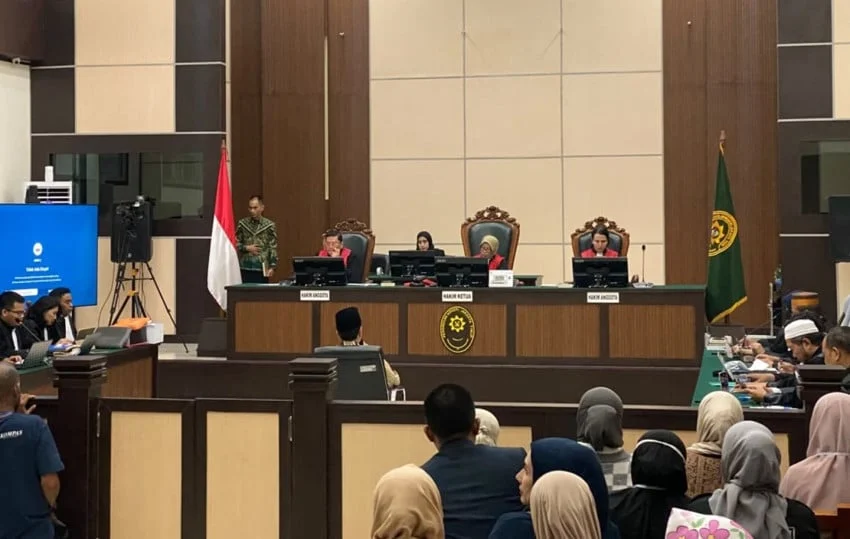
The courtroom atmosphere surrounding the ongoing legal challenge regarding the academic credentials of the seventh President of Indonesia, Joko Widodo, reached a boiling point during the latest session in Jakarta. Tensions escalated significantly when a dispute erupted between the legal counsel for the plaintiff, associated with Dokter Tifa, and the Public Prosecution Office (JPU) regarding the accessibility of forensic laboratory results. The confrontation became so intense that the presiding judge was compelled to raise his voice to restore order, underscoring the high-stakes nature of a case that has captured significant public and political attention.
The Genesis of the Conflict
The friction began when the JPU presented findings from a forensic laboratory analysis intended to verify the authenticity of Joko Widodo’s university diploma. During the presentation, the prosecution asserted that the forensic evidence indicated the document was identical to official records. Crucially, the JPU categorized these findings as an "instrument of proof" (alat bukti) rather than "physical evidence" (barang bukti), a distinction that holds significant weight under Indonesian procedural law. By framing the findings as a tool for the court’s consideration, the prosecution aimed to display the results directly in the courtroom.
However, the legal team representing Dokter Tifa immediately raised a formal objection. They argued that the presentation of such critical forensic data should not be limited to a visual display by the prosecution. The plaintiff’s counsel demanded that the documents be physically handed over to them for independent review and scrutiny. This demand triggered a heated exchange, with the defense and prosecution clashing over procedural rights, transparency, and the rules of evidence.
Chronology of the Legal Dispute
The controversy over President Jokowi’s academic background is not a recent development. The legal challenges surrounding his university graduation documents date back several years, emerging initially during the transition of political cycles.
- Initial Allegations: The narrative questioning the authenticity of Jokowi’s degree from Gadjah Mada University (UGM) began as a series of social media accusations, which later migrated into the formal legal sphere.
- The Filing of Lawsuits: Various parties, including those supported by figures such as Dokter Tifa, filed civil lawsuits claiming that the diplomas presented by the former president were fabricated or altered.
- Forensic Interventions: Throughout the legal proceedings, both the government and the university have consistently maintained that the documents are legitimate. Forensic experts have been brought in to analyze handwriting, paper texture, and ink signatures, consistently supporting the defense’s position.
- Current Impasse: The recent session highlights a recurring theme in this litigation: the struggle for procedural transparency versus the rules of evidence presentation. The latest outburst by the presiding judge reflects the judiciary’s increasing frustration with the procedural delays and the repetitive nature of the arguments being presented by the plaintiffs.
Understanding the Legal Distinction
The tension regarding "alat bukti" versus "barang bukti" is a core procedural issue. In the Indonesian legal system, an "alat bukti" (instrument of proof) is typically used to support an argument during the trial phase. If the JPU treats the forensic report as an instrument of proof, they are not strictly required to surrender the original documentation to the opposing party in the same manner as they would with physical evidence (barang bukti), which is subject to different handling protocols.
The plaintiff’s team, however, argues that without full access to the underlying data, they are unable to mount an effective rebuttal. This creates a procedural deadlock. If the court denies the plaintiffs access, it risks appearing opaque; if the court grants it, the prosecution fears it may compromise the integrity of the evidence chain.
Broader Context and Implications
The persistence of the legal challenge against Joko Widodo’s academic credentials has had a broader impact on the Indonesian political landscape. Critics argue that these cases serve as a tool for political delegitimization, aiming to undermine the legacy of the former president by attacking the integrity of his educational journey. Conversely, the plaintiffs maintain that they are merely exercising their right to verify the qualifications of a high-ranking public official.

The university involved, Gadjah Mada University, has previously issued official statements confirming the graduation of Joko Widodo from the Faculty of Forestry in 1985. The university has also made the records available to the public on several occasions, yet the legal challenges continue to resurface. The repeated nature of these sessions, often characterized by minor procedural disputes, has led to public fatigue and concerns regarding the efficient use of the judiciary’s time.
Judicial Conduct and Courtroom Order
The presiding judge’s decision to raise his voice is a reflection of the difficulty in managing a trial that is heavily laden with political subtext. Judges in Indonesia are tasked with maintaining a neutral, orderly environment, but when legal teams engage in aggressive posturing, the bench is often forced to intervene to ensure the trial does not descend into chaos.
This particular incident highlights the pressure on the judiciary to remain impartial. As the trial progresses, the court must balance the rights of the plaintiffs to receive a fair hearing with the need to prevent the courtroom from being used as a platform for political grandstanding.
Analysis of the Forensic Evidence
Forensic science in document verification generally looks for consistency in three areas:
- Typography: The alignment and font characteristics of the document compared to others issued in the same era.
- Materiality: The chemical composition of the ink and the specific type of paper used by the university in 1985.
- Administrative Consistency: The internal records of the university, including the graduation registry and the signature logs of the faculty members present at the time.
The JPU’s insistence that the document is "identical" suggests that their forensic experts have found high degrees of correlation across these three metrics. However, in legal settings, "identical" is often interpreted differently by opposing counsel, who may seek to find microscopic inconsistencies—such as minute differences in the printing press pressure or the storage conditions of the diploma over the last four decades—to create "reasonable doubt."
Looking Ahead
The case is expected to continue with further debates over the discovery process. The judge’s warning to the parties involved suggests that the court will likely impose stricter time limits on oral arguments and demand that future evidence requests be submitted in writing prior to the sessions.
The outcome of this trial will be significant, not necessarily because of the potential for the diploma to be invalidated—as the weight of academic evidence is overwhelmingly in favor of the defense—but because of the precedent it sets for the usage of the court system in challenging the credentials of public figures. If the court eventually dismisses the case based on the forensic evidence provided, it may serve as a definitive legal chapter in the long-running saga of the former president’s academic credentials.
For now, the courtroom remains a stage for intense procedural theater. As the nation watches, the focus remains on whether the legal process can maintain its dignity and objective rigor in the face of persistent, politically charged litigation. The upcoming sessions will be critical in determining whether the plaintiff’s team can produce new, credible evidence or if the court will move toward a final ruling based on the existing forensic data. The integrity of the judicial system, and its ability to distinguish between valid legal inquiry and procedural obstructionism, remains at the heart of this ongoing debate.