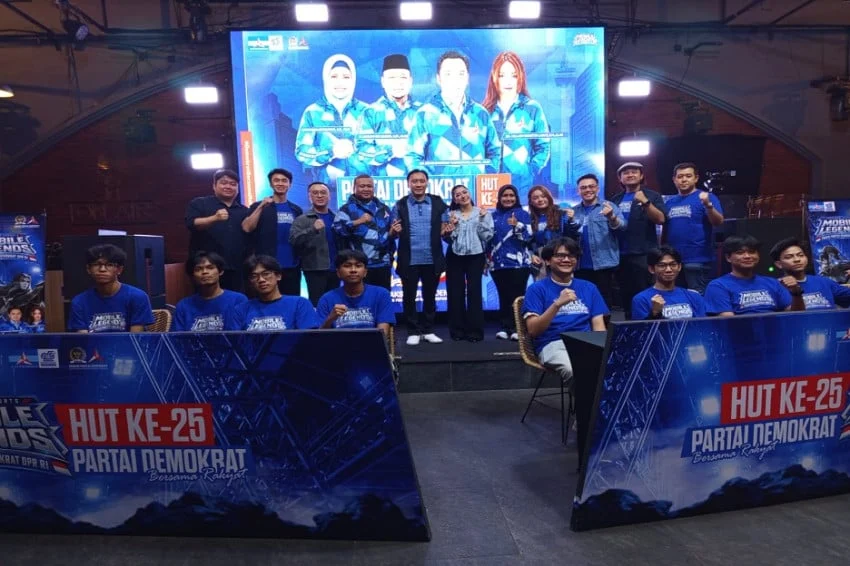
JAKARTA — Demonstrating a proactive approach toward the integration of modern youth culture and digital advocacy, the Democratic Party faction (Fraksi Partai Demokrat) within the House of Representatives of the Republic of Indonesia (DPR RI) officially hosted a high-profile Mobile Legends: Bang Bang (MLBB) esports tournament. Held on Tuesday, September 8, 2026, at the sophisticated Saka Social House in South Jakarta, the competitive gaming event served as a vibrant centerpiece for the political party’s quarter-century milestone, marking its 25th anniversary with a forward-looking nod to the digital native generation.
Bringing together an impressive cohort of 320 players distributed across numerous competitive teams, the tournament transcended traditional political commemoration. Instead, it manifested as a dynamic platform designed to engage Indonesia’s burgeoning youth demographic, channeling their digital passions into constructive avenues of creativity, strategic thinking, and economic empowerment. The event underscored a growing recognition among Indonesian lawmakers that the esports industry is no longer a mere recreational pastime, but rather a formidable pillar of the modern creative economy and a legitimate career pathway for the nation’s youth.
Main Facts of the Legislative-Backed Esports Initiative
The championship event in South Jakarta drew significant attention from both the political sphere and the national gaming community. At its core, the tournament was structured to test the tactical acumen, rapid decision-making, mechanical skill, and seamless communication of hundreds of participants. Mobile Legends: Bang Bang, one of the most prolific multiplayer online battle arena (MOBA) titles in Southeast Asia, requires advanced teamwork and synchronization, making it an ideal metaphor for collaborative success both in digital arenas and in broader societal development.
The high-profile gathering was graced by the presence of several prominent political figures. Most notably, Edhie Baskoro Yudhoyono—widely known as Ibas—attended the event in his triple capacity as the Chairman of the Democratic Party Fraction in the DPR RI, the Deputy Speaker of the People’s Consultative Assembly (MPR RI), and the Vice Chairman of the Democratic Party. He was accompanied by Aliya Baskoro Yudhoyono. The presence of senior party leadership signaled a institutional commitment from the Democratic Party to align its policy advocacy with the lifestyle, aspirations, and economic interests of Generation Z and millennial constituents.
In addition to Ibas and his entourage, the event featured notable political figures such as Hillary Brigitta Lasut, Harmusa Oktaviani, and Hasani Bin Zuber. Demonstrating hands-on engagement with the participants and attendees, Hillary Brigitta Lasut actively participated in a special fan match session of Mobile Legends, bridging the gap between legislative representatives and young constituents through interactive gaming.
Chronology and Timeline of the 25th Anniversary Celebration
The integration of an esports tournament into a political party’s silver anniversary celebrations represents a calculated evolution in public outreach strategies. The chronology of the event unfolded through a meticulously planned sequence of milestones leading up to and during the tournament day on September 8, 2026.
In the months preceding the main event, the organizing committee—operating under the auspices of the Democratic Party Faction in the DPR RI—conceptualized a commemorative agenda that would resonate deeply with younger voters, who constitute a decisive majority of Indonesia’s electorate. Recognizing the exponential growth of the digital landscape, the leadership opted to pivot away from conventional celebratory formats in favor of an initiative that highlights youth empowerment.
Registration for the tournament opened weeks prior, utilizing digital platforms to attract amateur and semi-professional teams from across the Greater Jakarta region (Jabodetabek). The overwhelming response, culminating in a competitive pool of 320 players, necessitated a rigorous screening and bracket-placement process managed by professional tournament organizers to ensure fair play and high competitive standards.
On the morning of September 8, 2026, Saka Social House was transformed into a hybrid venue blending the atmosphere of a high-tech esports arena with a corporate networking space. The venue was equipped with high-speed internet infrastructure, professional casting setups, and large viewing screens to accommodate spectators and media personnel.
The event kicked off with opening remarks from organizing representatives, followed by the commencement of the group stages. Teams battled through intense best-of-one and best-of-three matches throughout the afternoon. The competitive peak of the day occurred during the late afternoon, coinciding with the arrival of Edhie Baskoro Yudhoyono and accompanying dignitaries. The VIP delegation toured the venue, interacted with team captains, and observed high-level matches. The highlight for many attendees was the exhibition fan match featuring Hillary Brigitta Lasut, which injected a lighthearted yet engaging energy into the proceedings before the tournament culminated in the final championship rounds and trophy presentations.
Supporting Data: The Rise of Indonesian Esports and Youth Demographics
To fully understand the significance of the Democratic Party Faction’s initiative, it is essential to examine the broader socioeconomic and industrial data surrounding esports in Indonesia. As the largest digital economy in Southeast Asia, Indonesia boasts more than 170 million active gamers, with mobile gaming commanding the lion’s share of the market due to widespread smartphone penetration and improving cellular data networks.
Mobile Legends: Bang Bang, developed by Moonton, holds a dominant market position in the Indonesian archipelago. According to industry analytics from platforms such Niko Partners and Newzoo, Indonesia regularly ranks among the top global markets for daily active users and esports viewership. Major domestic leagues, such as the Mobile Legends Professional League (MPL Indonesia), routinely draw millions of concurrent digital viewers, rivaling traditional sports broadcasts in television ratings and digital engagement.
Furthermore, the Indonesian government—through the Ministry of Youth and Sports (Kemenpora) and the Ministry of Tourism and Creative Economy (Kemenparekraf)—has officially recognized esports as a priority sector capable of generating substantial GDP contributions. The industry extends far beyond professional players, encompassing a wide value chain that includes game developers, tournament organizers, content creators, shoutcasters, coaches, merchandise manufacturers, and digital marketing agencies.
Official Responses and Statements from Party Leadership
The rationale behind the tournament was articulated clearly by Edhie Baskoro Yudhoyono during his address at the venue. Emphasizing the constructive potential of competitive gaming, Ibas highlighted that esports serves as an invaluable crucible for essential life skills, including discipline, strategic foresight, emotional intelligence, and collaborative teamwork.
"Esports can be an effective and productive channel for the younger generation to direct their passions, energy, and creativity," Ibas stated during the event. He further elaborated that in an era dominated by digital distractions and potential social vulnerabilities, structured competitive gaming provides a healthy, goal-oriented alternative that keeps young people engaged in positive community activities.
By framing esports as a protective and developmental buffer against negative influences, the Democratic Party leadership positioned digital literacy and gaming not merely as entertainment, but as vital components of youth welfare. Ibas underscored that political institutions must evolve to meet the demographic reality of Indonesia, where tech-savvy youth expect their representatives to understand and support their modern lifestyle choices.
Broader Impact, Economic Implications, and Societal Analysis
The intervention of a major political faction into the esports ecosystem carries significant implications for policy formulation, youth engagement, and the future of the digital economy in Indonesia. Analysts observing the intersection of politics and technology note several key takeaways from the Saka Social House tournament:
-
Institutional Legitimation of the Creative Economy
For years, competitive gaming faced social stigma in Indonesia, often dismissed as an unproductive or sedentary habit. When high-ranking state officials—such as the Deputy Speaker of the MPR RI and faction leaders—actively sponsor and participate in esports events, it accelerates the cultural and institutional legitimation of the industry. This top-down validation encourages parents, educational institutions, and traditional financial sectors to view esports as a serious vocation rather than a frivolous hobby. -
Policy and Infrastructure Advocacy
The involvement of lawmakers in esports tournaments often translates into tangible legislative support. Issues such as the development of regional digital infrastructure, government grants for grassroots training academies, intellectual property protection for domestic game developers, and mental health support for professional athletes require legislative foresight. Events like the Democratic Party’s MLBB tournament serve as ground-level listening posts for politicians to understand the practical challenges faced by digital creators and competitive players. -
Shifting Political Communication Paradigms
In an increasingly digitized society, traditional political campaigns relying on billboards and sterile town halls are losing efficacy among younger demographics. By embedding political milestones—such as a 25th-anniversary celebration—within culturally relevant spaces like esports tournaments, political parties demonstrate cultural agility. This strategy fosters organic goodwill and bridges the generational divide between veteran politicians and digital natives. -
Mental Health and Social Cohesion
Beyond economic metrics, team-based esports foster intense social cohesion. The collaborative nature of Mobile Legends demands that players communicate effectively, resolve conflicts under pressure, and trust their peers regardless of background. By promoting such environments, the initiative subtly reinforces values of solidarity, fair play, and collective problem-solving among participants.
Conclusion
The hosting of the Mobile Legends: Bang Bang tournament by the Fraksi Partai Demokrat DPR RI marks a notable convergence of legislative outreach and modern youth culture. By commemorating its 25th anniversary through an event that celebrates digital creativity and competitive excellence, the Democratic Party has signaled its alignment with the aspirations of Indonesia’s younger generations. As the nation continues its rapid ascent as a digital economic powerhouse in Southeast Asia, initiatives that bridge governance, community engagement, and the creative economy will undoubtedly play a critical role in shaping the nation’s future trajectory.