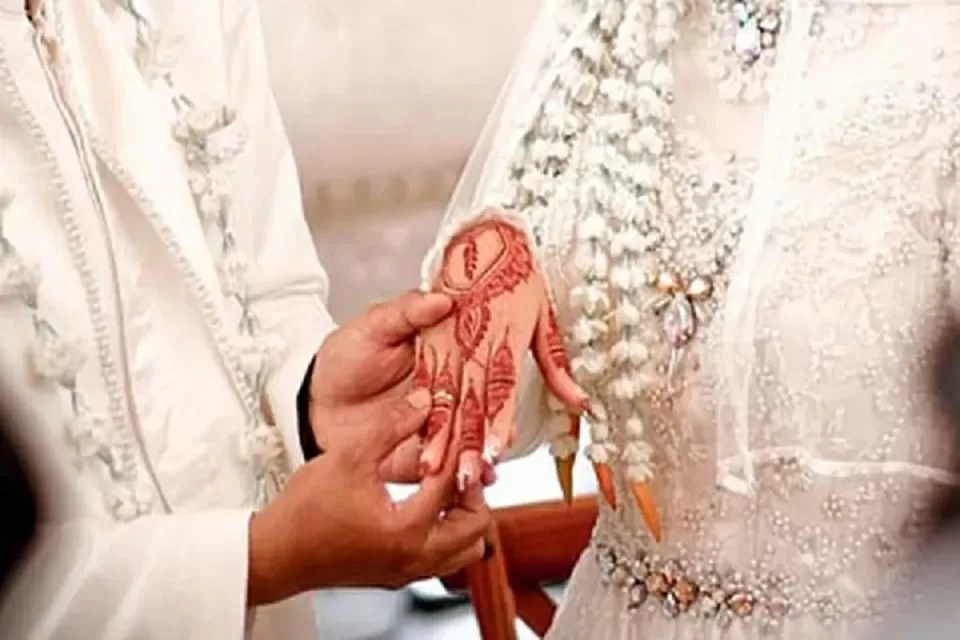
The month of Safar, the second month of the Islamic Hijri calendar, has long been a subject of cultural debate and theological clarification within Muslim societies, particularly concerning the suitability of performing marriages during this period. While certain cultural traditions and long-standing superstitions suggest that Safar is a month of ill omen or "Safar Balai," Islamic jurisprudence and prophetic history provide a starkly different narrative. According to mainstream Islamic scholarship, including the Syafii school of thought, getting married in Safar is not only permissible but is considered by many scholars to be a Sunnah—a practice recommended based on the traditions of the Prophet Muhammad. This distinction between cultural myth and religious reality remains a vital point of education for millions of practitioners worldwide who navigate the intersection of ancestral customs and faith-based doctrines.
The Persistence of Pre-Islamic Superstitions and Cultural Taboos
To understand why the month of Safar is often viewed with trepidation, one must look back at the historical context of the Arabian Peninsula before the advent of Islam, a period known as the Jahiliyyah (the Age of Ignorance). During this time, the pagan Arabs held various superstitions regarding time and celestial movements. They believed that Safar was a month of bad luck, misfortune, and divine anger. This belief was so deeply rooted that it dictated their social behaviors, including the postponement of travels, business ventures, and marriages until the month had passed.
A specific myth prevalent during that era suggested that Safar was a type of malignant disease or a giant worm residing in the stomach that would strike during this month. Others believed that the month itself possessed an inherent "unlucky" character that would cause any new endeavor to fail. In the context of marriage, these superstitions evolved into the belief that a union formed in Safar would be plagued by financial instability, constant debt, and eventual failure. These "bad omens" or tathayyur were precisely what the Prophet Muhammad sought to eradicate through his teachings, emphasizing that no period of time possesses the inherent power to cause harm or benefit outside of the will of God.
Linguistic Origins: The Concept of Safar as Emptiness
The word "Safar" itself carries a literal meaning in Arabic that contributed to its various interpretations. Etymologically, Safar translates to "empty" or "void." Historically, this name was derived from the fact that during this month, the houses of the Arabs would become empty as the men left for war or to forage for food after the sacred month of Muharram—during which fighting was strictly prohibited—had concluded.
Another linguistic theory suggests that the name refers to the "yellowing" (Sufrah) of plants during the autumn season when the month was originally named. However, the "emptiness" definition is the most widely accepted by historians. Over centuries, this concept of emptiness was misinterpreted by some as a spiritual or material vacuum, leading to the fallacy that a marriage started in an "empty" month would lead to a life of "emptiness" or poverty. Modern scholars argue that this is a classic example of how linguistic history can be distorted into superstition when separated from its original societal context.
The Prophetic Precedent: The Marriage of Fatimah and Ali
The most significant theological argument in favor of marriage during Safar is the historical precedent set by the Prophet Muhammad himself. Islamic history records that the Prophet’s beloved daughter, Sayyidah Fatimah az-Zahra, was married to Sayyidina Ali bin Abi Thalib during the month of Safar. According to the text Nihayatuz Zain and various narrations found in Al-Mausu’ah Al-Fiqhiyah Al-Kuwaitiyah, this union took place approximately twelve months after the Hijrah (the migration to Medina).
The scholar Al-Zuhri narrated: "Verily, the Messenger of Allah married his daughter, Fatimah, to Ali in the month of Safar at the beginning of the twelve months of the Hijrah." This historical event serves as a cornerstone for Islamic jurists. If the Prophet Muhammad chose this month for the marriage of his own daughter—a union that produced the lineage of the Ahl al-Bayt—it stands as a definitive rejection of any notion that the month is unlucky. Consequently, the Syafii school of thought and other major madhabs (schools of law) categorize marriage in Safar as mustahabb (recommended) or Sunnah, alongside the month of Shawwal.
Debunking the "Month of Misfortune" Through Hadith
The Islamic perspective on Safar is further solidified by several Sahih (authentic) Hadiths that directly address the concept of omens. In a well-known narration found in both Sahih Bukhari and Sahih Muslim, the Prophet Muhammad stated: "There is no ‘Adwa (contagious disease is not transmitted by itself without Allah’s permission), nor is there any Tiyarah (evil omen), nor is there any Hamah (a pre-Islamic superstition about owls), nor is there any Safar."
Scholars explain that the phrase "nor is there any Safar" specifically targets the pre-Islamic belief that the month itself brings bad luck. By explicitly negating the superstitious power of the month, the Prophet established a framework of rational faith. This teaching emphasizes Tawhid (the Oneness of God), asserting that only the Creator controls destiny, and that days and months are merely vessels for human action.
In response to the persistent myths, many scholars have adopted the term "Shafarul Khair" (The Good Safar) to describe the month. This rebranding is an intentional effort to shift the public consciousness away from fear and toward a recognition of the month’s potential for blessings and divine favor.
Sociological Impact and Economic Superstitions
In various regions, including parts of Southeast Asia and the Indian subcontinent, the belief that marrying in Safar leads to financial ruin remains a lingering cultural artifact. The source content highlights a common fear: that couples marrying in Safar will face constant debt and business failure. From a journalistic and sociological perspective, this belief can be analyzed as a form of social anxiety projected onto the calendar.
When a community experiences economic hardship, it often looks for external "causes" to explain its misfortune. Attributing a failed business or a mounting debt to the timing of a wedding provides a psychological scapegoat. However, Islamic scholars argue that such beliefs are not only scientifically unfounded but are also a form of shirk asghar (minor polytheism), as they attribute power to something other than God. They point out that financial success in marriage is determined by hard work, compatibility, financial literacy, and divine providence—not by the lunar phase or the name of the month on the calendar.
Institutional Responses and Educational Initiatives
Leading Islamic institutions, such as the Indonesian Ulema Council (MUI) and various global Fatwa councils, have consistently issued clarifications regarding the permissibility of weddings in Safar. Their official stances usually follow a structured logic:
- Legal Basis: There is no text in the Quran or Sunnah that prohibits marriage in any specific month.
- Prophetic Action: The Prophet’s actions (the marriage of Fatimah) provide a clear positive example.
- Theology of Time: All time belongs to God, and no day is inherently "evil."
Educational programs in mosques and Islamic centers often intensify during Safar to combat these myths. Imams frequently use their Friday sermons (khutbah) to remind the congregation that the "bad luck" associated with Safar is a relic of the Jahiliyyah era that has no place in the life of a modern Muslim. They emphasize that a marriage built on the foundations of taqwa (God-consciousness) and mutual respect will flourish regardless of when the contract is signed.
The Chronology of Islamic Months and Marriage Recommendations
To provide a broader context, it is helpful to look at how Safar fits into the wider Hijri calendar regarding social milestones. While Safar is highly recommended for marriage due to the precedent of Fatimah and Ali, other months also hold significance:
- Shawwal: Also considered Sunnah, as the Prophet married Aisha in this month to debunk a different pre-Islamic superstition.
- Dhu al-Hijjah: A month of pilgrimage, often seen as a blessed time for new beginnings.
- Muharram: While marriage is permitted, many communities observe a period of mourning for the tragedy of Karbala, leading to a cultural (though not legal) preference for delaying celebrations.
The timeline of Fatimah and Ali’s marriage in Safar, just one year after the Hijrah, suggests that the Prophet was eager to establish new social norms early in the formation of the Islamic state. By choosing Safar, he actively dismantled the psychological barriers that had restricted the freedom and happiness of his community for generations.
Analysis of Implications for Modern Practitioners
The continued discussion around Safar highlights a broader tension between "folk Islam" and "scriptural Islam." For many families, the decision to avoid Safar for a wedding is not a rejection of theology but a cautious adherence to "what the elders said." However, as literacy and access to authentic religious texts increase, these traditions are gradually fading.
The implications of adhering to Safar superstitions are twofold. First, it creates unnecessary logistical and financial pressure on families to cram all weddings into "lucky" months like Syawal or Zulkaidah, leading to higher costs for venues and services. Second, it perpetuates a mindset of fear rather than faith. By reclaiming Safar as a month of "Khair" (goodness), the Muslim community promotes a more rational and spiritually grounded approach to life’s milestones.
In conclusion, the hukum (legal status) of marrying in Safar is clear: it is permitted and carries the potential for great blessing. The historical marriage of Fatimah and Ali remains the ultimate rebuttal to any claims of misfortune. As societies continue to evolve, the transition from seeing Safar as a "month of emptiness" to seeing it as a "month of goodness" represents a significant victory of theological clarity over ancient superstition. The focus for any couple should remain on the sanctity of the contract, the sincerity of their intentions, and the building of a home based on the principles of their faith, rather than the date on the calendar.