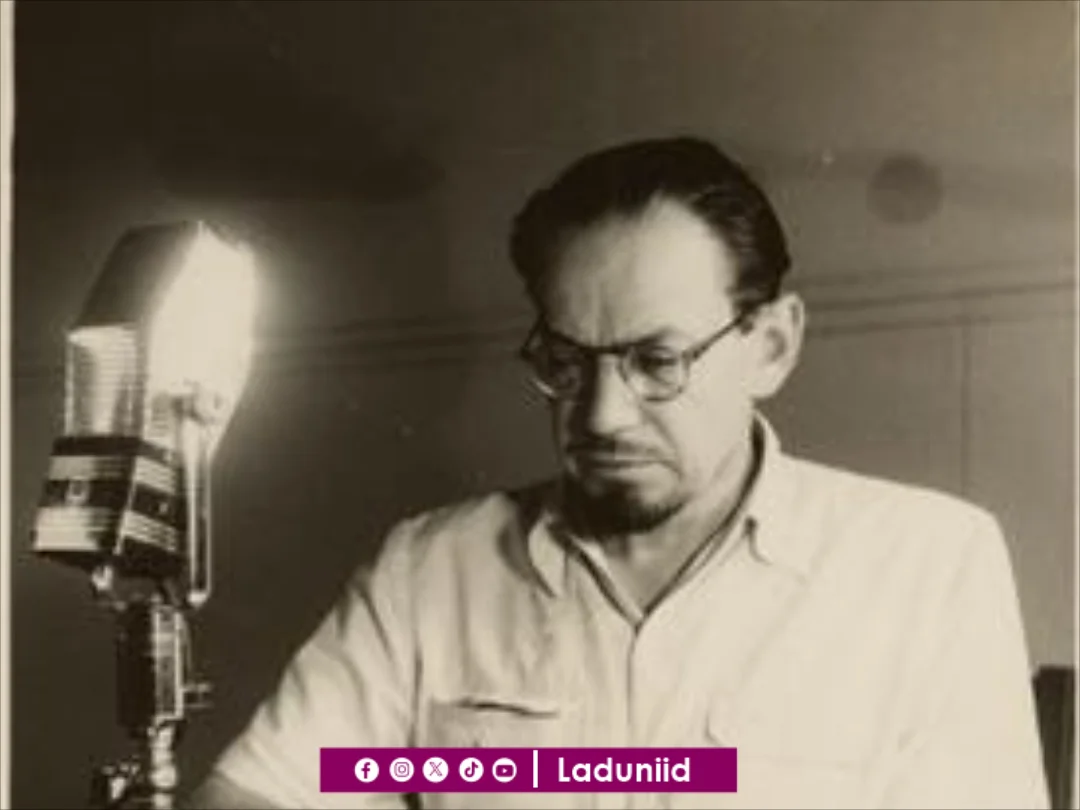
"Never again, never again, never again will you be a stranger!" Such were the jubilant shouts that once echoed across the desert winds, accompanying thousands of pilgrims clad in white. A man on horseback, journeying towards Mecca, for the first time in his life experienced a profound sense of belonging, of truly being home. This man, once known as Leopold Weiss, would become globally recognized as Muhammad Asad, a towering figure in 20th-century Islamic scholarship. His narrative is particularly compelling because he was not born into Islam; rather, he emerged from a deeply religious Jewish family in Lemberg, Austria-Hungary (present-day Lviv, Ukraine), where his ancestors served as esteemed rabbis. From an early age, Weiss was immersed in the sacred texts of Judaism, mastering Aramaic and Hebrew, and delving into the Torah, Talmud, Mishna, Gemara, and Targum. Yet, it was precisely this profound erudition that spurred a relentless intellectual inquiry, leading him to question the very foundations of inherited faith and the notion of God belonging exclusively to one group.
Early Life and Intellectual Ferment in Europe
Leopold Weiss was born on July 2, 1900, into an intellectual milieu that shaped his early questioning spirit. His paternal grandfather was a prominent rabbi, and the family lineage was steeped in rabbinical scholarship stretching back generations. This rigorous upbringing provided him with an unparalleled foundation in comparative religion and philosophy. By his early teens, Weiss was not only proficient in ancient Semitic languages but also possessed a critical understanding of the theological arguments and historical narratives embedded within Jewish tradition. However, this deep immersion paradoxically ignited a skepticism about the dogma and ritualistic aspects of religion, particularly the idea that spiritual truth could be confined to a single, inherited path.
His formative years coincided with a period of immense social and political upheaval in Europe. The Austro-Hungarian Empire was on the cusp of dissolution, and intellectual currents such as modernism, Zionism, and various socialist movements were challenging established norms. Weiss, a keen observer and independent thinker, found himself drawn to these broader intellectual currents. He eschewed the predetermined path of rabbinical studies, opting instead for a life of exploration and journalism. After a brief and unenthusiastic stint at university in Vienna, he embarked on a journey across Central Europe, cultivating a reputation as a perceptive and eloquent writer. His early journalistic assignments allowed him to travel extensively, exposing him to diverse cultures and philosophies beyond his immediate Jewish heritage. This period of restless inquiry solidified his commitment to seeking truth independently, free from the constraints of familial or societal expectations.
The Middle East: A New Horizon and Deeper Questions
In the early 1920s, Weiss’s journalistic assignments led him to the Middle East, a region then undergoing significant geopolitical transformations under the mandate system following the collapse of the Ottoman Empire. He served as a correspondent for prestigious German newspapers, most notably the Frankfurter Zeitung, providing insightful dispatches from Egypt, Palestine, Syria, and other parts of the Levant. His keen intellect and fluency in multiple languages allowed him to penetrate beyond superficial observations, engaging deeply with local cultures and political movements.
It was during this period that Weiss began to critically assess the Zionist project, which he had initially viewed with some interest given his Jewish background. He met with prominent Zionist leaders, including Chaim Weizmann, but his interactions with Arab populations and his observations of the colonial dynamics at play led him to a growing disillusionment. He became increasingly convinced that Zionism, in its practical application, was fundamentally unjust to the indigenous Arab inhabitants of Palestine. This nuanced perspective, often at odds with prevailing European sentiments, underscored his commitment to objectivity and ethical reasoning.
More profoundly, his prolonged exposure to Arab societies brought him into intimate contact with Islam. Unlike many Western observers who viewed Islam through a lens of orientalist exoticism or religious prejudice, Weiss approached it with intellectual curiosity and an open mind. He was struck by the simplicity, coherence, and profound sense of community he observed among Muslims. He noted the stark contrast between the often-hypocritical materialism he perceived in Western societies and the spiritual earnestness he found in many Muslim communities. These early encounters planted the seeds for a much deeper spiritual exploration.
The Pivotal Conversion: A Rational and Spiritual Awakening
The journey towards his conversion was not an impulsive decision but the culmination of years of rigorous intellectual and spiritual struggle. While living in Berlin in 1926, Weiss dedicated himself to a systematic study of the Qur’an. He approached the text not as a theological treatise to be accepted or rejected blindly, but as a document to be understood in its historical and linguistic context, engaging with its message on an intellectual plane. He wrestled with its verses, comparing them with his extensive knowledge of Jewish and Christian scriptures, and contemplating their implications for human existence and societal organization.
In his seminal autobiography, The Road to Mecca, Muhammad Asad vividly recounts the pivotal moment of his conversion. He describes an evening in Berlin when, after a period of intense reflection and study, the message of the Qur’an suddenly "crystallized" for him. It was a moment of profound clarity, where the pieces of his intellectual and spiritual puzzle fell into place. He found in Islam a religion that, unlike what he perceived as the ritualistic and often contradictory aspects of other faiths, offered a rational, comprehensive, and internally consistent worldview. The concept of Tawhid (the absolute oneness of God), the emphasis on justice, equality, and compassion, and the call for individuals to live a balanced life of submission to God’s will (Islam) resonated deeply with his philosophical inclinations.
On a particular autumn evening in September 1926, after attending a lecture on the economic system of Islam, Leopold Weiss formally embraced Islam. He later reflected that this decision was not a departure from truth but a homecoming to a universal truth he had always sought. He chose the name Muhammad Asad, "Asad" meaning "lion" in Arabic, signifying his newfound identity and strength in his chosen path. This conversion marked a profound transformation, redirecting his life’s purpose from journalism to becoming a dedicated scholar and interpreter of Islam.
Years in the Arabian Peninsula: Deepening Islamic Knowledge
Following his conversion, Muhammad Asad embarked on a journey to Mecca, the spiritual heart of Islam, where he spent several years immersing himself in Islamic scholarship and living among the Bedouin tribes. This period, from 1927 to 1932, was crucial for his intellectual development. He diligently studied Arabic, Islamic law (Sharia), and Hadith (the sayings and traditions of Prophet Muhammad) directly from esteemed scholars, gaining an unparalleled understanding of classical Islamic thought and practice.
His unique background as a Western intellectual, coupled with his profound grasp of Semitic languages and religious texts, allowed him to approach Islamic sources with both critical insight and deep reverence. He formed a close relationship with King Abdulaziz Ibn Saud, the founder of modern Saudi Arabia, who recognized Asad’s intellectual prowess and appointed him as an advisor. In this capacity, Asad undertook extensive travels across the Arabian Peninsula, gaining firsthand knowledge of tribal customs, the diverse interpretations of Islamic law, and the social fabric of Muslim societies. These experiences provided him with an invaluable ethnographic and historical context for his future scholarly works. His first significant publication after conversion, Unromantisches Morgenland (The Unromantic Orient), published in German, offered a nuanced and empathetic portrayal of the Arab world, challenging prevalent Western stereotypes.
The Pakistan Movement and Diplomatic Service
Muhammad Asad’s life took another significant turn in the 1930s when he encountered Muhammad Iqbal, the renowned poet-philosopher who is widely regarded as the spiritual father of Pakistan. Iqbal recognized Asad’s exceptional intellectual abilities and encouraged him to translate his works into English and to contribute to the intellectual discourse surrounding the creation of a separate Muslim state in British India. This marked the beginning of Asad’s deep involvement with the Pakistan Movement.
After the partition of India and the establishment of Pakistan in 1947, Asad played a crucial role in the nascent nation. He was appointed to various high-ranking positions, including Director of the Department of Islamic Reconstruction, where he advised on constitutional matters, aiming to integrate Islamic principles into modern statecraft. He also served as Pakistan’s Minister Plenipotentiary to the United Nations in New York, representing the country on the global stage. His diplomatic career saw him engage with complex international issues, always advocating for justice and peace, guided by his Islamic principles. This period, however, was not without its challenges. The political landscape of Pakistan was often turbulent, and Asad, a committed idealist, occasionally found himself at odds with political pragmatism, leading to his eventual departure from official service in the mid-1950s.
Literary Legacy: The Message of The Qur’an and The Road to Mecca
It is through his literary works that Muhammad Asad’s most enduring legacy is preserved. His magnum opus, The Message of The Qur’an, a monumental translation and commentary of the Holy Qur’an, took him 17 years to complete and was first published in 1980. This work stands as a testament to his profound scholarship, linguistic precision, and deep understanding of Islamic teachings. Asad’s Tafsir (exegesis) is particularly notable for its emphasis on rational understanding, contextual interpretation, and its address to the intellectual challenges of the modern age. He strove to present the Qur’an as a living guide, relevant to contemporary issues, and accessible to a Western-educated audience. Unlike many traditional commentaries, Asad avoided excessive theological hair-splitting, focusing instead on the practical and ethical implications of the Qur’anic message. He meticulously cross-referenced verses, provided extensive historical and linguistic notes, and consistently emphasized the Qur’an’s call for reason, justice, and human dignity.
Equally significant is his autobiography, The Road to Mecca, published in 1954. This spiritual and intellectual travelogue chronicles his journey from a skeptical European intellectual to a devoted Muslim scholar. More than a mere memoir, it offers profound insights into the process of religious conversion, cultural assimilation, and the universal quest for meaning. The book has inspired countless individuals, particularly those in the West seeking a deeper understanding of Islam, and remains a classic in the genre of spiritual autobiography.
Other notable works include Islam at the Crossroads (1934), which critically examines the challenges faced by Muslim societies in the modern world and advocates for a return to the pristine principles of Islam, free from cultural accretions. His The Principles of State and Government in Islam (1961) explored the theoretical foundations of Islamic governance, advocating for a just and equitable system rooted in Qur’anic values.
Broader Impact and Implications
Muhammad Asad’s contribution to Islamic thought and interfaith dialogue cannot be overstated. He served as a crucial intellectual bridge between the East and West, and between classical Islamic scholarship and modern intellectual inquiry. His unique background allowed him to articulate Islamic concepts in a language and framework accessible to Western minds, demystifying Islam for many and challenging prevailing misconceptions.
His Tafsir has been particularly influential among Western Muslims and those seeking a rational, progressive, and contextual understanding of the Qur’an. He strongly advocated for ijtihad (independent reasoning) within the framework of Islamic principles, urging Muslims to engage with the challenges of their time with intellectual vigor and ethical discernment. Asad’s work has contributed significantly to a more nuanced understanding of Islamic law, ethics, and spirituality, moving beyond rigid literalism to embrace the dynamic spirit of the faith.
Furthermore, his life story itself stands as a powerful testament to the universal appeal of Islam and the possibility of intellectual and spiritual transformation. His journey from an individual steeped in one of the world’s oldest monotheistic traditions to a profound scholar of another highlights the shared human quest for ultimate truth and purpose. In an increasingly polarized world, Asad’s legacy continues to inspire dialogue, foster understanding, and promote a vision of Islam that is both deeply rooted in tradition and vibrantly relevant to contemporary global challenges.
Later Life and Enduring Legacy
In his later years, Muhammad Asad chose to reside in Europe, spending time in Switzerland, Spain, and Portugal, continuing his scholarly pursuits and enjoying a quieter life. He passed away on February 20, 1992, in Mijas, Spain, and was buried in the Muslim cemetery of Granada. His passing marked the end of an extraordinary life dedicated to intellectual exploration, spiritual discovery, and serving the cause of Islam.
Muhammad Asad’s journey, from Leopold Weiss, a skeptical scion of a rabbinical lineage, to Muhammad Asad, an acclaimed scholar and interpreter of the Qur’an, remains a compelling narrative of intellectual honesty and spiritual courage. His unwavering commitment to truth, his rigorous scholarship, and his ability to bridge cultural and religious divides have cemented his place as one of the most significant Muslim thinkers of the 20th century. His works continue to be studied, debated, and cherished by millions worldwide, ensuring that his message of rational faith, universal justice, and human dignity endures, echoing the very sense of belonging he found on his own journey to Mecca: "Never again, never again, never again will you be a stranger!"