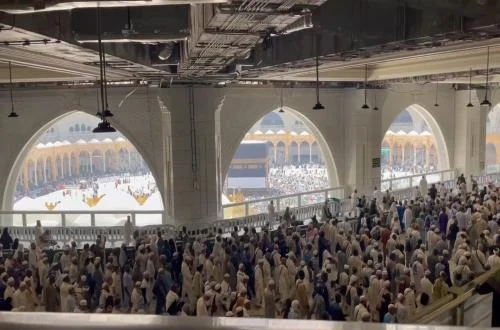
Makkah al-Mukarramah stands as the revered Holy Land within the Islamic tradition, a city imbued with unparalleled sanctity and spiritual eminence. At its heart lies Masjid al-Haram, the Grand Mosque, which not only serves as the Qibla (direction of prayer) for Muslims worldwide but also as the ultimate destination for the annual Hajj pilgrimage and the lesser Umrah pilgrimage. The profound significance of this sacred precinct is underscored by numerous Islamic texts, particularly prophetic traditions, which promise immense spiritual rewards for acts of worship performed within its hallowed confines. This promise, while a source of profound motivation for millions, necessitates careful theological understanding to prevent misinterpretations that could inadvertently undermine the fundamental tenets of Islamic practice.
The Prophetic Tradition: Unpacking the 100,000-Fold Multiplier
Central to the discourse surrounding the virtues of Masjid al-Haram is a widely accepted Hadith (saying or teaching of Prophet Muhammad SAW) that outlines the extraordinary multiplicity of rewards for prayer performed there. This Hadith, authenticated by prominent compilers such as Imam Ahmad and Ibn Hibban, explicitly states: "One prayer in my mosque (Masjid Nabawi in Medina) is better than one thousand prayers in any other mosque, except Masjid al-Haram. One prayer in Masjid al-Haram is more excellent than one hundred thousand prayers in my mosque."
This profound statement reveals a hierarchical structure of spiritual merit associated with specific sacred spaces in Islam. Masjid Nabawi, the Prophet’s Mosque in Medina, holds a distinct position of honor, offering a reward multiplier of 1,000 times compared to other mosques globally. However, Masjid al-Haram transcends even this elevated status, with a single prayer within its premises yielding a reward equivalent to an astounding 100,000 prayers performed in Masjid Nabawi, and by extension, 100 million prayers elsewhere. This theological concept of multiplied rewards serves as a powerful incentive for Muslims to yearn for and strive towards visiting these holy sites, reinforcing their spiritual connection to the epicenters of Islamic history and revelation.
The concept of barakah (blessings) is deeply intertwined with this understanding. Sacred spaces, individuals, and even specific times (like the month of Ramadan or Laylat al-Qadr) are believed to be endowed with special divine blessings that enhance the spiritual efficacy and reward of good deeds. Masjid al-Haram, housing the Ka’bah, the first house of worship established for humanity, is considered the epitome of such blessed locations, where the divine grace is perceived to be most abundant.
Addressing Misconceptions: The Interpretation of Ustaz Abdul Somad
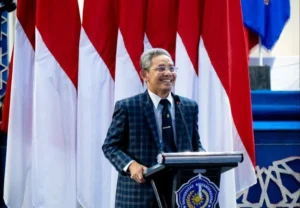
Despite the clear spiritual motivation embedded in this Hadith, a common misinterpretation has emerged, leading some individuals to adopt a flawed understanding of its implications. Ustaz Abdul Somad (UAS), a prominent Indonesian Islamic scholar, addresses this specific issue in his 2019 book, 66 Tanya Jawab Umrah (66 Questions and Answers about Umrah). UAS highlights a concerning trend where some Muslims mistakenly interpret the Hadith literally, concluding that if one prayer in Masjid al-Haram equates to 100,000 prayers elsewhere, then a single prayer there might suffice for a lifetime, or even thousands of years, effectively negating the continuous obligation of daily prayers upon returning home.
UAS unequivocally asserts that while the authenticity of the Hadith is beyond doubt, its interpretation must align with the broader principles of Islamic jurisprudence (Fiqh) and the continuous nature of religious obligations. He clarifies that the phrase "sama dengan" (equal to) in the context of the Hadith refers exclusively to the magnitude of the reward (pahala), not to a quantitative substitution for future acts of worship. "It should not cross our minds that one day’s prayer in Masjid al-Haram is sufficient, making it unnecessary to pray for 100,000 years," UAS states, emphasizing that such a literal interpretation would contradict the fundamental pillars of Islam.
The Enduring Obligation: Why Daily Prayers Remain Paramount
The misinterpretation identified by Ustaz Abdul Somad poses a significant challenge to the understanding of continuous devotion in Islam. Salat, the ritual prayer performed five times a day, is one of the five pillars of Islam, an absolute and non-negotiable obligation for every Muslim adult, provided they are of sound mind and body. Its performance is tied to specific times throughout the day and night, forming a continuous rhythm of remembrance and submission to Allah. To suggest that a single prayer, regardless of its multiplied reward, could absolve an individual from this lifelong duty is to fundamentally misunderstand the essence of Islamic worship.
Islamic theology emphasizes that while Allah is Merciful and generous with rewards, the primary purpose of worship is submission, gratitude, and the cultivation of a constant connection with the Divine. The multiplication of rewards for acts performed in Masjid al-Haram should be seen as an additional blessing and an incentive to deepen one’s faith and strive for excellence in worship, rather than a loophole for spiritual complacency. The Hadith, therefore, serves as a powerful motivator to physically visit the Holy Land and experience the profound spiritual atmosphere of Makkah, imbuing pilgrims with a lasting spiritual upliftment and a renewed commitment to their daily religious duties. The implication is clear: the reward is a divine gift, but the obligation to pray daily remains constant, a testament to a Muslim’s unwavering commitment to their faith.
A Journey Through Time: The Genesis and Evolution of Masjid al-Haram
The historical narrative of Masjid al-Haram is as rich and profound as its spiritual significance, tracing its origins to pre-creation and extending through millennia of human history.
-
Celestial Blueprint and Early Foundations: Islamic tradition holds that Masjid al-Haram is not merely an earthly construction but a reflection of a celestial archetype. It is believed to be the terrestrial counterpart of Baitul Ma’mur, the Frequented House in the seventh heaven, around which angels circumambulate. Furthermore, the Ka’bah, the cubic structure within Masjid al-Haram, is traditionally believed to have been built by angels long before the creation of humanity, even prior to the existence of Prophet Adam (AS). This establishes its unique status as the first house of worship dedicated to the One God on Earth, predating human civilization itself. Its initial purpose was pure monotheistic worship, a beacon of Tawhid (oneness of God).
-
The Reconstruction by Prophets Ibrahim and Ismail: Following the great flood during the era of Prophet Nuh (AS), the foundations of the Ka’bah became obscured and buried. Millennia later, Allah commanded Prophet Ibrahim (Abraham) (AS), the patriarch revered by all Abrahamic faiths, to restore and rebuild this sacred structure. Ibrahim, accompanied by his son Prophet Ismail (Ishmael) (AS), embarked on this monumental task. The narrative of their rebuilding is replete with miraculous events and profound lessons. It includes the story of Hagar (Hajr), Ismail’s mother, and her desperate search for water in the barren desert, leading to the miraculous gushing forth of the Zamzam well – a source of sustenance that continues to flow to this day.
As Ibrahim and Ismail raised the walls of the Ka’bah, they continuously invoked Allah, praying for its acceptance and for their progeny to be a nation submissive to Him. They placed the Hajar al-Aswad (Black Stone), believed to have descended from paradise, into one of its corners. This act of rebuilding by two prophets solidified the Ka’bah’s status as a central pillar of monotheistic worship and established many of the rites that form the core of the Hajj pilgrimage, such as the tawaf (circumambulation) and the sa’i (running between Safa and Marwah). -
Pre-Islamic Era: After the time of Ibrahim and Ismail, the Ka’bah remained a revered site. However, over centuries, it gradually became corrupted by idolatry. Various Arab tribes placed their pagan deities within and around it, transforming it into a pantheon of idols, even as its fundamental significance as a house of God was vaguely remembered. Despite this polytheistic deviation, Makkah remained a crucial trading hub and a pilgrimage destination, albeit one that had strayed from its original monotheistic roots.
-
Purification and Consolidation in the Prophetic Era: The birth of Prophet Muhammad (SAW) in Makkah marked a new chapter in the history of Masjid al-Haram. After years of persecution and exile in Medina, the Prophet triumphantly returned to Makkah in 630 CE (8 AH) during the ‘Conquest of Makkah’ (Fath Makkah). His first act upon entering the city was to proceed to the Ka’bah and personally oversee the removal of all 360 idols that had defiled its sacred space. With each idol cast down, he recited the Quranic verse, "Truth has come, and falsehood has vanished. Indeed, falsehood is ever bound to vanish" (Quran 17:81). This act symbolized the complete restoration of pure monotheistic worship (Tawhid) to the Ka’bah and Masjid al-Haram, re-establishing its original purpose as the exclusive house of Allah. From that point forward, Makkah and Masjid al-Haram became the spiritual heartland of the nascent Islamic faith.
-
Centuries of Expansion and Development: Over the succeeding centuries, Masjid al-Haram underwent numerous expansions and renovations to accommodate the ever-growing number of pilgrims. The early Caliphs (Umar, Uthman) initiated expansions. The Umayyad and Abbasid dynasties significantly enlarged the mosque, adding grand arcades and minarets. The Ottoman Empire, which ruled over the Holy Cities for centuries, also undertook extensive renovations, further beautifying and expanding the complex. The most significant and continuous expansions, however, have occurred under the custodianship of the Saudi royal family since the early 20th century. These modern expansions have transformed Masjid al-Haram into an architectural marvel, capable of hosting millions of worshippers simultaneously, while preserving its historical and spiritual essence.
Beyond the Spiritual: Masjid al-Haram’s Global Impact
The influence of Masjid al-Haram extends far beyond its immediate spiritual context, profoundly impacting global demographics, economies, and logistics.
-
Scale and Infrastructure: Today, Masjid al-Haram is one of the largest mosques in the world, encompassing an area of approximately 356,800 square meters (88 acres) including its outdoor prayer areas. Its current capacity is designed to accommodate over 2 million worshippers at any given time, a figure that swells dramatically during the Hajj season, reaching up to 5 million people within the greater Makkah area. The Saudi government has invested billions of dollars in an ambitious expansion project, including the King Abdullah Expansion, which aims to further increase its capacity and improve pilgrim facilities, incorporating advanced climate control systems, escalators, and state-of-the-art security measures.
-
Economic Significance: Makkah’s economy is almost entirely driven by the pilgrimage industry. Hotels, transportation, food services, retail, and construction sectors thrive on the influx of millions of pilgrims annually. This creates thousands of jobs and generates substantial revenue for Saudi Arabia, contributing significantly to its non-oil economy. The global impact is also felt in travel agencies, airlines, and related industries worldwide, as they facilitate the journeys of pilgrims from every corner of the globe.
-
Logistical Marvel: Managing the annual Hajj pilgrimage, which sees millions converge on a single city within a few days, is an extraordinary logistical undertaking. The Saudi authorities meticulously plan and execute operations related to crowd control, transportation, health services, sanitation, food and water supply, and security. This involves complex coordination between various government agencies, local authorities, and international bodies, making Hajj one of the largest peaceful gatherings of people on Earth. The continuous flow of Umrah pilgrims throughout the year also demands sophisticated management systems.
-
Symbol of Unity: Masjid al-Haram serves as a powerful symbol of Muslim unity and brotherhood. Five times a day, Muslims worldwide turn their faces towards the Ka’bah, creating an unparalleled sense of global solidarity. During Hajj and Umrah, Muslims from diverse ethnic, linguistic, and socio-economic backgrounds gather in one place, clad in simple white ihram garments, erasing distinctions and emphasizing equality before Allah. This shared experience fosters a deep sense of communal identity and mutual understanding among the global Muslim Ummah.
Scholarly Consensus and Guidance for Pilgrims
The interpretation provided by Ustaz Abdul Somad regarding the Hadith on prayer rewards in Masjid al-Haram is consistent with the mainstream understanding among Islamic scholars globally. The continuous obligation of daily prayers is a fundamental tenet that no amount of multiplied reward can override. Religious authorities, including the Grand Mufti of Saudi Arabia and various Islamic ministries, consistently issue guidance to pilgrims and the wider Muslim community, emphasizing adherence to core Islamic duties while appreciating the special blessings of sacred sites. Pilgrims are advised to focus on the sincerity and consistency of their worship, both during their visit to the Holy Land and upon their return to their daily lives. Education on proper Islamic jurisprudence is crucial to prevent misconceptions and ensure that the spiritual journey is enriching and aligned with authentic Islamic teachings.
Conclusion: A Symbol of Faith and Continuous Devotion
Masjid al-Haram stands not only as an architectural marvel but as a timeless symbol of faith, history, and unity for over 1.8 billion Muslims worldwide. Its virtues, particularly the promise of multiplied rewards for acts of worship, are a testament to Allah’s boundless mercy and an profound invitation to deeper spiritual engagement. However, as clarified by scholars like Ustaz Abdul Somad, these divine incentives must be understood within the comprehensive framework of Islamic obligations. The essence of the Hadith is to inspire love for the Holy Land and motivate Muslims to strive to visit and worship there, experiencing its unique spiritual atmosphere. It is a call to continuous devotion, a reminder of the enduring importance of daily prayers, and a beacon guiding humanity towards the unwavering worship of the One God, underscoring that while blessings are multiplied, fundamental duties remain constant.