
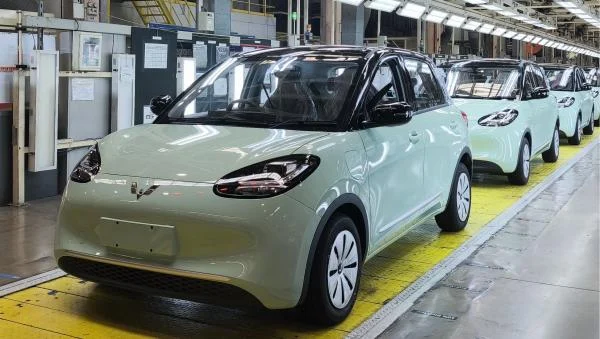
The landscape of Indonesia’s automotive industry is currently at a critical juncture as the nation strives to pivot toward sustainable energy and electric mobility. Stella Christie, the Deputy Minister of Higher Education, Science, and Technology, has issued a strategic call to action for the nation’s universities to transform their research agendas. According to the Deputy Minister, the development of a robust electric vehicle (EV) ecosystem cannot rely on superficial or short-term technological imports. Instead, she posits that Indonesia must mirror the strategic patience and persistent innovation cycles that propelled China to become the global leader in EV manufacturing.
The directive follows a growing concern among policymakers that Indonesian universities are currently lagging in their capacity to produce high-impact, industry-ready innovations. Speaking in Jakarta on Wednesday, October 28, 2026, Stella emphasized that the mandate for higher education institutions extends beyond simply satisfying current industrial requirements. Rather, the academic sector must become a catalyst for creating entirely new market opportunities, effectively steering the direction of the automotive industry rather than merely reacting to it.
The Chinese Model: A Lesson in Sustained Development
To underscore her point, Stella Christie shared personal reflections on her academic tenure as a Harvard student who spent a pivotal semester in China years ago. She described a China that was fundamentally different from the current technological powerhouse seen today. During her time there, the prevalence of electric transport—now a ubiquitous feature of Chinese urban life—was non-existent.
"I was in China many years ago as a student. At that time, I was studying at Harvard, but I spent a semester in China. Back then, there were no electric bicycles, no electric motorcycles, and certainly no electric cars," Stella recounted.
This observation serves as the foundation for her argument regarding the necessity of a long-term vision. The transformation of the Chinese automotive sector was not an overnight success story driven by simple market demand. It was the result of decades of state-sponsored research, massive investments in battery technology, and a structural integration between academic laboratories and manufacturing plants. For Indonesia, the lesson is clear: the pursuit of an EV ecosystem requires a commitment that spans decades, not fiscal quarters.
Bridging the Gap Between Academia and Industry
The current disconnect between Indonesian university research and industrial application remains a significant hurdle. In many instances, academic research in Indonesia is criticized for being overly theoretical, sequestered within university walls, and failing to address the pragmatic engineering challenges faced by manufacturers.
The Ministry of Higher Education, Science, and Technology is now looking to reform this dynamic. The objective is to foster a "triple helix" model where government, industry, and academia collaborate to solve specific technological bottlenecks. These bottlenecks include the optimization of battery management systems, the development of lightweight chassis materials, and the creation of indigenous charging infrastructure protocols.
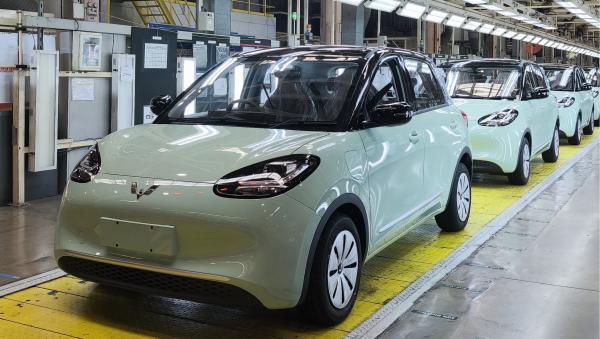
If Indonesia intends to leverage its vast nickel reserves—a critical component in lithium-ion battery production—it must do more than simply export raw materials. The country must transition into a high-value-added manufacturer. This transition, however, is impossible without a workforce and a research base that understands the nuances of electrochemical engineering and power electronics.
Historical Context and Industrial Chronology
The global shift toward electric vehicles has accelerated rapidly over the last decade, with major economies setting aggressive net-zero carbon targets. For Indonesia, the timeline of EV development has been marked by several key legislative and strategic milestones:
- 2019: The issuance of Presidential Regulation Number 55 of 2019, which officially initiated the Acceleration of the Battery-Based Electric Motor Vehicle Program. This marked the government’s formal commitment to the EV transition.
- 2020-2022: The establishment of the Indonesia Battery Corporation (IBC), a state-owned enterprise formed to integrate the value chain from mining to battery cell production.
- 2023-2025: A period defined by the entry of major foreign players into the Indonesian market, establishing assembly plants and initial battery precursor facilities.
- 2026 and Beyond: The current phase, characterized by the government’s push for "local content requirements" (TKDN) and a focus on domestic innovation rather than just assembly.
Stella Christie’s comments arrive at a time when the "local content" push is facing pressure to produce tangible, home-grown technological breakthroughs. The ministry’s current focus is to ensure that by the 2030s, the intellectual property governing Indonesian-made EVs is owned by domestic institutions or companies, rather than being entirely licensed from abroad.
Supporting Data: The Global and Local EV Landscape
Data from the International Energy Agency (IEA) highlights the sheer scale of the challenge Indonesia faces. In 2025, global EV sales surpassed 20 million units, with China accounting for over 60% of that total. Indonesia’s market penetration remains in the nascent stages, primarily driven by two-wheeled vehicles.
From an academic perspective, the output of patents related to battery technology and EV drivetrain efficiency in Indonesia has shown a steady, albeit slow, upward trend. However, when compared to regional peers like Thailand or international leaders like South Korea, the volume of high-impact research papers remains insufficient.
Furthermore, economic analysts suggest that for Indonesia to maintain its competitive edge, the cost of production for EV components must drop by at least 25% over the next five years. This reduction can only be achieved through significant technological innovation—specifically in the refinement of battery chemistry and the automation of vehicle manufacturing processes—areas where university research is expected to play a central role.
Official Responses and Expected Implications
Industry stakeholders have generally welcomed the Deputy Minister’s focus on long-term innovation. Representatives from the Indonesian Automotive Industry Association (GAIKINDO) have frequently stated that the availability of a skilled domestic engineering workforce is the primary factor in determining whether Indonesia can become a regional EV hub.
The academic community, however, faces the challenge of funding and infrastructure. To achieve the goals set forth by the Ministry of Higher Education, Science, and Technology, there is a clear requirement for increased public-private partnership (PPP) funding. Universities are calling for more robust mechanisms to commercialize research, allowing professors and students to transition their prototypes into the industrial production line.

The implications of this policy shift are significant. If successful, Indonesia could transition from a passive market for international EV manufacturers to an active exporter of EV technology. This would not only bolster the national trade balance but also provide long-term energy security by reducing reliance on imported fossil fuels.
Challenges to Sustainable Innovation
Despite the optimistic outlook, several obstacles remain. The first is the "brain drain" phenomenon, where top Indonesian talent in science and engineering often gravitates toward international research centers or multinational corporations abroad. Retaining this talent within the local academic ecosystem is a prerequisite for the kind of long-term innovation Stella Christie envisions.
Secondly, there is the issue of infrastructure. Research into EV technology requires sophisticated laboratories, clean rooms, and high-performance computing facilities that are currently concentrated in only a few elite Indonesian universities. Scaling this capacity across the archipelago will require a massive budgetary allocation and a change in how research is prioritized in the national budget.
Finally, the transition requires a shift in mindset. As Stella Christie noted, the success of the Chinese model was not a sprint but a marathon. The Indonesian academic sector must be prepared to endure the "valley of death"—the difficult period between the discovery of a new technology in the lab and its successful commercial application in the market.
Conclusion: A Strategic Pivot for Higher Education
The intervention by Stella Christie marks a shift in how the government views the role of universities. No longer seen as purely pedagogical centers, they are being repositioned as the "R&D engines" of the Indonesian economy.
By looking to the history of China’s EV revolution, the Deputy Minister is providing a roadmap that emphasizes patience, foundational research, and the courage to innovate beyond the existing market. For the Indonesian government, the next decade will be defined by its ability to translate these academic ideals into the reality of assembly lines and electric grids.
As Indonesia moves forward, the integration of academic output into the heart of the automotive industry will be the ultimate litmus test for the country’s technological sovereignty. The challenge is immense, but the strategic necessity of the energy transition makes the call for long-term, research-driven innovation not just a policy preference, but an economic imperative. The road to becoming an electric vehicle hub is paved with the research conducted in laboratories today, and the government’s commitment to this long-term view will be the defining factor in Indonesia’s industrial future.
