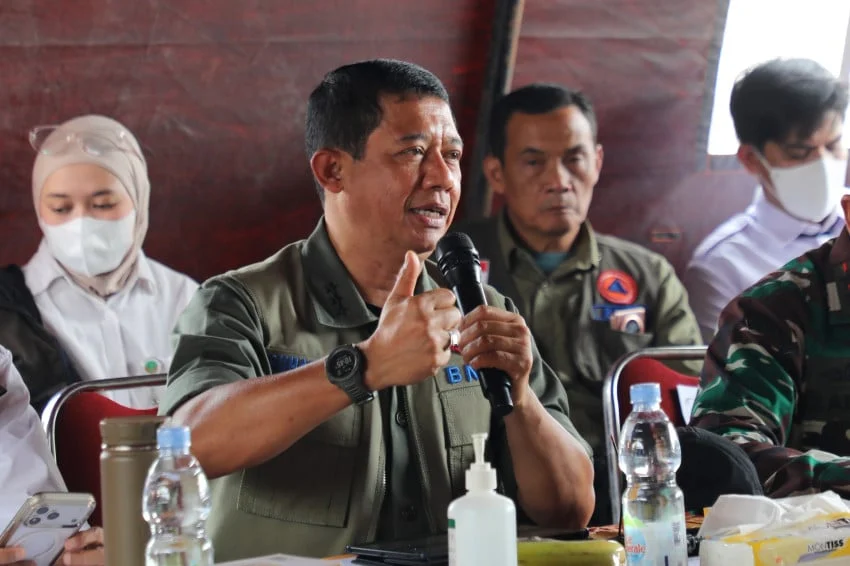
Head of the National Disaster Management Agency (BNPB), Lieutenant General TNI Suharyanto, has formally addressed public criticism surrounding his recent remarks regarding the ongoing forest and land fires (karhutla) and the resulting haze crisis in Kalimantan. The controversy erupted following a limited cabinet meeting (ratas) chaired by President Prabowo Subianto, during which Suharyanto reported that the wheels of community life were continuing to operate normally despite the environmental disaster. The statement quickly drew widespread backlash from environmental activists, public health advocates, and residents of the affected regions who felt that the phrase minimized the severe hardships, health crises, and economic disruptions they were enduring daily.
Seeking to quell the mounting public outrage and clear any misunderstandings, Suharyanto issued an official clarification statement, elaborating on the specific context and intent behind his words during the high-level government briefing. The clarification attempts to bridge the gap between high-level bureaucratic reporting on emergency mitigation efforts and the grim, on-the-ground realities faced by communities engulfed in toxic haze. As public scrutiny intensifies over the government’s handling of seasonal fires, the incident has reignited broader national debates regarding disaster communication, accountability, and the true extent of environmental degradation caused by recurrent land clearing and climate anomalies across Indonesia’s major islands.
Context and Chronology of the Controversy
The sequence of events leading to the public controversy began on September 23, 2026, when President Prabowo Subianto convened a strategic limited cabinet meeting at the state palace to evaluate the national response to escalating forest and land fires. During the briefing, key ministers and agency heads presented status reports on disaster mitigation, resource deployment, and inter-agency coordination. As the head of the primary disaster management body, Lieutenant General Suharyanto delivered an update detailing the progress of firefighting operations, water-bombing deployment, and the general state of infrastructure functionality in the disaster zones.
Within this bureaucratic and logistical update, Suharyanto utilized the phrase indicating that everyday societal functions and economic lifelines in Kalimantan were running normally. While intended as a metric of basic systemic resilience—demonstrating that supply chains, state administration, and essential transport corridors had not entirely collapsed—the phrasing was isolated by media outlets and rapidly disseminated across digital platforms. By September 25, 2026, the statement had triggered fierce pushback from civil society organizations, local communities, and digital commentators who argued that portraying life as normal glossed over the suffocating pollution, rising respiratory illness rates, and paralyzed educational activities plaguing provinces like Central Kalimantan and West Kalimantan.
Understanding the Bureaucratic Context of Normalcy
In his official clarification released on Friday, September 25, 2026, Suharyanto explicitly detailed what he meant by the term normal within the framework of emergency management reporting. He stressed that his remarks were strictly confined to a narrow set of functional indicators related to fundamental societal mechanics, such as overland traffic flow, basic market trade, and the continuity of frontline public administrative services. According to the BNPB head, this terminology was never intended to paint an idealized picture of the environmental landscape or to dismiss the profound physical and psychological toll exacted upon citizens residing in the haze-stricken zones.
Furthermore, Suharyanto emphasized that his reporting framework during presidential briefings focuses on operational capacities—evaluating whether logistical routes remain passable and whether distribution networks can deliver emergency aid. He acknowledged that transferring such administrative terminology into public discourse without sufficient contextualization unfortunately created a perception of administrative apathy. By clarifying his stance, the BNPB sought to reassure the public that the central government remains acutely aware that institutional functionality does not equate to an acceptable standard of living for populations breathing hazardous air.
On-the-Ground Realities in Kalimantan
While disaster management agencies monitor logistical indicators, the ground reality for millions of residents across Central Kalimantan, West Kalimantan, and surrounding provinces tells a starkly different story. Dense palls of toxic haze have intermittently blanketed major urban centers and rural settlements alike, drastically reducing visibility and plunging air quality index (AQI) readings into hazardous categories. Schools in several districts have frequently been forced to suspend physical classroom learning, shifting back to remote modules to protect children from inhaling particulate matter that poses severe long-term risks to developing respiratory systems.
Healthcare facilities across the affected provinces have reported noticeable surges in patients presenting with acute respiratory infections (ARIs), asthma exacerbations, and severe eye irritations. Outdoor economic activities, which form the lifeblood of informal workers such as street vendors, agricultural laborers, and traditional fishermen, have faced crippling disruptions as visibility drops and authorities advise vulnerable populations to remain indoors. Furthermore, regional aviation has experienced recurring flight delays and cancellations due to low visibility at local airports, isolating certain districts and complicating the rapid transport of medical supplies and firefighting personnel.
Environmental Perspectives and the Root Causes of Karhutla
The controversy over disaster reporting also intersects with ongoing friction between government assessments and environmental watchdogs regarding the root causes of the fires. Organizations such as Greenpeace Indonesia have consistently pushed back against simplistic attributions of the fires solely to natural climate phenomena like El Nino. Environmental advocates argue that structural issues, including corporate land management practices, illegal land clearing for plantations, inadequate peatland restoration enforcement, and delayed prevention protocols, play a dominant role in igniting and sustaining the annual blazes.
Belgis Habiba of Greenpeace Indonesia and other prominent environmental analysts have repeatedly highlighted that treating forest fires as an inevitable seasonal curse obscures corporate and administrative accountability. Peatlands, which act as massive carbon sinks when wet, become highly combustible tinderboxes when drained for agricultural conversion. When these carbon-rich soils catch fire, they release staggering volumes of greenhouse gases into the atmosphere alongside toxic smog that crosses national borders, turning a domestic environmental management challenge into an international diplomatic concern.
The Implications of Disaster Communication
The backlash faced by the BNPB highlights a critical vulnerability in modern crisis management: the widening chasm between technical disaster indicators and human-centric messaging. In emergency communications, quantitative metrics measuring infrastructural survival—such as roads remaining open or markets functioning—often clash with qualitative realities of human suffering. When disaster officials prioritize institutional resilience over public empathy in their public-facing statements, it frequently alienates affected populations and erodes public trust in official mitigation efforts.
Communication experts note that high-ranking officials must meticulously calibrate their language during presidential briefings that are subsequently broadcast to the public. In an era of hyper-connected digital media, fragmented soundbites can easily strip away vital bureaucratic context, transforming a nuanced logistical assessment into an apparent dismissal of a humanitarian crisis. Moving forward, disaster management authorities face the imperative of integrating empathetic public messaging that explicitly validates community hardships while simultaneously reporting on technical response measures.
Broader Economic and Long-Term Impacts
Beyond immediate health and visibility concerns, recurrent forest fires and prolonged haze crises exact a heavy toll on the national and regional economy. Agricultural productivity suffers as sunlight is blocked by thick smoke blankets, stunting crop development in vulnerable sectors. The tourism industry experiences immediate cancellations as travelers avoid smoke-choked destinations. Furthermore, the substantial financial outlays required for water-bombing operations, cloud-seeding initiatives, medical interventions, and emergency relief distribution strain both national and regional state budgets annually.
The recurring nature of the karhutla cycle underscores the urgent necessity for structural transformations in Indonesia’s environmental governance. Policymakers face mounting pressure to transition from a reactive posture—dominated by emergency firefighting and post-crisis mitigation—to a proactive strategy anchored in strict preventive enforcement, community-based fire watch networks, and mandatory corporate compliance regarding peatland preservation. Without systemic enforcement of preventative regulations, communities in Kalimantan will continue to cycle through annual phases of environmental crisis, regardless of how normal administrative indicators appear on paper.
Moving Forward: Accountability and Inter-Agency Coordination
In the wake of the clarification provided by Lieutenant General Suharyanto, BNPB and its coordinating partners, including the Ministry of Environment and Forestry, local regional disaster management agencies (BPBD), the Indonesian National Armed Forces (TNI), and the Indonesian National Police (Polri), face the ongoing challenge of sustaining effective suppression operations. Inter-agency coordination remains vital as hotspots fluctuate depending on wind patterns, humidity levels, and localized rainfall anomalies. Ensuring transparent, empathetic, and accurate public communication will remain essential for maintaining community cooperation and adherence to health advisories.
Ultimately, the controversy serves as a stark reminder that managing natural and human-induced environmental disasters requires more than mechanical efficiency and logistical deployment. It demands acute sensitivity to the lived experiences of vulnerable populations whose daily existence is upended by toxic environmental hazards. As Indonesia navigates the complexities of climate change and recurrent seasonal fires, bridging the communication divide between state bureaucracy and civil society remains an indispensable component of effective national resilience.