
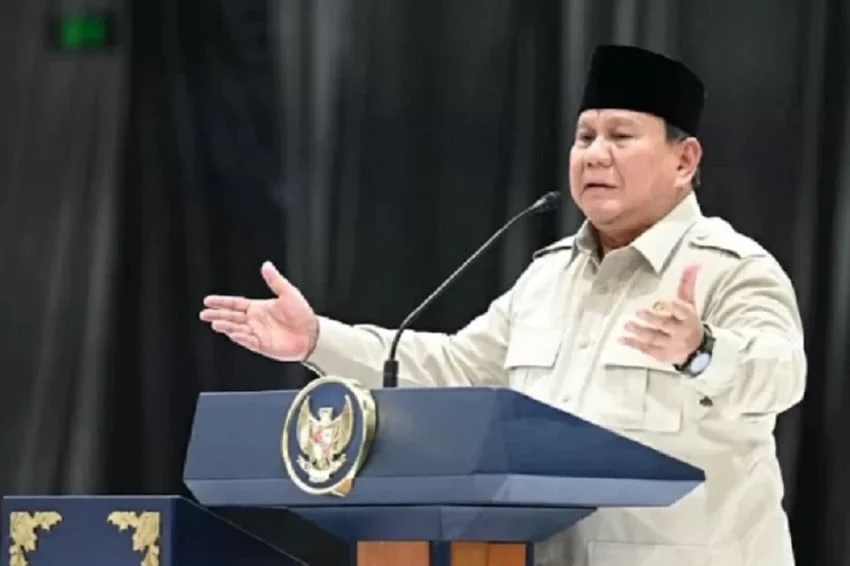
President Prabowo Subianto recently shared a personal anecdote regarding his use of artificial intelligence to explore spiritual concepts during his address at the 15th-anniversary celebration of the NasDem Party in Jakarta on Wednesday, November 11, 2026. This unconventional approach to philosophical inquiry highlighted the President’s ongoing engagement with modern technology, while simultaneously setting the stage for a stern rebuke regarding national stability and political ethics.
The President recounted a moment of intellectual curiosity during his daily routines, where he found himself pondering the deeper theological implications of "Shiratal Mustaqim"—a central term appearing in the opening chapter of the Quran, Al-Fatihah, which translates to "the straight path." Unable to immediately clarify the nuances of the phrase to his satisfaction, the President directed his personal staff (Sespri) to utilize ChatGPT to provide an accessible and comprehensive interpretation. This brief foray into digital assistance served as a segue into a much heavier discourse regarding the integrity of the Indonesian state and the responsibility of its political actors.
The Context of the National Discourse
Prabowo’s use of the AI tool occurred against a backdrop of increasing political tension. While his inquiry into the "straight path" was framed as a personal search for moral and spiritual clarity, it contrasted sharply with his assessment of the current political environment. The President expressed significant concern over what he described as a deliberate, malicious effort by certain factions to paint a narrative of an "Indonesia in darkness."
According to the President, this narrative is not merely political disagreement—which he acknowledges as a standard component of democratic rivalry—but an act of sabotage. He specifically addressed the damaging of government infrastructure, which he emphasized is financed by taxpayer money. The President’s rhetoric during the NasDem anniversary event was firm: he characterized the spreading of rumors regarding state collapse and the subsequent destruction of public assets as "evil" acts that undermine the progress of the nation.
Chronology and Escalation of Rhetoric
The timeline of these events points to a period of heightened sensitivity within the administration. In the weeks leading up to the November 11th address, reports of civil unrest and localized protests against government policies had been circulating. The government has remained vigilant against what it terms "misinformation campaigns" aimed at delegitimizing state institutions.
President Prabowo’s speech was not an isolated incident but part of a broader communications strategy. In recent weeks, the President has been vocal about the distinction between legitimate political opposition and what he classifies as "destabilizing activities." By bringing up the "Shiratal Mustaqim" anecdote, the President attempted to bridge the gap between his role as a national leader and his personal adherence to ethical guidelines, implicitly challenging his detractors to align their political actions with a "straight path" of constructive engagement rather than destruction.
The Role of AI in Modern Governance
The mention of ChatGPT by the President marks an interesting intersection between high-level governance and the rapid adoption of generative AI. In the Indonesian context, this is significant because it signals an executive branch that is increasingly comfortable with integrating digital tools into the daily workflow of the state. While the President used it for theological inquiry, the anecdote underscores a broader trend: the democratization of information.
The potential implications for governance are vast. As public officials embrace AI, the reliance on digital intermediaries for policy research, speech drafting, and even philosophical inquiry is expected to rise. However, experts suggest that such reliance requires careful verification, particularly when dealing with sensitive cultural or religious texts. The President’s transparency in revealing his source of information—the AI platform—serves as a case study in the evolving relationship between state leadership and silicon-based knowledge systems.

Analyzing the "Indonesia Gelap" Narrative
The term "Indonesia Gelap" (Indonesia in darkness) has emerged as a potent political trope used by critics of the administration to signify economic stagnation, social unrest, or democratic backsliding. President Prabowo’s rejection of this narrative rests on the premise that such claims are not based on economic reality but are instead calculated to incite public anxiety.
From an analytical standpoint, the President’s focus on the destruction of public facilities as an indicator of "evil" intent suggests a hardening stance against civil disobedience that crosses into vandalism. By framing the issue this way, the administration is effectively delegitimizing the methods of certain opposition groups, moving the debate away from policy critiques and toward the maintenance of public order. This strategy is aimed at consolidating support among the moderate base, who prioritize stability and institutional preservation over disruptive protest movements.
Official Responses and Political Implications
The NasDem Party, as the host of the event, has historically positioned itself as a bridge-builder in Indonesian politics. By allowing the President to utilize their anniversary platform to issue this warning, the party reinforces its alignment with the current administration’s stance on stability. Other political parties and observers have noted the gravity of the President’s statement. While opposition figures have largely remained silent on the specific "ChatGPT" anecdote, they have been quick to defend their right to criticize the government, arguing that calling out state failings is a fundamental aspect of the democratic process.
The political implications of this address are two-fold. First, it serves as a warning to domestic political actors that the state will be increasingly aggressive in prosecuting those linked to the destruction of public property. Second, it highlights the President’s personal preoccupation with the ethical underpinnings of his presidency. By invoking the "straight path," he is framing his administration’s actions—no matter how controversial—as part of a principled commitment to the national interest.
Economic and Social Impact
The rhetoric surrounding the "darkness" of the nation has potential consequences for investor sentiment. Economic analysts point out that while Indonesia’s macroeconomic indicators remain stable, the perception of political stability is crucial for foreign direct investment (FDI). If the administration continues to emphasize that the country is under threat from "evil actors," it may inadvertently create a climate of uncertainty that markets dislike. Conversely, if the government successfully demonstrates control and maintains the rule of law, it may stabilize investor confidence in the long run.
The social impact of this narrative is equally significant. As the government prepares for future policy shifts, the struggle to define the "true" state of the nation will continue. The President’s focus on the moral dimensions of leadership, exemplified by his interest in the "straight path," suggests a desire to steer the national conversation toward unity and collective responsibility.
Looking Ahead
As of November 2026, the administration appears to be entering a phase of consolidation. The President’s narrative—that he is a leader seeking moral clarity and guidance, while simultaneously defending the nation against malicious disruptors—is a potent political tool. Whether this approach will satisfy the growing calls for political accountability or exacerbate existing divisions remains to be seen.
The use of AI as a touchstone in his public speaking suggests that Prabowo is aiming to appear as a modern, relatable leader who is not afraid to embrace new technology. Yet, the core of his message remains deeply rooted in traditional concepts of order, loyalty, and national duty. The "straight path" that he seeks for his administration is one that he demands his political opponents follow as well.
In conclusion, the story of the President’s ChatGPT inquiry into the meaning of Shiratal Mustaqim is more than a mere human-interest sidebar. It is a reflection of a presidency grappling with the complexities of digital communication, the demands of moral leadership, and the challenges of maintaining national stability in a volatile political climate. As Indonesia moves forward, the dichotomy between the "straight path" of the state and the "darkness" of its detractors will likely remain the central theme of the national dialogue, with the administration showing little willingness to compromise on its vision of order and national progress. The coming months will be critical in determining whether this firm stance succeeds in unifying the country or further polarizes an already divided electorate. The President’s message is clear: the path forward for Indonesia must be one of construction, not destruction, and those who deviate from this path will face the full weight of the state’s resolve.
