
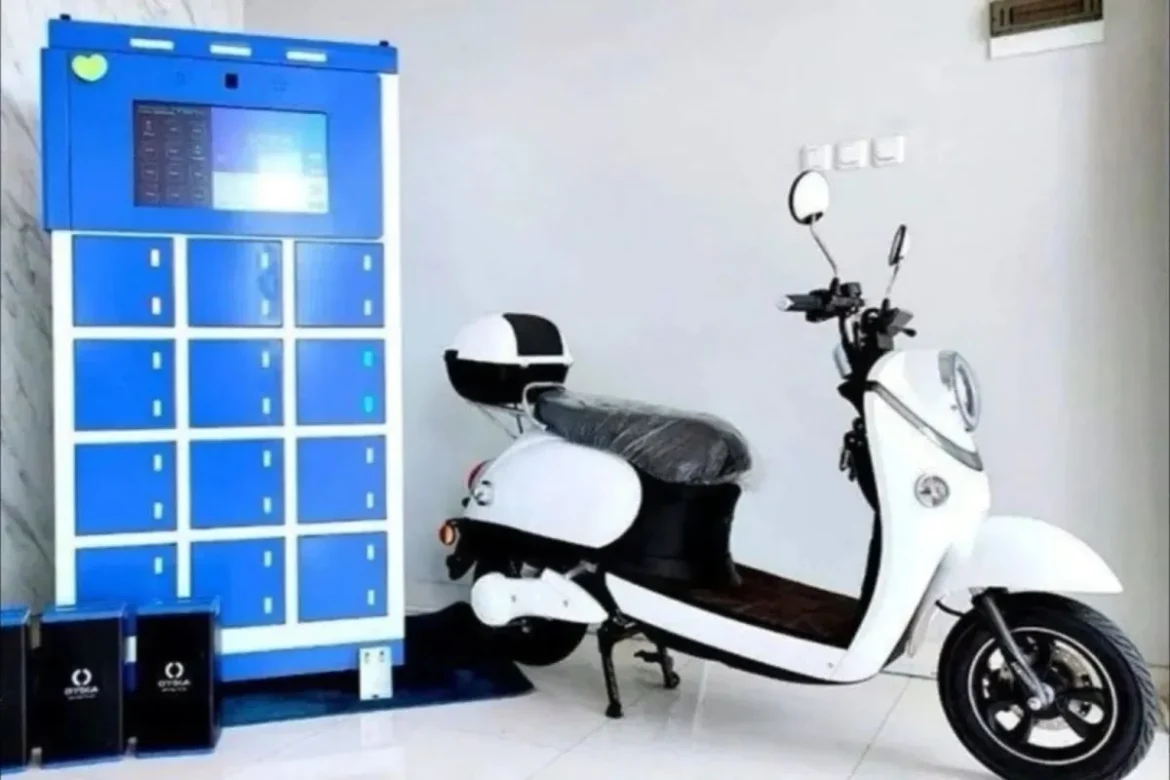
The Indonesian government is accelerating its push toward sustainable transportation by preparing a fresh wave of fiscal incentives for the domestic electric vehicle sector. Set to launch officially in September 2026, the administration has earmarked a substantial budget of approximately Rp3 trillion to subsidize the purchase of electric motorcycles, offering a direct price cut of Rp3 million per unit. This strategic economic intervention aims to accelerate the adoption of eco-friendly two-wheelers, reduce reliance on heavily subsidized fossil fuels, and bolster the manufacturing capabilities of local electric vehicle industries.
However, while the financial contours of the program are beginning to take shape, critical regulatory frameworks, technical guidelines, and official lists of eligible vehicle models remain under meticulous review by relevant ministries. As stakeholders across the automotive ecosystem prepare for the upcoming transition, industry associations and manufacturers are closely monitoring the regulatory developments to align their production lines and marketing strategies with the government’s visionary roadmap.
Financial Allocation and Production Realities
The announcement of the Rp3 million per-unit incentive marks a significant evolution in the government’s ongoing strategy to electrify national transportation. According to statements from Minister of Finance Purbaya Yudhi Sadewa, the allocated budget of Rp3 trillion has the theoretical capacity to subsidize up to one million electric motorcycles if the maximum quota is fully realized and absorbed by the public.
Despite the robust financial backing, economic planners and industry analysts maintain a pragmatic outlook regarding the immediate uptake of the program. Current projections from industrial capacity assessments indicate that the national production volume of electric motorcycles is expected to reach approximately 100,000 units by the end of 2026. Consequently, the actual distribution of incentives is anticipated to scale gradually, aligning closely with manufacturing output rather than immediately exhausting the maximum fiscal ceiling. This balanced approach ensures that the subsidy stimulates local manufacturing growth without creating severe supply chain bottlenecks or overextending market capacity prematurely.
Spotlight on Domestic Brands: Alva and Gesits
In the preliminary discussions surrounding the upcoming subsidy program, the government has explicitly highlighted two prominent domestic electric motorcycle brands: Alva and Gesits. These brands represent the vanguard of Indonesia’s indigenous electric vehicle engineering, reflecting the administration’s intent to prioritize domestic manufacturing and local economic value addition.
Alva, manufactured by PT Ilectra Motor Group (IMG), and Gesits, produced by PT Gesits Motor Nusantara, have established strong footholds in the domestic market. Nevertheless, policymakers have emphasized that the mere mention of these brands does not grant automatic eligibility for a blanket Rp3 million discount across all their existing lineups. The final implementation will be strictly governed by technical criteria that evaluate specific vehicle standards, component localization, and consumer verification mechanisms.
To better understand the potential market dynamics, industry observers have mapped out simulation prices for various models under the hypothetical Rp3 million subsidy framework. For Alva, the current portfolio includes popular models such as the Alva Cervo, Cervo X, Cervo Q, N3 Next Gen, and One XP.
Under a simulated price reduction of Rp3 million applied to current retail listings, the Alva Cervo—typically retailed around Rp35.75 million—could see its price adjusted to approximately Rp32.75 million. Similarly, the Alva Cervo X could shift from roughly Rp32.9 million to a more accessible Rp29.9 million. Meanwhile, the Alva N3 Next Gen and One XP, which currently hover around the Rp31.5 million mark, could potentially retail near Rp28.5 million. Market analysts stress that these figures are strictly simulations for exploratory purposes and do not constitute official pricing structures until the government finalizes regulatory decrees.
A similar exercise applies to the Gesits lineup, which features models such as the Gesits G1, Gesits GV1 Standard Range, Gesits GV1 Long Range, and Gesits Raya. Based on baseline market data compiled ahead of the September 2026 rollout, the flagship Gesits G1 is generally priced around Rp28.27 million. With the application of the Rp3 million incentive, the simulated price would adjust downward to approximately Rp25.27 million.
For entry-level and alternative configurations, the Gesits GV1 Standard Range—historically pegged around Rp23.95 million—could see pricing drop to roughly Rp20.95 million. The Gesits GV1 Long Range, retailing near Rp29.9 million, could adjust to about Rp26.9 million, while the Gesits Raya model could experience a reduction from approximately Rp26.5 million down to roughly Rp23.5 million. These projections highlight the potential affordability boost that the subsidy program aims to deliver to Indonesian consumers, broadening the demographic reach of electric mobility.
Regulatory Prerequisites and Compliance Standards
As anticipation builds across the consumer base, government officials have issued cautionary reminders urging the public to exercise patience. The specific qualifying criteria required to receive the Rp3 million incentive have not yet been formalized through binding legal regulations.
In previous iterations of government-backed electric vehicle incentives, frameworks heavily relied on strict metrics such as the Domestic Component Level (TKDN—Tingkat Komponen Dalam Negeri), requiring a significant percentage of parts to be sourced and manufactured locally. While it remains highly likely that similar localization requirements will feature in the September 2026 framework, stakeholders must wait for the definitive release of ministerial regulations to avoid market confusion and misinformation.
Industry associations, such as the Indonesian Electric Motorcycle Industry Association (AISMOLI), have actively engaged with regulatory bodies to ensure a smooth transition. AISMOLI has consistently advocated for transparent guidelines, emphasizing that manufacturers are fully prepared to adapt to upcoming compliance mandates. Furthermore, industry leaders have stressed the importance of simultaneous efforts to enhance product quality, improve after-sales service infrastructure, and expand public charging networks to support the long-term viability of the electric vehicle ecosystem.
Broader Economic and Environmental Implications
The introduction of the Rp3 million incentive program is far more than a simple consumer discount; it represents a core pillar of Indonesia’s broader macroeconomic and environmental strategy. For years, the government has borne a heavy fiscal burden associated with subsidized fossil fuels. Transitioning personal mobility from internal combustion engines to electric propulsion offers a dual advantage: curbing state expenditure on imported petroleum and significantly lowering urban carbon emissions.
Environmental think tanks, including the Institute for Essential Services Reform (IESR), have repeatedly underscored the multifaceted benefits of rapid electrification. Beyond climate mitigation, transitioning to electric two-wheelers stimulates local technological innovation, fosters green jobs, and positions Indonesia as a regional manufacturing hub within the burgeoning Southeast Asian electric vehicle supply chain.
Moreover, complementary initiatives—such as proposals by energy policy researchers to mitigate financial risks and broaden consumer financing options—are being integrated into the broader discourse. Expanding access to affordable credit for electric motorcycle purchases is viewed as a vital catalyst to ensure that lower- and middle-income households can participate in the green transition, thereby democratizing access to clean transportation.
Outlook Leading to September 2026
With the implementation date slated for September 2026, the intervening months will serve as a critical preparation phase for regulators, manufacturers, and prospective buyers. The Ministry of Finance, alongside the Coordinating Ministry for Economic Affairs and the Ministry of Industry, is expected to finalize the technical decrees that will outline the exact mechanics of disbursement, verification procedures for dealerships, and consumer eligibility checks.
For prospective buyers, industry experts recommend maintaining a watchful eye on official government announcements rather than relying on speculative retail adjustments. As the regulatory architecture solidifies, transparency regarding eligible brands, verified retail pricing, and transaction procedures will become clear. Ultimately, the September 2026 incentive program stands as a decisive milestone in Indonesia’s journey toward a cleaner, more sustainable, and self-reliant automotive future.
