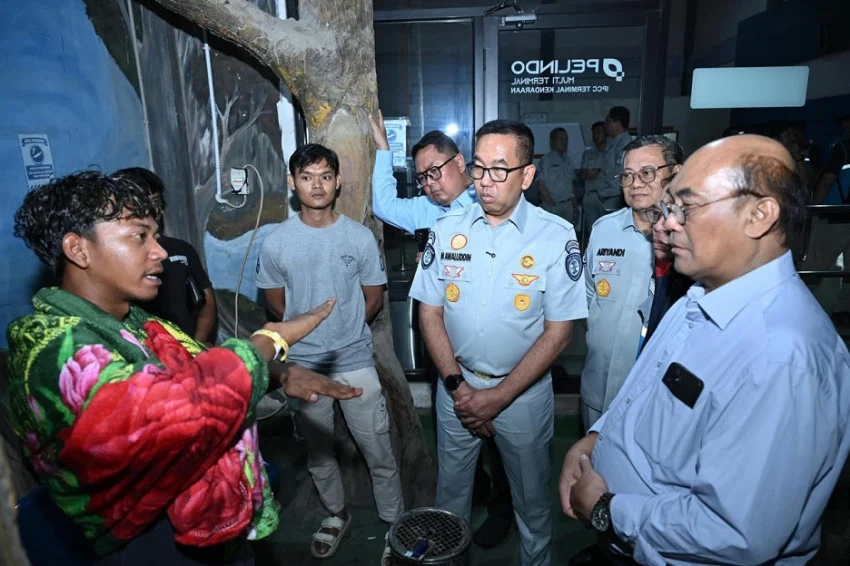
The maritime safety landscape in Indonesia faced yet another grim reminder of the unpredictable perils of archipelagic navigation following the tragic accident involving the motor vessel KM Virgo Transport 8. Operating along the heavily trafficked maritime corridor connecting the bustling port city of Surabaya in East Java to Banjarmasin in South Kalimantan, the vessel met with disaster on Sunday, September 13, 2026. The incident, triggered by extreme weather conditions and violent wave action in the Java Sea, has prompted an immediate, multi-agency response centered on search, rescue, medical triage, and victim advocacy. At the forefront of the humanitarian and financial relief effort is PT Jasa Raharja (Persero), the state-owned enterprise tasked with providing social insurance and statutory passenger protection. Led by President Director Muhammad Awaluddin, the corporate leadership has mobilized institutional resources to guarantee that all affected passengers and crew members receive prompt administrative verification, immediate medical coverage, and rightful statutory compensation without bureaucratic impediment.
The unfolding crisis has once again placed maritime logistics, passenger vessel safety standards, and state-backed disaster response mechanisms under intense public scrutiny. As search and rescue operations persist alongside rigorous victim identification protocols, the coordinated efforts of federal agencies, local medical infrastructure, and corporate guarantors serve as a critical lifeline for families shattered by the tragedy.
Chronology of the Disaster: From Smooth Transit to Maritime Emergency
The final voyage of KM Virgo Transport 8 began under standard operational parameters from the Port of Tanjung Perak in Surabaya, carrying a complement of passengers and cargo bound for the port of Banjarmasin. According to initial preliminary logs from maritime authorities, the voyage proceeded without incident for the initial phase of the crossing through the Java Sea. However, meteorological forecasts from the Meteorology, Climatology, and Geophysical Agency (BMKG) had previously warned of localized maritime turbulence, characterized by sudden wind shifts and hazardous sea states.
As the vessel approached the regional waters closer to South Kalimantan, it encountered severe and anomalous wave formations. Witnesses and initial survivor accounts indicate that high, rogue waves battered the starboard side of the vessel, critically destabilizing its cargo and center of gravity. Within minutes, the compounding forces of violent wave action and momentum shifts caused the vessel to capsize. The suddenness of the disaster left the crew with minimal opportunity to issue a formal distress call prior to impact, although emergency transponders eventually alerted regional maritime traffic control and the National Search and Rescue Agency (Basarnas).
The immediate aftermath initiated a frantic coordinated search and rescue (SAR) operation involving joint teams from the Indonesian Navy (TNI AL), Basarnas, the Marine Police, and local fishermen. Operating under adverse weather conditions, the SAR team prioritized the location of survivors adrift in the turbulent waters and the retrieval of those trapped or unaccounted for. By Sunday afternoon, the scale of the disaster became apparent as emergency responders confirmed that the vessel had fully turned turtle, its hull partially submerged and presenting a significant navigational hazard in the busy shipping lane.
Casualty Statistics and the Verification Process
As the joint SAR operation transitions from immediate rescue to recovery and investigation, official casualty figures have been updated by operational task forces stationed in Banjarmasin. Current operational briefings indicate that six individuals have tragically lost their lives in the disaster. The bodies of the deceased have been recovered and transferred to designated regional forensic units, where disaster victim identification (DVI) teams are working meticulously to confirm identities through dental records, DNA sampling, and distinct physical markers.
Concurrently, dozens of other passengers and crew members sustained varying degrees of physical trauma, ranging from hypothermia and near-drowning complications to lacerations, fractures, and severe psychological shock. These survivors were pulled from the water or rescued from life rafts and immediately funneled into the regional healthcare grid. The accuracy of passenger manifests continues to be cross-referenced against ticket sales and port clearance documents to ensure that no missing individuals are overlooked during the ongoing sweep of the disaster zone.
State-Backed Financial Relief and Statutory Compensation
In alignment with its statutory mandate under Law No. 33 and Law No. 34 of 1964 concerning the Mandatory Passenger Accident Insurance Fund and Road Traffic Accident Fund, PT Jasa Raharja swiftly activated its emergency response protocol upon confirmation of the KM Virgo Transport 8 tragedy. President Director Muhammad Awaluddin, flanked by executive management personnel, personally visited the disaster response centers and hospitals in Banjarmasin to oversee the distribution of guarantees and interface directly with surviving victims and grieving families.
Speaking on the framework of corporate responsibility, Awaluddin emphasized that the state remains fully committed to upholding the financial security of every citizen utilizing public transportation networks. For the families of the six individuals confirmed dead in the incident, Jasa Raharja has verified that statutory compensation amounting to Rp50 million per deceased victim will be disbursed directly to legal heirs. This compensation package operates under streamlined administrative guidelines designed to bypass protracted bureaucratic delays, ensuring that families receive financial assistance during their period of acute vulnerability.
Furthermore, to alleviate the immediate financial burden associated with emergency medical intervention, Jasa Raharja has issued comprehensive hospital payment guarantees. These administrative instruments cover all medical expenses up to a maximum threshold of Rp20 million per injured victim. The guarantees have been formally extended to the primary medical facilities designated to handle the crisis: RSUD Ulin, the Banjarmasin Military Hospital (RS TPT), and RS Sultan Suryansyah. By securing direct billing arrangements with these institutions, the state ensures that survivors receive unhindered access to surgical, pharmaceutical, and rehabilitative care without being forced to pay out-of-pocket deposits.
Multilayered Institutional Protection and Corporate Synergy
A notable aspect of the financial mitigation strategy deployed for the KM Virgo Transport 8 incident is the integration of auxiliary insurance vehicles. Beyond the baseline coverage provided by the parent corporation, supplemental protection has been activated through Jasaraharja Putera (JRP), a specialized subsidiary operating within the broader Jasa Raharja corporate ecosystem. This secondary layer of institutional backing ensures that any incidental liabilities or supplementary policy provisions held by passengers are accounted for, maximizing the financial recovery and support network available to the victims.
This collaborative approach highlights a maturation in Indonesia’s public-sector insurance administration. By coupling statutory accident funds with subsidiary underwriting capacity, state entities are better positioned to absorb the systemic shocks of mass-casualty transportation accidents, providing a buffer that individual households could rarely manage independently.
Broader Implications for Maritime Safety and Inter-Island Logistics
The tragic capsizing of KM Virgo Transport 8 extends far beyond the immediate humanitarian concerns of rescue and compensation; it forces a critical re-evaluation of maritime safety regulations across Indonesia’s vast archipelago. As an island nation heavily dependent on domestic ferry networks and cargo vessels for economic connectivity, Indonesia’s inter-island transit infrastructure faces perennial challenges related to extreme weather, regulatory enforcement of passenger manifests, and vessel load compliance.
Transport safety analysts note that incidents occurring in transitional weather windows—such as the shift between monsoon seasons—frequently expose vulnerabilities in medium-sized commercial shipping. The Java Sea, known for its shallow bathymetry and swift meteorological shifts, can transform from a benign shipping lane into a hostile marine environment within hours. Consequently, the ongoing investigation by the National Transportation Safety Committee (KNKT) will likely scrutinize not only the seaworthiness and stability certification of KM Virgo Transport 8, but also the real-time weather advisory compliance framework enforced by port authorities prior to departure.
Moreover, the incident places renewed emphasis on the digitalization of passenger manifests. Discrepancies between physical headcounts and port departure logs have historically complicated rescue operations and victim identification protocols during maritime disasters in Indonesian waters. The rapid response demonstrated by Jasa Raharja in verifying identities through digital databases underscores the critical need for integrated, real-time passenger tracking systems across all major commercial ports.
Conclusion and Ongoing Outlook
As recovery operations in the Java Sea wind down and forensic teams finalize the identification of the remaining deceased, the focus in Banjarmasin and Surabaya shifts toward long-term recovery, legal accountability, and administrative finalization. PT Jasa Raharja has affirmed that its crisis command posts will remain active until every designated survivor has completed their medical rehabilitation and all legal heirs have successfully received their statutory disbursements.
The disaster involving KM Virgo Transport 8 stands as a sobering reminder of the inherent risks associated with maritime transit, yet it also highlights the robust resilience of Indonesia’s state-backed social protection mechanisms. Through proactive leadership, immediate financial intervention, and inter-agency coordination, entities like Jasa Raharja continue to provide a vital social safety net, ensuring that even in the face of sudden tragedy, the rights and welfare of citizens remain fully protected under the law.