
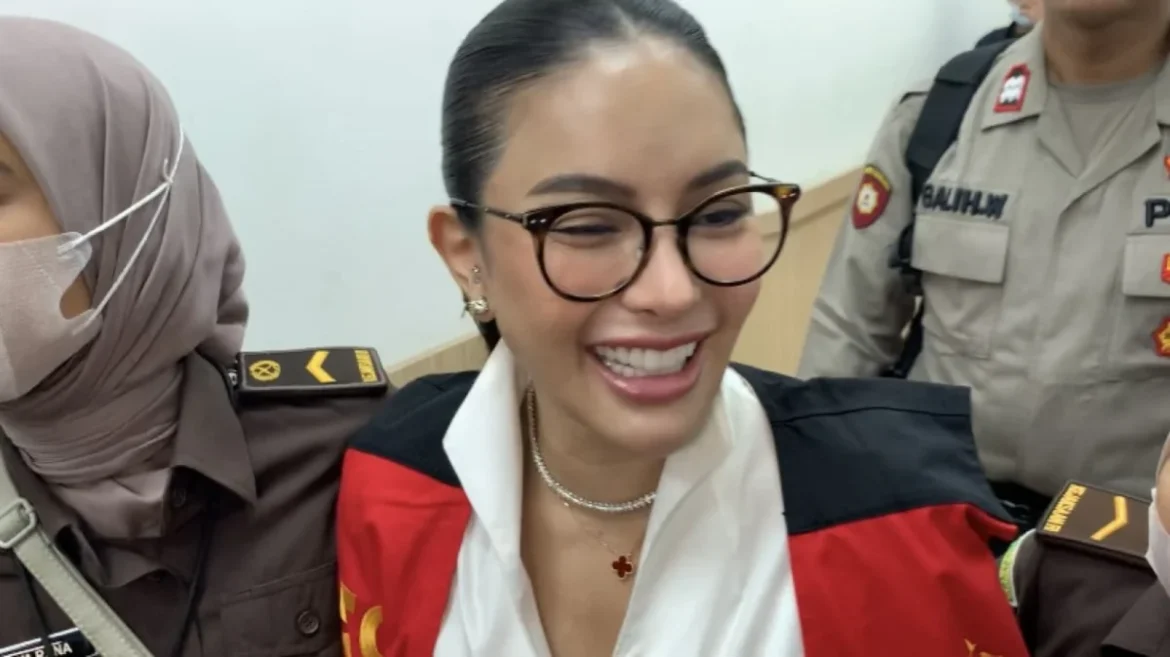
The legal battles of prominent Indonesian celebrity and actress Nikita Mirzani have reached a critical juncture following a definitive ruling by the Supreme Court of Indonesia. The highest judicial institution in the country officially rejected the extraordinary legal remedy known as a Judicial Review or Peninjauan Kembali submitted by Mirzania legal maneuver intended to overturn her conviction. With this final decision, the six-year prison sentence previously handed down by the appellate court remains fully in force, closing several chapters of a high-profile litigation saga that has captured public attention for years.
The culmination of this protracted legal process has triggered widespread public commentary across traditional and digital media platforms. In a surprising turn of events, public figures, legal experts, and former adversaries have weighed in on the outcome. Among the most notable reactions was an unexpected message of support from Tengku Zanzabella, a social media personality who had previously been embroiled in public disputes and bitter feuds with the actress. Rather than utilizing the opportunity to gloat or launch further verbal attacks, Zanzabella took to digital networks to extend well wishes, advice, and moral encouragement to her former rival, demonstrating a notable shift in tone that quickly became a major talking point within the entertainment industry.
Background Context of the Legal Dispute
The origins of the legal conflict trace back to a formal criminal complaint filed by aesthetic doctor and business owner Reza Gladys. The initial grievance centered on allegations of defamation, online harassment, and subsequent financial discrepancies that eventually escalated into severe criminal charges. The dispute rapidly moved beyond a standard celebrity feud into the formal jurisdiction of the Indonesian criminal justice system, drawing intense media scrutiny as investigators gathered evidence, questioned witnesses, and processed formal indictments through the South Jakarta Metropolitan Police and subsequently the state prosecution office.
As the case proceeded to the judicial phase, the initial trial at the South Jakarta District Court delivered a verdict that found Mirzani guilty of specific charges, resulting in a sentence of four years of imprisonment alongside a subsidiary financial penalty of one billion rupiah, with an alternative three-month confinement term in lieu of payment. However, neither the defense nor the prosecution was entirely satisfied with the initial ruling, setting the stage for higher-stakes appellate proceedings that would drastically alter the severity of the legal consequences for the defendant.
Chronology of Judicial Proceedings and Appeals
The legal timeline of the case illustrates the progressive escalation of penalties as the matter moved through successive tiers of the Indonesian court system.
-
Initial District Court Trial: The South Jakarta District Court concluded its primary hearings by sentencing Nikita Mirzani to four years in prison and imposing a one-billion-rupiah fine. During this initial phase, certain complex financial allegations, specifically relating to money laundering charges or Tindak Pidana Pencucian Uang, were not legally substantiated to the satisfaction of the first-instance panel of judges.
-
High Court Appellate Ruling: Dissatisfied with the initial outcome, prosecutors elevated the matter to the Jakarta High Court. In the appellate review, the judicial panel arrived at a substantially different conclusion regarding the scope of the criminal acts committed. The High Court determined that the evidence sufficiently demonstrated active participation in money laundering offenses. Consequently, the appellate judges overturned aspects of the lower court ruling and significantly aggravated the sentence, expanding the prison term from four years to a total of six years.
-
Supreme Court Cassation: Seeking to invalidate the harsher appellate ruling, Mirzani’s defense team filed a formal cassation petition with the Supreme Court. The highest court reviewed the administrative and substantive legal arguments presented by the defense but ultimately found no procedural errors or misinterpretations of law that would justify annulling the appellate decision, thereby upholding the six-year prison term.
-
Judicial Review Application: Refusing to concede defeat, the legal representatives of the actress pursued an extraordinary legal remedy in the form of a Judicial Review. This mechanism requires the discovery of novel circumstances or newly identified material evidence that was not presented during the original trials, or a manifest judicial error apparent on the face of the previous rulings. The Supreme Court thoroughly evaluated the submission and formally rejected the petition, cementing the six-year incarceration period as the final standing judicial reality.
Surprising Public Reactions and the Response from Tengku Zanzabella
The finality of the Supreme Court decision prompted immediate public reactions, most notably from Tengku Zanzabella. The prominent social media influencer, whose historical relationship with Nikita Mirzani was characterized by high-profile public confrontations and mutual antagonism, surprised observers by publicly displaying empathy.
Utilizing her verified social media channels, Zanzabella posted direct messages addressed to the incarcerated actress. Displaying a conciliatory posture, she wrote, "Stay healthy, Nyai," employing a well-known affectionate honorific often used by Mirzani’s fanbase. Recognizing the immense psychological toll of prolonged imprisonment and the exhaustion of standard judicial remedies, Zanzabella went a step further by offering practical counsel regarding institutional mechanisms for sentence reduction. "At the very least, you can try to pursue a remission," she added, before concluding with a final message of encouragement: "Keep your spirits up, Nik."
This unexpected display of solidarity generated considerable discussion among netizens, highlighting the fluid nature of public rivalries in the digital age where long-standing animosities occasionally yield to human empathy when individuals face severe personal adversity.
Alternative Legal Avenues: The Path of Presidential Clemency
With the formal rejection of the Judicial Review petition, standard avenues within the judicial hierarchy have been entirely exhausted. Legal practitioners have noted that while the courts have spoken their final word, constitutional mechanisms outside the judiciary remain theoretically available under Indonesian law.
Prominent legal expert and criminal law practitioner Ricky Sitohang publicly addressed the remaining options available to the defendant, pointing specifically to the constitutional right to petition the President of the Republic of Indonesia for clemency, widely known as grasi. According to Indonesian statutory frameworks governing clemency, a convicted person possesses the legal prerogative to request the head of state to grant mercy, which can manifest as a commutation, reduction, complete remission, or total abolition of the executed criminal penalty.
"If the situation has reached this point, and the Judicial Review has been rejected by the authorities, then effectively only one option remains: applying for presidential clemency," Ricky Sitohang explained to members of the media during a press briefing discussing high-profile criminal cases.
Legal analysts emphasize, however, that presidential clemency is not a judicial review of legal guilt or innocence, but rather an act of executive grace and sovereignty. The President exercises this authority based on considerations advised by relevant state institutions, including the Supreme Court and the Ministry of Law and Human Rights. Furthermore, legal experts clarify that initiating a clemency petition does not suspend the execution of the sentence unless specific administrative stays are granted, and the decision to pursue this path rests entirely within the personal discretion of Nikita Mirzani and her legal counsel.
Broader Implications for Public Figures and the Legal Landscape
The conclusion of this multi-year legal saga carries broader implications for the intersection of celebrity culture, digital defamation laws, and the enforcement of financial crimes legislation in Indonesia. The case serves as a prominent precedent regarding how digital disputes, online content creation, and business conflicts can escalate into severe criminal prosecutions carrying substantial custodial sentences.
The inclusion of money laundering charges in the appellate decision—which ultimately elevated the prison term to six years—underscores the increasing strictness with which Indonesian courts evaluate financial transactions and commercial disputes involving high-profile public personalities. Prosecutors and judicial panels have demonstrated an increasing willingness to apply comprehensive statutory frameworks beyond basic defamation when investigating and punishing digital-era offenses.
As Nikita Mirzani navigates the remainder of her sentence within the correctional system, the entertainment industry and legal observers continue to monitor the situation closely. Whether the defense team will ultimately advise filing a formal clemency petition to the executive branch remains to be seen. For now, the definitive rulings of the Supreme Court stand as an unyielding testament to the conclusion of one of the most closely watched celebrity trials in modern Indonesian legal history.
