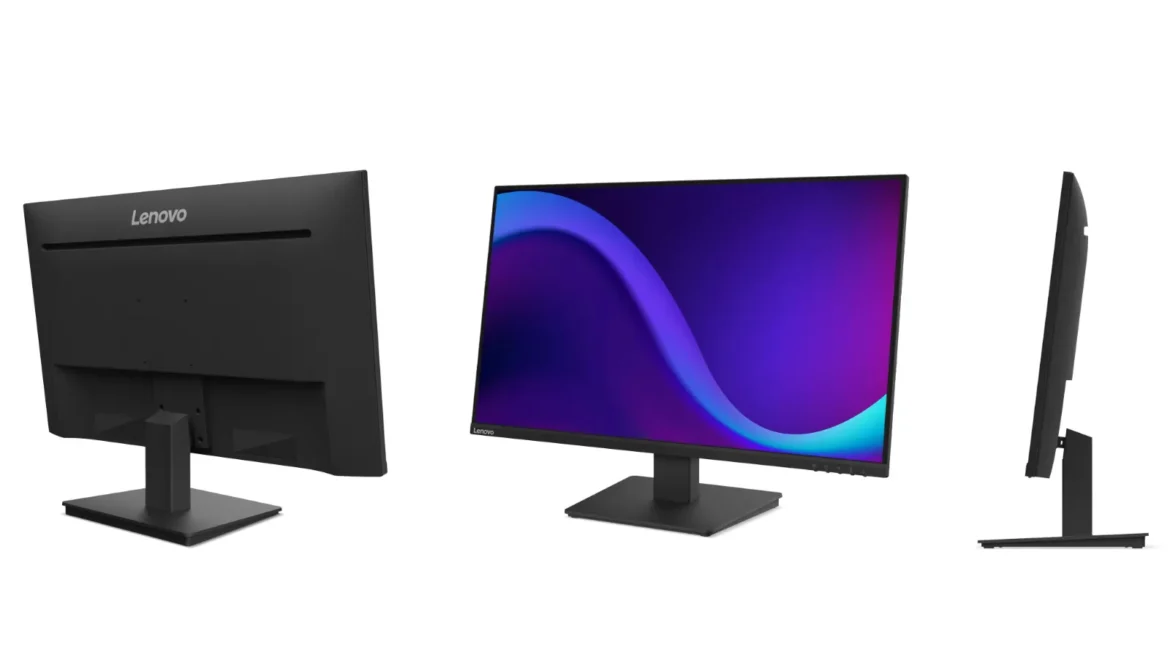
Lenovo has officially expanded its portfolio of affordable display solutions with the introduction of a larger-format option within its entry-level SKU series. Previously, the company’s budget-focused "e" monitor lineup was restricted to compact 24-inch form factors, best exemplified by models such as the Lenovo L24-4e. Recognizing a growing consumer demand for expansive screen real estate without a prohibitive price tag, the technology giant has unveiled the Lenovo L32-4e. This new addition brings a 32-inch display panel to the budget segment, aiming to capture the attention of value-conscious consumers, home office workers, and casual multimedia enthusiasts who require more workspace than traditional monitors can offer.
Main Facts and Display Specifications of the Lenovo L32-4e
Positioned firmly in the budget-friendly category, the Lenovo L32-4e incorporates a set of pragmatic hardware specifications designed to balance cost efficiency with everyday usability. In a notable shift from smaller sibling models in the same series—which frequently utilize In-Plane Switching (IPS) panels—this new 32-inch iteration opts for a Vertical Alignment (VA) panel. This technological choice allows the monitor to deliver significantly deeper contrast ratios, a critical factor for immersive media consumption in dimly lit environments.
The display boasts a native Full HD resolution of 1920 by 1080 pixels mapped across a standard 16:9 widescreen aspect ratio. While some users might desire a higher pixel density at the 32-inch size, the 1080p resolution keeps system hardware requirements low, making it compatible with older or entry-level graphics cards without performance penalties. The monitor achieves a maximum peak brightness rating of 300 nits, which is adequate for typical indoor office and living room lighting conditions.
Color reproduction is handled via a color depth equivalent to 8-bit color, achieved through a 6-bit plus Frame Rate Control (FRC) method. The panel covers 99 percent of the sRGB color gamut, ensuring reasonably accurate and vibrant hues for daily productivity tasks, web browsing, and casual content creation. Furthermore, the VA panel distinguishes itself with a remarkable static contrast ratio of 4,000:1, providing noticeably richer blacks compared to standard IPS alternatives in the same price bracket.
Despite its budget classification and large physical footprint, the Lenovo L32-4e does not skimp entirely on performance metrics. The monitor supports a maximum refresh rate of up to 144Hz, complemented by AMD FreeSync technology support. This combination helps mitigate screen tearing and stuttering, rendering the device surprisingly viable for light gaming and ensuring that standard desktop navigation, window dragging, and scrolling appear noticeably smoother than traditional 60Hz or 75Hz panels. The manufacturer specifies a gray-to-gray (GtG) response time of 4 milliseconds when the monitor is operated in its "Extreme" response time mode, effectively minimizing motion blur during fast-paced sequences.
Engineering Compromises and Connectivity Options
Achieving an aggressive price point inevitably requires strategic manufacturing compromises. In the case of the Lenovo L32-4e, these concessions are most apparent in the realm of physical connectivity and peripheral support.
Lenovo has elected to provision the monitor with a minimalist I/O panel. Connectivity options are restricted to a single HDMI 1.4 port and a legacy VGA port. Noticeably absent from the specification sheet are modern standards such as DisplayPort connectivity, integrated USB hub functionality, and a standard 3.5mm audio jack for headphones or external speakers. Consequently, prospective buyers must carefully evaluate their existing hardware ecosystem to ensure compatibility, as users relying on modern graphics cards lacking legacy video outputs may require active adapters to interface with the monitor.

Ergonomic adjustments are similarly streamlined. The included factory stand offers basic functionality, limited strictly to a tilt adjustment range spanning from -5 to +22 degrees. Height adjustment, swivel, and pivot capabilities are omitted from the stock stand. However, to accommodate users seeking more flexible ergonomic positioning, Lenovo has incorporated standard VESA 100 x 100 mm mounting holes on the rear chassis, allowing the monitor to be easily attached to third-party monitor arms or wall brackets.
Chronology and Market Introduction
The rollout of the Lenovo L32-4e marks a calculated progression in Lenovo’s display product roadmap. Over the past several fiscal quarters, market analysts have observed an increasing consumer shift toward larger desktop displays to support multi-window productivity workflows, remote work environments, and hybrid learning setups.
Historically, entry-level display lineups from major original equipment manufacturers (OEMs) remained anchored to the 22-inch to 24-inch domains, forcing consumers who desired a 32-inch workspace to invest in mid-range or professional-grade hardware lines carrying significantly higher price premiums. By scaling the "e" series up to 32 inches, Lenovo has effectively bridged this market gap.
The device first surfaced when detailed specifications were officially listed on Lenovo’s global product specification reference pages, accompanied by simultaneous global technology press coverage. As of the initial product listings, Lenovo has not yet disclosed official manufacturer’s suggested retail pricing (MSRP) figures or a definitive commercial release date across global regional markets. Industry observers anticipate that regional pricing strategies and availability timelines will be communicated closer to the official retail shipping window.
Broader Industry Implications and Market Analysis
The introduction of the Lenovo L32-4e highlights several ongoing trends within the global PC peripheral market. Manufacturers are increasingly under pressure to deliver enhanced feature sets—such as high refresh rates and adaptive synchronization technologies—down to the most affordable tiers of hardware.
The inclusion of a 144Hz refresh rate in a budget-oriented 32-inch panel demonstrates that high refresh rates are no longer exclusive to dedicated gaming monitors. As consumer expectations shift toward smoother visual interfaces in everyday operating systems, hardware makers are incorporating these capabilities into general-purpose displays.
However, the choice of a 1080p resolution on a 32-inch screen presents an interesting study in consumer compromise. While lower resolutions reduce rendering loads for budget GPUs, they result in a lower pixel density (approximately 69 pixels per inch), which may not satisfy users accustomed to high-resolution Retina or 4K displays. Despite this, for demographic segments prioritizing physical screen size, workspace legibility, and high refresh rates over ultra-sharp pixel counts—such as enterprise reception areas, budget-conscious home offices, and casual users—the L32-4e addresses a distinct market niche.
As market competition intensifies among major PC hardware brands, the success of the Lenovo L32-4e will ultimately depend on its final retail positioning. If priced aggressively against competing large-format entry-level displays, it has the potential to redefine consumer expectations for what a budget-tier monitor can deliver in terms of physical scale and visual fluidity.