
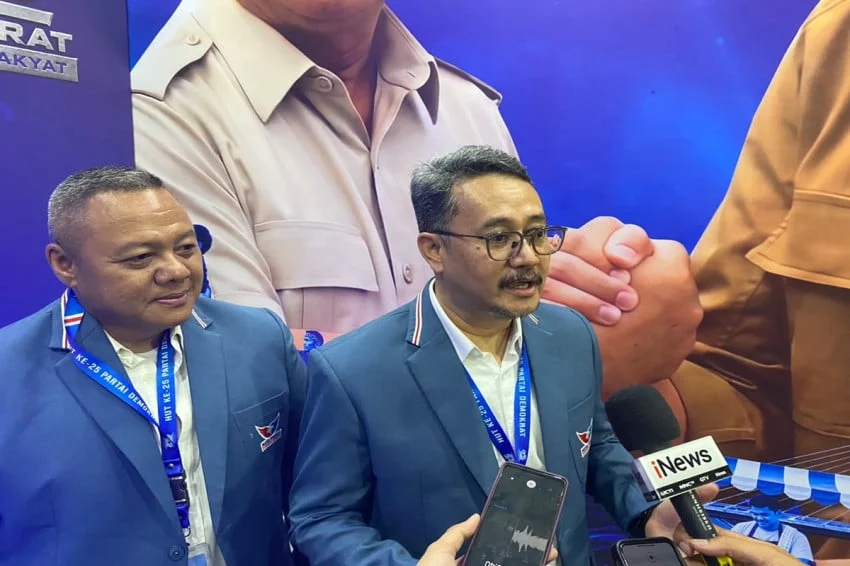
The Silver Jubilee celebration of the Democratic Party (Partai Demokrat) marked a significant milestone in the landscape of Indonesian politics as the organization reached its 25th anniversary. The event, held at the Indonesia Arena in Senayan, Central Jakarta, on Wednesday, September 9, 2026, served as a convergence point for various political stakeholders. Among the notable attendees was the Secretary-General of the Perindo Party, Ferry Kurnia Rizkiyansyah, who represented the party’s Chairwoman, Angela Tanoesoedibjo. His presence underscored a growing trend of inter-party cooperation aimed at consolidating democratic values and addressing the multifaceted challenges facing the nation.
A Commemoration of Two and a Half Decades
The Democratic Party, founded in 2001, has traversed various political cycles, ranging from periods of governance to roles in opposition. The 25th anniversary, often referred to as a "Silver Jubilee," acts as a reflective moment for the party’s leadership and its constituents. The choice of the Indonesia Arena—a modern, large-scale facility—reflected the party’s ambition to project strength and unity to the public.
For the Democratic Party, the anniversary is not merely a celebration of longevity but a strategic moment to reassert its ideological identity. The event was characterized by speeches from senior leadership, including Agus Harimurti Yudhoyono (AHY), who sought to align the party’s historical struggles with its current legislative and executive agenda. The themes emphasized during the celebration revolved around the sustainability of democratic institutions, the necessity of checking executive power, and the commitment to serving the grassroots population.
Inter-Party Diplomacy: The Perspective of Perindo
Ferry Kurnia Rizkiyansyah’s attendance provided a tangible example of the evolving "politics of collaboration" in Indonesia. Representing the Perindo Party, Ferry emphasized that the presence of various political figures at the event was a testament to the shared interest in maintaining a stable and productive political ecosystem.
"We, from the Perindo Party, representing our Chairwoman, are grateful to be able to attend the 25th anniversary of the Democratic Party. As part of the political landscape, we are eager to maintain a continuous synergy," Ferry stated during the event.
The sentiment expressed by the Perindo Secretary-General suggests that regardless of ideological differences or competition in previous election cycles, there is a recognized value in maintaining open channels of communication between parties. Ferry further noted that the core philosophy of Perindo—which focuses heavily on community-based activities and welfare—aligns with the populist narratives often championed by the Democratic Party. He emphasized that the common goal of working "with the people" serves as a bridge between the two organizations.
Contextualizing the Political Climate
The year 2026 serves as a critical juncture for Indonesian political parties as they navigate the post-election landscape and prepare for future local and national legislative shifts. The Democratic Party, having maintained a consistent presence in the national parliament, uses these anniversary events to solidify its brand.
Historically, the Democratic Party reached its peak in the late 2000s under the presidency of Susilo Bambang Yudhoyono. The last decade has seen the party undergo a leadership transition to a younger generation, represented by AHY. This transition has required the party to recalibrate its messaging to appeal to younger voters, who constitute a significant portion of the Indonesian electorate. By inviting representatives from other parties like Perindo, the Democratic Party is signaling a departure from isolated political maneuvering toward a more inclusive, coalition-oriented approach.
Chronology of the 25th Anniversary Event
The celebration in Senayan was meticulously organized to convey a sense of continuity. The schedule included:

- Morning Session: Opening remarks by the party’s founding members and senior advisory boards, reflecting on the party’s establishment in 2001.
- Midday Session: Keynote addresses focused on the current economic and social state of the nation. It was during this segment that the party reiterated its stance on the limits of power, a theme that has been central to their political discourse in recent months.
- Afternoon Session: Diplomatic interactions between party leaders. This was when officials like Ferry Kurnia Rizkiyansyah engaged with the host party to discuss future cooperation, whether in legislative committees or broader policy discussions.
Implications for Future Coalitions
The interaction between the Democratic Party and Perindo, though represented by a singular event, carries broader implications for coalition building. In a multiparty system like Indonesia’s, where a single party rarely holds a legislative majority, the ability to form alliances is paramount.
Political analysts observing the event note that the cordial atmosphere between the parties is indicative of a "soft coalition" strategy. While formal alliances are typically cemented through signed agreements and electoral cooperation, the groundwork for such partnerships is often laid through presence at significant milestones, mutual public acknowledgments, and shared rhetoric regarding the nation’s future.
Perindo’s stated desire to "continue to synergize" suggests that the party is looking to position itself as a reliable partner in the legislative process. By aligning with a party that has a quarter-century of experience, Perindo may be aiming to leverage the Democratic Party’s institutional knowledge and public outreach capabilities.
Challenges and Future Trajectory
Despite the celebratory nature of the event, the political path forward for both parties remains complex. Indonesia’s economic landscape, the necessity of bureaucratic reform, and the ongoing challenge of addressing public dissatisfaction with various policy outcomes mean that both the Democratic Party and Perindo face significant scrutiny.
The "limits of power" narrative discussed by AHY during the celebration reflects a cautious approach to the current administration. For parties like Perindo, which are focused on community empowerment, the challenge lies in translating that empowerment into tangible legislative wins. If these parties can maintain the synergy mentioned by Ferry, they may find themselves in a stronger position to influence policy in the coming years.
Analysis: The Evolution of Party Branding
The 25th anniversary of the Democratic Party is a case study in institutional resilience. Many political parties in Indonesia struggle with succession and longevity. By surviving for 25 years and successfully transitioning leadership while maintaining a clear ideological brand, the party has set a benchmark.
The inclusion of other parties in their celebration serves a dual purpose: it legitimizes the party’s status as a central player in national politics and creates a buffer against political isolation. For guests like the Perindo delegation, the event serves as a platform to demonstrate their own party’s relevance and willingness to engage in constructive dialogue.
As the political year continues, observers will be watching to see if this "synergy" translates into formal policy collaboration. The willingness of party elites to appear together in public, particularly at such a high-profile venue, is a strong indicator that the next phase of Indonesian politics will be defined by strategic alliances rather than rigid partisan confrontation.
Conclusion
The presence of Perindo’s Secretary-General at the Democratic Party’s silver anniversary is a reflection of the pragmatic political culture currently dominating Indonesia. While the event was celebratory, it was fundamentally about the future—about building bridges, finding common ground, and preparing for the next quarter-century of national governance. As the Democratic Party looks toward its future, its ability to foster these cross-party relationships will likely be as important as its internal policies. Similarly, for Perindo, the focus on community-centric politics remains a key pillar for growth, provided they can successfully navigate the complexities of national political alliances. The event in Senayan was not just a birthday party; it was a demonstration of the interconnected nature of the Indonesian political machine.
