
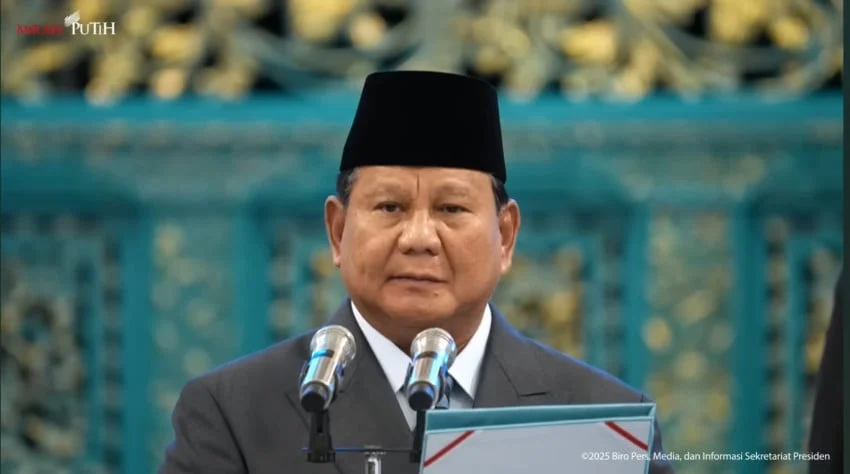
President Prabowo Subianto has officially signed into law the new Manpower Protection Law, marking a monumental shift in Indonesia’s labor and employment landscape. Designated as Law Number 27 of 2026, the sweeping legislation comprises an expansive 23 chapters spanning 313 articles, addressing a broad spectrum of worker rights, job security, welfare standards, and industrial relations. Published officially through the State Secretariat’s legal documentation network (JDIH), the legislation was formally signed and promulgated on October 28, 2026, and entered the State Gazette of the Republic of Indonesia as Year 2026 Number 179.
The introduction of this comprehensive legal framework follows months of intense discourse, widespread labor advocacy, and structural reviews involving lawmakers, business associations, and labor unions. By overhauling foundational labor regulations that have governed the country for decades, Law Number 27 of 2026 aims to strike a delicate balance between safeguarding the welfare of the Indonesian workforce and maintaining a competitive, investment-friendly climate.
Legislative Chronology and Background Context
The journey toward the enactment of the Manpower Protection Law has been characterized by protracted negotiations and persistent demands from labor organizations. For years, Indonesian labor unions have voiced deep concerns regarding job precarity, outsourcing practices, severance pay calculations, and the protections afforded to contractual workers. These grievances intensified following the enactment of Law Number 13 of 2003 concerning Manpower and the subsequent passing of Law Number 6 of 2023, which ratified the controversial Government Regulation in Lieu of Law (Perppu) on Job Creation, widely known as the Omnibus Law on Job Creation.
While the Job Creation Law was championed by the government as a vital instrument to cut red tape, attract foreign direct investment, and boost job creation, critics and labor unions frequently argued that it leaned too heavily in favor of business interests at the expense of worker security. Provisions concerning flexible working hours, simplified outsourcing mechanisms, and adjusted severance computations became major flashpoints for nationwide protests.
Pressure reached a critical juncture in the weeks leading up to the signing of the new statute. Representatives of labor confederations and communication heads from various labor bodies held high-level dialogues with state officials, aggressively lobbying the executive branch to expedite a dedicated legal framework that would prioritize worker protection. The culmination of these persistent appeals materialized on October 28, 2026, when President Prabowo Subianto affixed his signature to Law Number 27 of 2026, effectively establishing a new legislative cornerstone for Indonesian labor rights.
Structural Overhaul: What Replaces What
A critical aspect of the newly enacted Manpower Protection Law involves its transition mechanisms and the legal status of predecessor regulations. Article 310 and Article 311 of the newly signed statute outline clear parameters regarding how the legislation interacts with older laws, specifically Law Number 13 of 2003 and specific provisions within Law Number 6 of 2023 concerning Job Creation.
According to Article 310, all existing statutory regulations that served as implementing rules for Law Number 13 of 2003 on Manpower, as well as the Job Creation Law provisions related to manpower, shall remain legally binding. However, this continuance is strictly conditional: these older implementing regulations remain valid only to the extent that they do not contradict any provisions outlined in the newly enacted Law Number 27 of 2026. This transitional safety net is designed to prevent administrative vacuums while government agencies work on drafting new implementing regulations.
Conversely, Article 311 enacts a definitive repeal of previous foundational statutes. The original Law Number 13 of 2003 on Manpower is officially revoked and declared null and void. Furthermore, Chapter IV, Part One, Article 80 letter a, and Part Two, Article 81 within the Appendix of Law Number 6 of 2023 regarding the Job Creation Law are similarly rescinded. By systematically dismantling these specific legacy articles, the government has cleared the path for a unified, cohesive legal framework tailored to contemporary economic and social realities.
Transition Period and Implementation Timeline
Recognizing the immense administrative undertaking required to operationalize a 313-article statute, the law mandates a structured transition period. Government bodies, sectoral ministries, and labor authorities have been granted a maximum timeframe of one year from the date of promulgation to formulate, finalize, and issue all necessary implementing regulations, such as government regulations (PP), presidential regulations, and ministerial decrees.
During this 12-month transition window, stakeholders across the industrial ecosystem—including employers, human resource professionals, and labor unions—will be closely monitoring the drafting process. The success of the Manpower Protection Law will heavily depend on the substance of these forthcoming implementing rules, which will flesh out the practical application of workers’ rights, dispute resolution mechanisms, social security expansions, and compliance enforcement.
Stakeholder Reactions and Industrial Perspectives
The signing of Law Number 27 of 2026 has elicited a wave of cautiously optimistic reactions from labor unions, corporate leaders, and economic analysts alike.
Labor leaders, who previously staged continuous demonstrations and high-level meetings with state officials to fast-track the legislation, have expressed relief that the executive branch has formally delivered on worker-centric legal reforms. Many union representatives view the statute as a necessary corrective measure that restores a fairer equilibrium between labor and capital. They emphasize that the comprehensive nature of the 23 chapters offers a much-needed shield against unfair dismissals, unclear outsourcing boundaries, and inadequate workplace safety standards.
On the other side of the negotiating table, business associations and employer syndicates have voiced the importance of balanced implementation. While acknowledging the need for robust worker protection, corporate sectors have consistently stressed that labor regulations must not inadvertently stifle business agility or impede operational productivity. Business leaders are placing high expectations on the upcoming implementing regulations, hoping they will provide clear, predictable guidelines that accommodate both economic growth and worker welfare.
Economic Implications and Broader Impact
Economists and labor market experts point out that Law Number 27 of 2026 represents a pivotal evolution in Indonesia’s socio-economic trajectory. As Southeast Asia’s largest economy continues to navigate digital transformation, the gig economy, and shifting global supply chains, the nature of employment is undergoing rapid evolution.
A modern labor protection framework is seen as essential not only for domestic social stability but also for international trade compliance. Many global supply chains and international institutional investors increasingly prioritize Environmental, Social, and Governance (ESG) standards, which include fair labor practices and robust worker protections. By establishing a modern, transparent, and protective legal environment, Indonesia may bolster its standing as a responsible manufacturing and service hub, potentially attracting high-quality investments that value sustainable human capital development.
However, analysts also caution that the true test of the legislation lies in its enforcement. Bureaucratic efficiency, regional labor inspection capabilities, and the active participation of both workers and employers in compliance monitoring will determine whether the promises written within the 313 articles translate into tangible improvements on the ground.
As the one-year countdown for the completion of the implementing regulations begins, all eyes remain fixed on Jakarta. The coming months will witness intensive inter-ministerial coordination, public consultations, and tripartite dialogues to ensure that the operational rules of Law Number 27 of 2026 successfully bridge the gap between legislative ambition and practical industrial harmony.
