
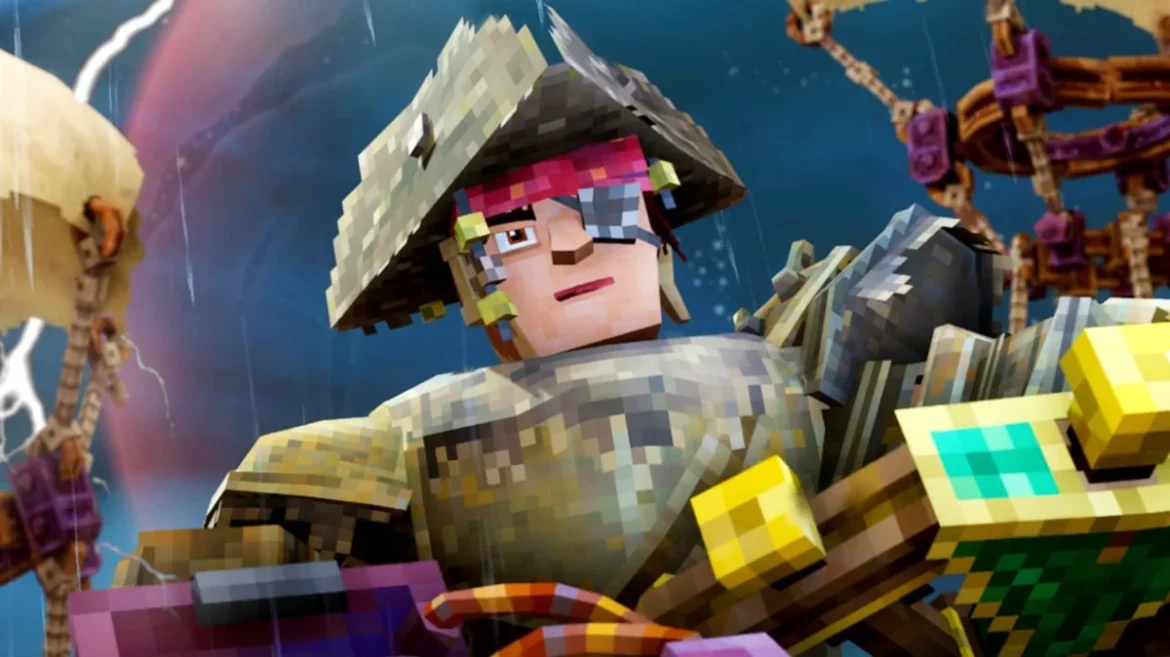
The survival RPG landscape witnessed a significant shift on Friday, September 25, 2026, as Enjoy Studio officially deployed its most ambitious update to date for the voxel-based title Everwind. Titled "Winds of Creation & Beyond," the update introduces a long-awaited Sandbox Mode, effectively pivoting the game from a strictly survival-focused experience toward a dual-identity platform that caters to both hardcore survivalists and creative builders. This strategic move positions Everwind to compete directly with genre titans like Minecraft, while maintaining its unique aesthetic identity centered on floating archipelagos and aerial navigation.
The Evolution of Everwind: From Survival to Sandbox
Everwind, a game defined by its voxel art style and RPG elements, has historically challenged players to manage resources, navigate perilous floating islands, and master airship travel in a hostile environment. Prior to this update, the game’s core loop was rooted in scarcity—players were required to hunt, gather, and scavenge to survive the harsh elements of its fantasy world.
The "Winds of Creation & Beyond" update fundamentally alters this dynamic. By implementing a dedicated Sandbox Mode, Enjoy Studio has removed the traditional resource-gating mechanisms, allowing users to focus entirely on structural design and mechanical experimentation. This shift reflects a broader trend in the gaming industry where developers are increasingly opting for "hybrid-genre" designs to maximize player retention and broaden demographic appeal.
Technical Breakdown: How Sandbox Mode Functions
The core of the new update is the Sandbox Inventory system. Unlike the standard gameplay mode, where item acquisition is tied to progression and biome-specific risks, Sandbox Mode provides players with an unlimited repository of building materials and tools.
Key features of the Sandbox implementation include:
- Sandbox Inventory: Instant access to all in-game assets, eliminating the need for farming or crafting progression.
- Command-Line Integration: Advanced users can utilize chat-based commands to manipulate the game world, including real-time adjustments to global weather patterns, time-of-day cycles, and entity spawning.
- Testing Environments: The introduction of specialized zones, such as the "One Island" and "Sandbox Islands," allows players to isolate their building projects from the procedural dangers of the main game world.
According to technical documentation released alongside the update, these changes are designed to support complex architectural projects that were previously impossible to achieve within the strict constraints of the survival economy. By allowing players to spawn enemies or change environmental conditions, Enjoy Studio is also providing a sandbox for game design, where players can essentially build their own challenge maps or dioramas.
Chronology of Development
The trajectory of Everwind has been marked by steady growth since its initial early-access phase. The timeline of the game’s development highlights a developer committed to community-led feedback:
- Q1 2025: Initial release of Everwind, focusing on core survival mechanics and the aerial ship-navigation system.
- Q3 2025: Community sentiment shifts; forums and social media channels show a high demand for a creative-focused mode to complement the existing RPG systems.
- Q1 2026: Enjoy Studio confirms the "Winds of Creation & Beyond" roadmap, promising a significant expansion of the world-building toolkit.
- September 25, 2026: Official deployment of the Sandbox Mode, alongside performance optimizations for the voxel rendering engine.
Industry analysts suggest that this development cycle is indicative of a "service-first" approach. By listening to the vocal segment of their player base that prioritized building over surviving, Enjoy Studio has effectively mitigated the "survival fatigue" that often plagues long-term players of the genre.
Comparative Analysis: Everwind vs. The Market
In the context of the global gaming market, Everwind occupies a unique niche. While Minecraft remains the industry standard for creative expression, its aesthetic is defined by blocky, low-fidelity textures. Everwind, conversely, utilizes a refined voxel engine that leans into a high-fantasy aesthetic, characterized by vibrant color palettes and verticality—specifically the navigation of floating islands via airship.
Data from third-party gaming analytics firms indicates that "creative-focused" gamers account for approximately 40% of the active player base in survival-RPG titles. By offering a mode that rivals the functionality of Creative Mode in Minecraft while keeping the high-fantasy setting of an RPG, Everwind is positioning itself to capture a significant portion of this market segment. Furthermore, the inclusion of airships as a primary mode of transport provides a vertical dimension to building that many other sandbox games lack.
Implications for the RPG Survival Genre
The introduction of a sandbox mode to a traditionally survival-heavy title is not without its risks. Some purists in the Everwind community have expressed concerns that the focus on creative freedom might dilute the stakes of the survival elements. However, Enjoy Studio has maintained that the Sandbox Mode exists as a parallel experience, distinct from the core campaign.
From an economic perspective, this update is likely to boost the game’s longevity. Sandbox games typically foster a "creator economy" where users spend hundreds of hours constructing elaborate cities or fantasy structures, which are then shared on social platforms. This user-generated content acts as a powerful marketing tool, effectively lowering the developer’s acquisition costs for new players.
Expert Perspectives and Community Reception
While official statements from Enjoy Studio management have been limited to technical patch notes, the sentiment among early adopters on public test realms has been overwhelmingly positive. Lead designers have emphasized that the "One Island" biome was a direct response to players who wanted to build without the intrusion of external hostile entities.
"The goal of this update is not to replace the survival experience, but to provide a canvas for the imagination," noted a spokesperson close to the development team. "We wanted to ensure that the mechanics of the game—the building blocks, the weather, and the enemies—are tools in the player’s hand, rather than obstacles in their path."
Looking Ahead: The Future of Everwind
With the release of "Winds of Creation & Beyond," the question now turns to the future of the game’s content pipeline. Developers have hinted that the new voxel-editing tools will eventually allow for the implementation of custom blueprints, which could enable players to share their creations via a centralized hub.
Furthermore, the integration of sandbox features provides a foundation for potential multiplayer server support. If players can eventually host their own "Creative Servers," Everwind could evolve into a social platform, similar to the massive ecosystems seen in titles like Roblox or Hytale.
As the game enters this new phase of its lifecycle, the focus will likely remain on stability and the refinement of the building interface. The ability to manipulate the environment with such precision suggests that the engine is capable of handling significantly more complex structures than originally anticipated.
In conclusion, the September 2026 update represents a pivotal moment for Everwind. By successfully bridging the gap between a high-stakes survival game and an open-ended creative sandbox, Enjoy Studio has demonstrated the agility required to succeed in a crowded market. Whether this update will be enough to propel Everwind to the top of the charts remains to be seen, but the tools provided to the player base are arguably among the most flexible in the current voxel-RPG genre. The shift towards creative freedom is not merely a feature addition; it is a fundamental transformation of the game’s core value proposition, ensuring its relevance in a gaming landscape that increasingly rewards player agency and creative expression.
