
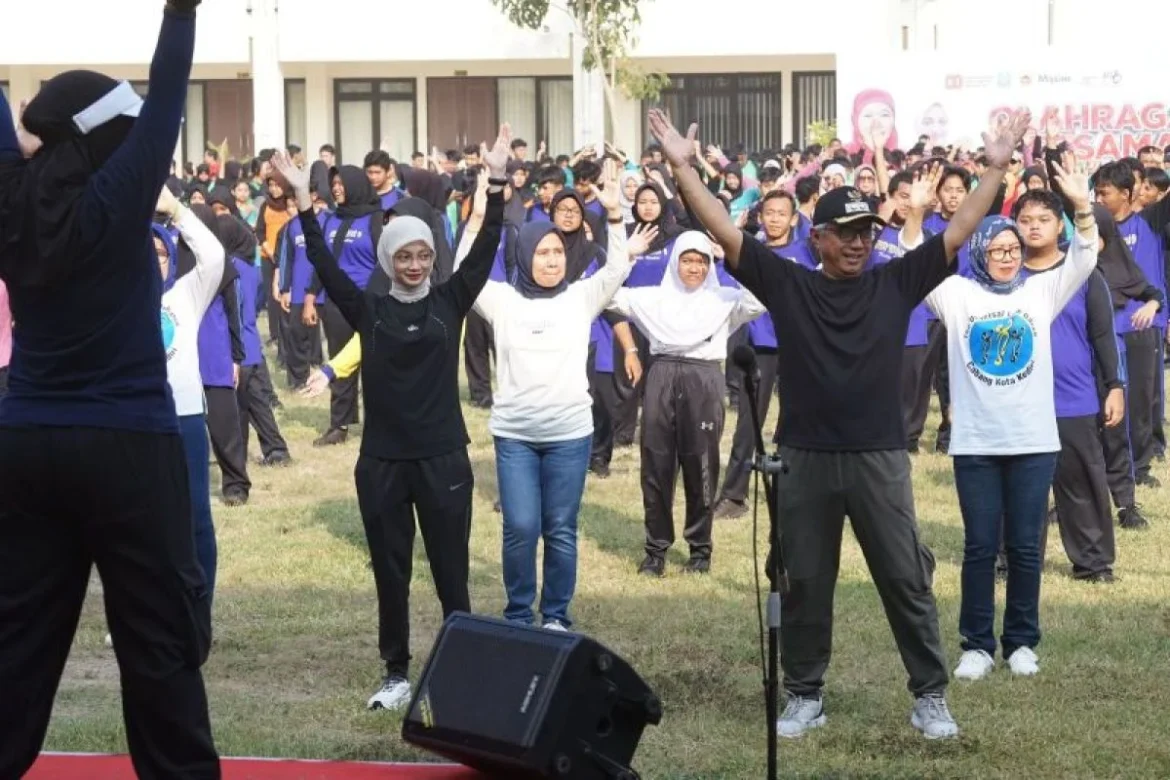
National Sports Day, widely recognized across the archipelago as Hari Olahraga Nasional (Haornas), stands as one of the most significant commemorations in the country’s civic and athletic calendar. Celebrated annually on September 9, this national observance serves as both a retrospective look at the triumphant evolution of Indonesian sports and a forward-looking catalyst for public health, community engagement, and national unity. The historical lineage of Haornas is deeply intertwined with the birth of the National Sports Week, or Pekan Olahraga Nasional (PON), which took place in Surakarta, Central Java, in 1948. From its genesis as a bold statement of sovereignty amidst post-independence turbulence to its modern incarnation as a multi-billion-rupiah driver of public health and sport tourism, Haornas encapsulates the indomitable spirit of a nation built on resilience and physical vitality.
The Historical Genesis: Defiance and Diplomacy Through Sports in 1948
The narrative of National Sports Day cannot be divorced from the geopolitical and social realities of Indonesia in the late 1940s. Having proclaimed independence on August 17, 1945, the young republic was still fighting to secure international recognition and defend its borders against colonial reoccupation forces. In this climate of intense political and physical struggle, Indonesian sports pioneers faced a monumental dilemma regarding international representation.
In 1948, the International Olympic Committee (IOC) invited nations to participate in the XIV Olympic Games in London, Great Britain. The fledgling Indonesian government eagerly sought to hoist the Red and White flag on the global stage, viewing the Olympics as a prime diplomatic avenue to demonstrate sovereignty and global presence. However, formidable administrative hurdles stood in the way. Because Indonesia’s independence had not yet achieved widespread formal diplomatic recognition—and given that the country lacked a recognized National Olympic Committee (NOC) and proper passport documentation accepted by the organizing committee—the Indonesian delegation was informed that its athletes could only compete under the flag of the Netherlands.
Choosing national dignity over compromised sovereignty, Indonesian sporting leaders firmly rejected the condition. Instead of succumbing to international isolation, visionary figures within the Sports Association of the Republic of Indonesia (PORI)—the precursor to the modern Indonesian National Sports Committee (KONI)—pivoted inward with extraordinary ambition. They resolved to organize a grand domestic multi-sport event that would unite the nation, showcase indigenous athletic talent, and prove to the world that Indonesia possessed the administrative capability and cultural vigor to govern itself.
Thus, the inaugural Pekan Olahraga Nasional (PON) was born. Held from September 9 to September 12, 1948, in Solo (Surakarta), Central Java, the games brought together athletes from across Java, Sumatra, and other islands despite severe logistical constraints, fractured transportation networks, and ongoing military conflicts. The opening ceremony on September 9, 1948, became an indelible milestone in Indonesian history. It was not merely a competition of speed and strength, but a powerful political and cultural declaration that the Republic of Indonesia was alive, functioning, and united through sport. Decades later, the opening date of this historic event was permanently etched into the national consciousness as the foundational date for Hari Olahraga Nasional.
Institutionalization: From Sriwedari Stadium to Presidential Decree
While the spirit of Haornas was forged in the fires of the 1948 PON, the formal institutionalization of the commemoration took nearly four decades to materialize. For the first thirty-five years following the Solo games, September 9 was celebrated organically by athletes, regional sports associations, and educational institutions, but it lacked official federal status.
The turning point occurred on September 9, 1983, exactly thirty-five years after the opening of the first PON. President Soeharto officially proclaimed Hari Olahraga Nasional during a grand ceremony in Surakarta, which coincided with the historic rededication and modernization of the legendary Sriwedari Stadium—the very venue that had hosted the opening of PON I in 1948. The presidential proclamation was designed to inject renewed vigor into the national sports ecosystem, shifting the government’s focus toward grassroots participation, physical education in schools, and systematic athletic training.
To solidify this mandate in legal terms, the Indonesian government enacted Presidential Decree (Keputusan Presiden or Keppres) Number 67 of 1985 concerning National Sports Day. This legal framework officially designated September 9 of each year as a national commemorative day. The decree emphasized that Haornas was established to foster continuous development, elevate physical fitness standards across the populace, and cultivate a competitive yet sporting national character.
Chronology of Key Milestones in Indonesian Sports History
To fully appreciate the scope of Hari Olahraga Nasional, one must examine the chronological progression of major events that shaped the nation’s athletic landscape:
- August 17, 1945: Indonesia proclaims its independence, setting the stage for nation-building across all sectors, including athletics.
- 1948: Indonesia faces administrative exclusion from the XIV Olympic Games in London due to a lack of international recognition and independent NOC status.
- September 9–12, 1948: The inaugural Pekan Olahraga Nasional (PON I) is successfully staged in Solo, Central Java, serving as a substitute for international competition and a display of sovereign unity.
- September 9, 1983: President Soeharto formally proclaims Hari Olahraga Nasional during the rededication of Sriwedari Stadium in Surakarta.
- 1985: Presidential Decree Number 67 of 1985 is enacted, providing the formal legal basis for the annual nationwide observance of Haornas on September 9.
- 2000s–Present: Haornas evolves from a ceremonial observance into a strategic policy instrument used by the Ministry of Youth and Sports (Kemenpora) to promote public health, economic growth via sport tourism, and elite athletic infrastructure development.
Evolving Significance: Health, Character, and Economic Impact
In the contemporary era, the Ministry of Youth and Sports (Kemenpora) has continually redefined the scope of Haornas to address modern societal challenges. According to policy guidelines issued for recent commemorations, Haornas transcends the mere celebration of historical triumphs or the tallying of international medals. Instead, it serves as an urgent call to action for the "bukan sekadar prestasi, tapi pembudayaan" (more than just achievement, but cultural integration) paradigm.
In a modern nation grappling with sedentary lifestyles, non-communicable lifestyle diseases, and urban stress, Haornas acts as a nationwide campaign to integrate physical activity into daily life. Kemenpora guidelines emphasize that sports serve as an invaluable tool for character building, instilling discipline, fostering resilience, and bridging social divides across Indonesia’s diverse ethnocultural landscape.
Furthermore, recent economic analyses and official statements from government leaders highlight the profound intersection between sports and national prosperity. The modern sports ecosystem is no longer viewed strictly as an expenditure item in the state budget, but as a dynamic economic engine. The development of sport tourism—exemplified by initiatives such as positioning Sumba Timur as a premier sport tourism destination for upcoming events like PON 2028, and hosting events like the Beach PON in Ancol—demonstrates how athletic events generate substantial local revenue, stimulate hospitality sectors, and create jobs for small and medium enterprises.
Government officials, including the Minister of Youth and Sports, have frequently noted that robust investments in sports infrastructure yield dual dividends: a healthier, more productive workforce and a booming leisure economy. Recent strategic proposals, such as requests for substantial capital allocations (including multi-trillion-rupiah investments for national training academies and high-performance centers), underscore the state’s long-term commitment to transforming Indonesia into a global sporting powerhouse.
Looking Ahead to Haornas 2026: Sustaining the Momentum
As the nation approaches the observance of the 43rd Hari Olahraga Nasional on Wednesday, September 9, 2026, the focus remains firmly fixed on grassroots participation and institutional excellence. Communities across Indonesia—from bustling metropolitan centers like Jakarta to remote regencies—mark the day through mass calisthenics, community running events, school sports competitions, and public awareness campaigns designed to encourage families to embrace active lifestyles.
The enduring legacy of Haornas lies in its ability to connect the courageous defiance of 1948 to the aspirations of the twenty-first century. When Indonesian athletes take to the field, the court, or the ring, and when ordinary citizens lace up their sneakers for a morning jog, they are participating in a continuous historical tradition. Hari Olahraga Nasional reminds the Indonesian public that the journey of national development is an endurance race—one that requires discipline, collective harmony, and an unwavering commitment to health, strength, and unity.
