
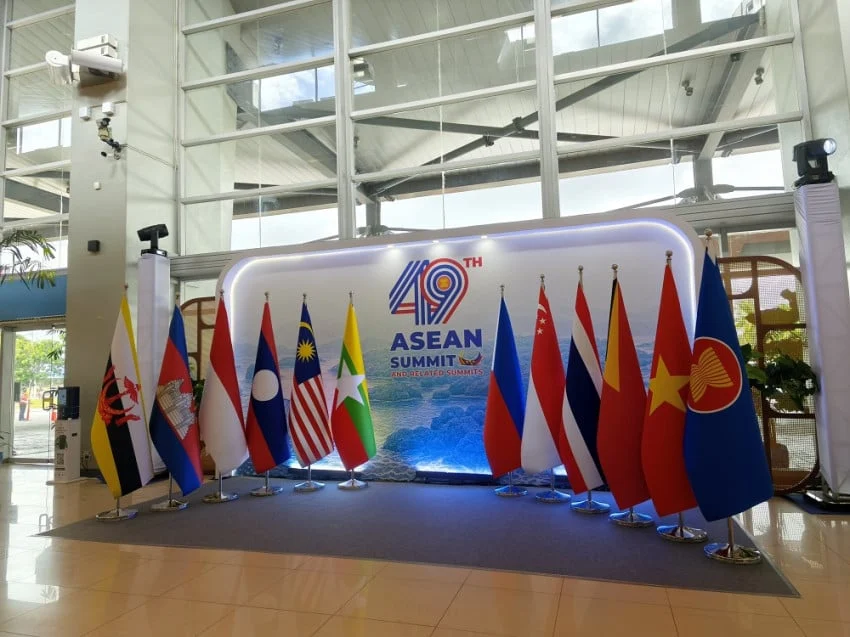
The Association of Southeast Asian Nations (ASEAN) finds itself at a critical historical juncture, navigating an increasingly volatile global landscape defined by the intensifying rivalry between the United States and China. As the regional bloc strives to maintain its centrality, the traditional doctrine of neutrality is facing unprecedented scrutiny. Sihasak Phuangketkeow, Thailand’s Vice Minister for Foreign Affairs, recently underscored this dilemma during the ISEAS Roundtable in Bangkok, arguing that while ASEAN must avoid alignment with major powers, the luxury of passive neutrality is rapidly diminishing. He suggested that for the sake of survival and regional prosperity, the bloc must transition toward a policy of proactive, interest-based decision-making.
The Erosion of Traditional Non-Alignment
For decades, the "ASEAN Way"—characterized by consensus, non-interference, and a balancing act between competing global powers—has served the region well. However, the current geopolitical climate, marked by trade wars, technology decoupling, and maritime territorial disputes in the South China Sea, has rendered a purely neutral stance increasingly untenable.
Sihasak’s remarks reflect a growing sentiment among Southeast Asian policymakers that silence or inaction is no longer a viable diplomatic strategy. In an era where economic security is inextricably linked to national security, ASEAN member states are finding that their domestic interests often clash with the binary choices presented by Washington and Beijing. "We clearly will not take sides, but at the same time, we cannot be constantly neutral because we also have to make decisions that are in line with what we perceive as our own interests," Sihasak stated. This pivot marks a subtle but profound shift from "passive neutrality" to "strategic autonomy."
A Chronology of Rising Tensions
To understand the urgency of Sihasak’s message, one must look at the timeline of events that have gradually pressured ASEAN’s unity:
- 2012: The ASEAN Foreign Ministers failed to issue a joint communiqué for the first time in history due to disagreements over the South China Sea, highlighting the fragility of the bloc’s consensus model under external pressure.
- 2018–2019: The escalation of the US-China trade war forced many ASEAN nations to re-evaluate their supply chains. Many manufacturing firms began the "China Plus One" strategy, pivoting toward Vietnam, Thailand, and Indonesia, which inadvertently placed these nations in the crosshairs of economic diplomacy.
- 2021–2022: The launch of the AUKUS security pact (Australia, UK, US) and the strengthening of the Quad (US, Japan, India, Australia) drew mixed reactions from ASEAN. While some nations welcomed the security umbrella, others, like Indonesia and Malaysia, expressed concerns about a potential arms race in their backyard.
- 2023–2024: The intensification of regional maritime friction, particularly between China and the Philippines near the Second Thomas Shoal, has forced ASEAN members to grapple with the reality that major power competition is no longer abstract—it is occurring in their maritime domains.
Data-Driven Reality: Economic Interdependence
The hesitation to abandon neutrality is rooted in hard economic data. According to the ASEAN Secretariat, China remains the bloc’s largest trading partner, with total trade exceeding $970 billion in 2023. Conversely, the United States remains the largest source of foreign direct investment (FDI) into the region.
This deep interdependence creates a "double-bind." If an ASEAN member state adopts a policy that alienates Beijing, it risks losing critical infrastructure investment and market access. If it alienates Washington, it risks losing access to high-end technology and military cooperation. Recent data from the ISEAS-Yusof Ishak Institute’s "State of Southeast Asia" survey indicates that over 50% of regional respondents feel that their countries are becoming a theater for major power competition, with significant anxiety regarding the stability of regional supply chains.
Expanding the Network: Seeking Strategic Autonomy
Sihasak’s proposal for a more flexible approach involves diversifying partnerships. He argued that ASEAN should proactively engage with other regional stakeholders—namely India, Japan, South Korea, Australia, and the European Union. By creating a multi-layered web of economic and security relationships, ASEAN can prevent any single power from exerting undue influence over its policy decisions.
This strategy of "hedging" is designed to increase the bloc’s "strategic autonomy." By elevating partnerships with the EU or Japan, ASEAN countries gain alternative sources of capital and technology, reducing their vulnerability to coercion. This is not about building an anti-China or anti-US bloc, but about maximizing the "freedom to choose."
Official Perspectives and Regional Reactions
The sentiment expressed by the Thai official is echoed in various corners of the region. Singapore’s leadership has long warned that Southeast Asia cannot afford to be a "pawn" in the games of great powers. Meanwhile, Vietnam has mastered the art of "bamboo diplomacy"—staying flexible and strong while navigating its complex relationship with China and its growing security partnership with the US.
However, critics of this shift toward more assertive decision-making point out the dangers of fragmentation. If individual ASEAN members start making decisions based on their own immediate interests, the principle of "ASEAN Centrality" could collapse. The challenge, therefore, lies in ensuring that these national decisions are coordinated through the ASEAN framework to maintain a cohesive regional voice.
Beyond the US-China Binary
While the US-China rivalry dominates the headlines, Sihasak noted that the challenges facing the region are far more diverse. The "wider challenges" he alluded to include:
- Economic Uncertainty: Post-pandemic recovery has been hampered by global inflation, energy price volatility, and the "de-risking" strategies of Western companies that threaten the export-oriented growth models of many Southeast Asian economies.
- Transnational Threats: Climate change, digital security, and the regulation of emerging technologies like Artificial Intelligence require regional cooperation that transcends traditional diplomatic rivalries.
- Conflict Management: The ongoing crisis in Myanmar has tested ASEAN’s diplomatic resolve, revealing that the bloc struggles to manage internal crises while simultaneously facing external geopolitical pressures.
Analysis: The Cost of Inaction
The implication of maintaining a status-quo policy is clear: ASEAN risks becoming irrelevant. In international relations, when a regional body fails to take a stance on critical issues of global stability, it creates a vacuum that major powers are all too eager to fill. If ASEAN remains paralyzed by the need to reach absolute consensus on every minor issue, it loses its ability to influence the "rules of the game" in the Indo-Pacific.
A transition toward "interest-based decision-making" is not a betrayal of ASEAN’s core values; it is an evolution. The bloc was founded in 1967 as a bulwark against the spread of communism during the Cold War, a time when regional stability was the primary goal. Today, the goal must be the preservation of regional sovereignty in a multipolar world.
Conclusion: A New Era for ASEAN
As the world enters a period of heightened geopolitical friction, the words of Sihasak Phuangketkeow serve as a wake-up call for the ASEAN member states. The era where the bloc could simply "sit on the fence" and hope for the best is ending. The future of the region depends on its ability to define its own interests, build a network of diverse partnerships, and act with the agility that the 21st century demands.
While the "ASEAN Way" has been the cornerstone of the bloc’s success, it must now be adapted to meet the challenges of a world where silence is often interpreted as complicity. Whether through deeper economic integration, stronger security dialogues, or a more robust stance on regional maritime issues, ASEAN is reaching a point where it must speak with a clearer, more decisive voice. The path forward is not one of abandonment of neutrality, but of a more sophisticated, active engagement that prioritizes the stability and prosperity of the region above the competing demands of external powers. The ASEAN of the future must be a player, not a playing field.
