

The global technology sector is reeling following a series of startling revelations involving Jensen Huang, the long-standing CEO of Nvidia Corporation. Known for his visionary leadership and pivotal role in the explosion of artificial intelligence, Huang, 63, issued a formal admission on November 8, 2026, confirming that he had engaged in an extramarital affair. While the personal nature of the confession initially dominated headlines, the situation has rapidly evolved into a complex corporate and geopolitical crisis, as details emerged linking the woman involved, identified as Alice Huang, to firms currently under scrutiny for the illicit transfer of advanced AI semiconductor technology to China.
The Admission and Internal Disclosure
The catalyst for the unfolding crisis was a corporate-wide memorandum disseminated to Nvidia’s global workforce on the morning of November 8, 2026. In the document, Huang expressed profound regret for personal lapses in judgment that he acknowledged had compromised the values of the company. While the internal communication focused primarily on personal accountability, it inadvertently opened a Pandora’s box regarding corporate governance and security protocols.
Industry analysts note that for a figure of Huang’s stature—often viewed as the architect of the modern AI revolution—this admission represents a significant blow to the company’s brand integrity. Nvidia, currently the world’s most valuable chipmaker, relies heavily on the trust of global governments and defense contractors. The revelation that the CEO was involved with an individual allegedly tied to entities circumventing export controls has prompted immediate concern among investors and regulatory bodies.

Chronology of Events
The timeline of the scandal began to take shape in late October 2026, when internal compliance monitors at Nvidia flagged irregular patterns in communication between high-level executive accounts and external consultants linked to Asia-based supply chains.
- October 25, 2026: Nvidia’s internal security team begins an audit of sensitive communications following reports of unauthorized data access.
- November 2, 2026: Investigative journalists begin inquiring about the relationship between Jensen Huang and Alice Huang, a consultant with previous affiliations to firms currently blacklisted by the U.S. Department of Commerce.
- November 8, 2026: Jensen Huang issues a direct admission to employees, confirming the affair and acknowledging the potential conflict of interest.
- November 9, 2026: Nvidia’s Board of Directors announces an independent investigation, led by a third-party legal firm, to determine if any proprietary information was leaked or if export control protocols were breached.
The Geopolitical Dimension
The most alarming aspect of the scandal is not the infidelity itself, but the professional background of the woman involved. Reports suggest that Alice Huang—who is not related to the CEO—had been operating within the periphery of semiconductor supply chains that facilitate the movement of high-end GPUs into restricted markets in China.
For years, the U.S. government has maintained a strict export regime designed to prevent China from acquiring the computational power necessary to advance its military-industrial AI capabilities. Nvidia has been at the center of this geopolitical tug-of-war, balancing the demand for its H100 and Blackwell-series chips with strict adherence to Washington’s directives. If it is found that the CEO’s personal relationship provided an avenue for, or even the appearance of, intelligence leakage, the implications for Nvidia’s license to operate in global markets would be catastrophic.
Official Responses and Governance
Following the disclosure, Nvidia’s Board of Directors moved quickly to contain the fallout. In a brief statement, the board affirmed that they have launched an independent inquiry into the matter. "The Board of Directors is committed to upholding the highest standards of corporate governance and ethics," the statement read. "We are conducting a thorough, independent investigation to ensure that our commitment to security and compliance remains uncompromised."

Market observers suggest that this investigation will focus on whether Jensen Huang inadvertently or intentionally shared sensitive information regarding product roadmaps, pricing, or restricted shipping schedules. Under federal law, if any evidence of influence-peddling or espionage is uncovered, the repercussions could extend beyond the boardroom and into the realm of federal criminal investigations.
Impact on Nvidia’s Market Position
Nvidia’s stock has remained volatile since the news broke. As a linchpin of the S&P 500 and the engine behind the AI boom, any instability in Nvidia’s leadership creates ripples across the entire equity market. Investors are particularly wary of "key-person risk." For the past decade, Jensen Huang’s influence has been synonymous with Nvidia’s success. The uncertainty surrounding his tenure and the potential for regulatory backlash has prompted analysts at several major financial institutions to revise their short-term outlooks for the company.
Furthermore, the scandal arrives at a time when Nvidia is already under pressure to demonstrate that its chips are not being repurposed for Chinese military applications. The optics of the CEO having a personal connection to a figure involved in that exact industry sector severely weakens the company’s defense in front of the U.S. Congress and international regulators.
Analysis of Corporate Ethical Breaches
Corporate governance experts argue that this scandal serves as a cautionary tale regarding the separation of personal and professional lives for C-suite executives in high-stakes industries. In the technology sector, where the line between national security and commercial product is blurred, the personal conduct of a CEO is no longer a private matter.
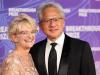
"When an executive holds the keys to the world’s most advanced AI infrastructure, their private associations become a matter of public interest," says Dr. Elena Vance, a professor of business ethics. "The question here is not just about the morality of the affair, but about whether the CEO maintained the necessary ‘Chinese wall’ between his private life and the highly classified data he holds regarding global semiconductor distribution."
Future Outlook and Regulatory Scrutiny
As the independent investigation proceeds, all eyes are on the U.S. Department of Commerce and the Securities and Exchange Commission (SEC). The SEC is expected to investigate whether the affair created undisclosed conflicts of interest that should have been reported to shareholders earlier.
The potential for a leadership transition at Nvidia is now a topic of discussion among analysts. While the board has not signaled an immediate intent to remove Huang, the pressure from institutional investors—many of whom prioritize ESG (Environmental, Social, and Governance) standards—could force the issue. If the investigation concludes that there was any compromise of national security, it is highly likely that shareholders will demand a restructuring of the executive suite to restore credibility.
For now, Nvidia remains in a state of high alert. Employees have been advised to refer all media inquiries to the corporate communications department, and internal security protocols have been tightened. The incident underscores the fragility of modern tech titans, whose market dominance often rests on the integrity of their leadership. As the world watches, the story of Jensen Huang’s personal fall from grace is becoming a definitive case study in the intersection of private scandal, global power, and national security in the 21st century.

The coming weeks will be critical. The findings of the independent board investigation will likely determine whether Jensen Huang can continue to steer the ship that he built, or if the gravity of these revelations will necessitate a new chapter for one of the most influential technology companies in human history. Whether the situation is a matter of a personal lapse with unfortunate associations or a systemic failure of leadership remains to be determined by the facts currently under review by legal authorities and corporate overseers.
