
The Maybank Marathon 2026, held on August 23, 2026, in Bali, marked a transformative milestone in the intersection of professional sports and corporate social responsibility. By integrating comprehensive sustainability frameworks into the fabric of one of Indonesia’s most prestigious athletic events, the organizers moved beyond the traditional competitive scope of marathon racing. This year’s event served as a high-visibility platform for environmental stewardship and social empowerment, anchored by the Maybank Marathon Run for Charity (MMRFC) and the innovative Jejak Hijau Runner initiative.
A Legacy of Growth: The Evolution of Maybank Marathon
Since its inception, the Maybank Marathon has evolved from a premier racing destination in Southeast Asia into a strategic venue for Maybank Indonesia’s sustainability agenda. The 2026 iteration underscored the bank’s mission of "Humanising Financial Services," treating the event as a vehicle to drive positive change in the host communities of Bali.
The event’s trajectory reflects a deliberate effort to scale social impact. In 2026, the Maybank Marathon Run for Charity (MMRFC) reached a record-breaking donation milestone of Rp933,711,005. This figure represents a robust 29% increase from the previous year, demonstrating a growing alignment between the athletic community and philanthropic goals. The funds, channeled through six key sustainability partners, are designated for grassroots projects that address economic disparities and community development.
The Mechanism of Change: MMRFC and Athlete Mobilization
The success of the 2026 charity initiative was driven by 35 "inspirational runners"—individuals selected for their commitment to social causes and their ability to influence the wider running community. These ambassadors did not merely compete; they served as conduits for fundraising, bridging the gap between donor support and the beneficiaries on the ground.
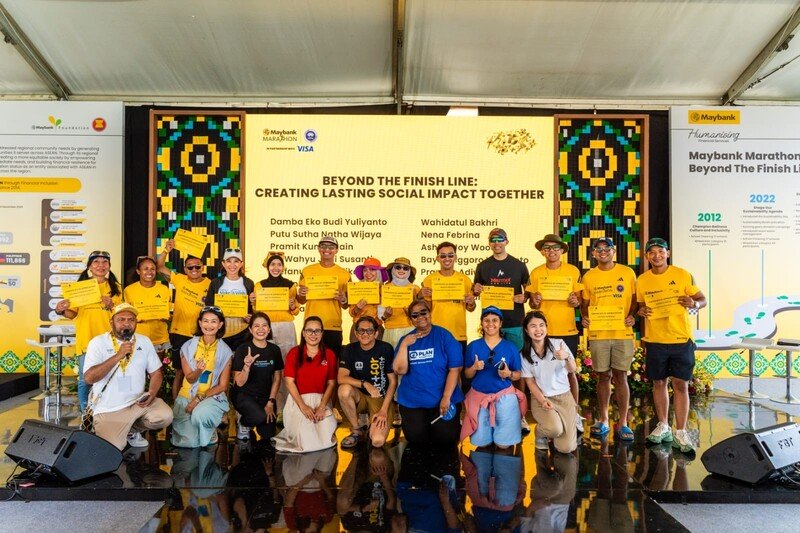
President Director of Maybank Indonesia, Steffano Ridwan, emphasized that the marathon’s value proposition has shifted significantly. "We built the Maybank Marathon not just as a sporting event, but as a platform that unites the spirit of running with a deep sense of responsibility toward society and the environment," Ridwan stated. By decentralizing the philanthropic effort through these 35 influencers, Maybank effectively turned the race into a collaborative social movement rather than a top-down corporate exercise.
Environmental Stewardship: The Jejak Hijau Runner Program
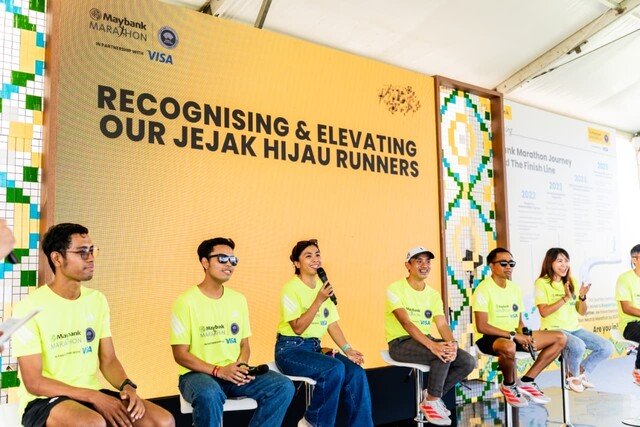
Perhaps the most visible manifestation of the event’s environmental commitment was the "Jejak Hijau Runner" program. In a novel approach to race management, selected pacers for the marathon category—specifically those targeting sub-6:30 and sub-7:00 finish times—were tasked with dual roles. Beyond guiding participants toward the finish line, these runners actively collected waste along the race route, physically embodying the "Green Trail" philosophy.
This initiative is a critical component of Maybank’s broader "Jejak Hijau" (Green Trail) movement, which seeks to mitigate the ecological footprint of large-scale athletic events. The urgency of this initiative is grounded in hard data. Following the 2025 marathon, Maybank conducted a rigorous audit of the event’s environmental impact, recording total emissions of 4,336 tonnes of carbon dioxide equivalent (tCO2e).
The audit identified that the primary drivers of this carbon footprint were logistics—specifically the transportation and accommodation arrangements for the thousands of participants, crew, and spectators arriving in Bali. Armed with this data, the organizers developed a comprehensive "Roadmap to Net Zero," which guided the operational decisions for the 2026 race.
Decarbonization Strategy and Operational Adjustments
The 2026 event served as the testing ground for the first phase of Maybank’s commitment to achieving a "Net-Zero Carbon Marathon" by 2030. Several operational shifts were implemented to reduce the event’s total carbon output:
- Sustainable Logistics: Enhanced optimization of shuttle services reduced the reliance on private vehicle transit for participants.
- Electrification: The increased deployment of electric vehicles (EVs) for race support and logistical movement across the course.
- Waste Management: The implementation of stringent waste-reduction protocols at water stations and village checkpoints.
Maria Trifanny Fransiska, Head of Sustainability at Maybank Indonesia, noted that the path to 2030 is inherently iterative. "Through the Jejak Hijau Runner program, we want to show that every runner can be a stakeholder in our sustainability journey," Fransiska explained. "Our goal is not just to reach the finish line of the race, but to reach the finish line of our net-zero commitment."
Community Integration: The Desa Sanding Initiative
The impact of the Maybank Marathon extends beyond the race circuit into the local Balinese landscape. In collaboration with the World Resources Institute (WRI) Indonesia, the bank continued its support for the "Desa Sanding Bebas Emisi" (Emission-Free Sanding Village) program. This project focuses on long-term systemic change, including the mapping of local carbon emissions and the establishment of community-led organic waste management systems. By involving the local population, Maybank is ensuring that the marathon’s sustainability legacy provides lasting infrastructure for the residents of Bali, rather than being a transient event that disappears after the runners depart.
Promoting Inclusivity: The Piduh Charity Café
The social dimension of the 2026 marathon was further highlighted through the support of the Piduh Charity Café, in partnership with the Yayasan Widya Guna. This initiative serves as a training ground and empowerment hub for children and youth with special needs. By integrating this into the marathon’s ecosystem, Maybank underscored that a truly sustainable event must also be an inclusive one. The café provides essential vocational training, allowing youth to develop marketable skills in the hospitality and service sectors, thereby creating a pathway for long-term independence.
The Road Ahead: Data-Driven Sustainability
As Maybank Indonesia looks toward future iterations of the event, the reliance on transparent, data-driven metrics remains paramount. The 4,336 tCO2e baseline established in 2025 has become the foundational benchmark against which all future progress will be measured.
The strategy for the coming years involves a continuous loop of measurement, mitigation, and community collaboration. According to the organizing committee, the transition to a net-zero event requires a multi-layered approach:
- Participant Education: Influencing the behavior of the running community regarding travel and waste production.
- Corporate Accountability: Investing in verified carbon offset projects and renewable infrastructure for race facilities.
- Technological Integration: Leveraging technology to monitor real-time energy usage and waste diversion rates during the event weekend.
The success of the 2026 event provides a blueprint for other international sporting events. It proves that the "sporting event" model can be successfully pivoted to serve as a catalyst for sustainable development. By involving athletes not just as competitors but as active participants in climate action and social welfare, Maybank has set a new standard for corporate-led athletic events.
In her closing remarks, Maria Trifanny Fransiska reiterated that the complexity of the challenge is acknowledged by the organizers. "The journey toward a Net-Zero Carbon Marathon by 2030 is not something we can accomplish in isolation. It requires the active collaboration of our partners, the runners, and the local community. Every action, no matter how small, contributes to a measurable reduction in our environmental impact and a tangible increase in our social value."
With the 2026 edition concluded, the focus now shifts to analyzing the impact of the newly implemented logistical changes and determining how the Rp933 million in donations will catalyze the next phase of development for the six sustainability partners. As the Maybank Marathon continues to grow, it remains a critical case study in how large-scale financial institutions can align their core operations with global sustainability goals, effectively "humanizing" their services while fostering a more responsible, inclusive, and environmentally conscious sporting culture.
