
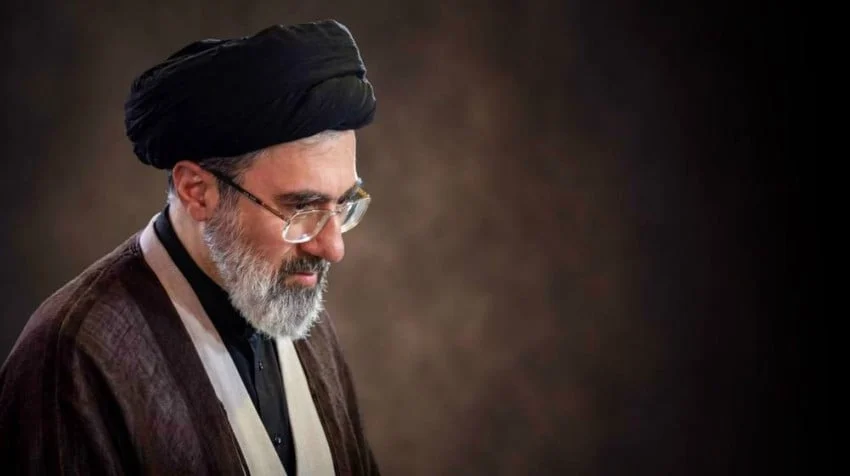
TEHRAN — In a significant policy address coinciding with the religious observance marking the martyrdom anniversary of Sayyidah Fatimah Zahra, Ayatollah Seyyed Mojtaba Khamenei has laid out a comprehensive and ambitious strategic roadmap aimed at cementing Iran’s status as a formidable global superpower. Addressing a distinguished gathering of the nation’s top-performing scientists, academic scholars, and international sports medalists, Khamenei issued a resounding call to action for the country’s intellectual vanguard. He urged the elite class to aggressively shatter existing scientific boundaries, transcend regional limitations, and systematically shift the axis of the world’s knowledge production centers directly toward Tehran.
The address, which reverberated across Iranian state media and drew significant attention from international observers, underscored a multi-pronged state strategy. This vision integrates rapid advancements in cutting-edge technologies, the cultivation of domestic intellectual capital, the assertion of cultural values on the global stage, and a deliberate structural pivot toward what Tehran terms a new multipolar world order. By directly connecting the achievements of Iran’s youth in international science Olympiads and athletic arenas to the broader geopolitical ambitions of the state, the leadership has signaled that human capital and technological sovereignty will serve as the primary pillars of Iran’s future national security and international standing.
Context and Background of the Strategic Vision
To understand the weight of Mojtaba Khamenei’s recent pronouncements, one must examine the socio-political and economic backdrop against which they are delivered. For decades, the Islamic Republic of Iran has operated under a severe regime of unilateral and multilateral economic sanctions orchestrated primarily by the United States and its Western allies. These punitive measures have systematically targeted Iran’s vital financial institutions, energy sector, and industrial supply chains, designed explicitly to cripple the nation’s economic growth and technological modernization.
In response to these external pressures, Tehran has long championed a doctrine of "Resistance Economy," which emphasizes self-sufficiency, import substitution, and indigenous research and development. Over the past twenty years, Iranian leadership has consistently funneled state resources into high-tech sectors—such as nuclear technology, aerospace engineering, biotechnology, and nanotechnology—to bypass sanctions and build an autonomous industrial base.
The framing of Iran’s scientific and athletic elite as frontline soldiers in this geopolitical struggle is not new, but Mojtaba Khamenei’s detailed roadmap elevates this narrative. By casting scientific achievement as a tool for national liberation and superpower status, the leadership attempts to galvanize the country’s educated youth, counter the phenomenon of the "brain drain" (the migration of skilled professionals to Western nations), and foster a renewed sense of nationalist pride amidst persistent economic hardships.
The Chronology of Excellence: Celebrating Youth Achievement
The announcement was intentionally synchronized with a series of recent, notable triumphs by young Iranians on the international stage. In recent months, Iranian student delegations have secured top-tier medals in prestigious global science Olympiads spanning astronomy, astrophysics, mathematics, physics, chemistry, biology, computer science, artificial intelligence, and the humanities. Simultaneously, Iranian athletes have demonstrated remarkable resilience and competitiveness in global athletic championships.
During his address, Khamenei extended official congratulations to the Iranian populace for these milestones, highlighting the psychological and strategic value of such victories. "The motivation and hope possessed by our elite to bring about transformation for this country is a bright flame that I have witnessed—both closely and from afar—for years and even decades," Khamenei stated, according to transcripts provided by state broadcasters.
Special recognition was reserved for Iranian athletes, particularly female competitors. Khamenei commended women athletes for their dedication, noting that their performances on international podiums not only showcased physical prowess but also projected a specific cultural and religious ethos to the world, stating that they "make the symbol of the honor of Iranian women’s attire shine in the eyes of the world." This commentary reflects Tehran’s ongoing effort to project a state-sanctioned image of modern, highly capable Iranian women who simultaneously adhere to Islamic dress codes and cultural norms.
The Five Core Pillars of the Superpower Strategy
While the broad strokes of Iran’s national development plans are frequently discussed in state policy documents, Mojtaba Khamenei’s address crystallized five interconnected strategies designed to accelerate the nation’s transition into a globally dominant technological and political actor.
- Redefining Elite Responsibility and Scientific Mobilization
At the core of the strategy is a fundamental philosophical shift regarding the social contract of the educated class. Khamenei explicitly rejected Western notions of elitism rooted in individual exceptionalism or socioeconomic privilege.
"The true elite are not individuals who—simply because of their extraordinary talent and intelligence—consider themselves superior to others or focus solely on fleeting personal desires," Khamenei asserted. Instead, he defined a true elite member as one who possesses a profound sense of social obligation, viewing personal capability as a collective trust to be deployed in service of the community.
This philosophy translates into practical directives for the academic community: theoretical research must be immediately translatable into practical solutions for domestic and systemic challenges.
- Harnessing Deep-Tech and Frontier Sciences
Iran has long prided itself on indigenous advancements in high-risk, high-reward scientific fields. Khamenei’s roadmap explicitly calls for the intensification of research and development across a broad spectrum of advanced disciplines. He highlighted ongoing successes in stem cell research, nanotechnology, biomanufacturing, and advanced aerospace engineering.
Furthermore, the strategy encompasses critical industrial sectors, including mining technologies, advanced medicine, precision agriculture, and nuclear energy infrastructure. By leveraging domestic talent to solve real-world problems—ranging from clean energy production to chronic medical treatments—Iran aims to render its domestic economy immune to external supply shocks.
- Shifting the Global Axis of Knowledge Production
Perhaps the most ambitious component of the roadmap is the explicit call to dismantle Western dominance over global academic and scientific institutions. Khamenei urged Iranian scholars and scientists to "break scientific boundaries" and actively work toward shifting the global center of gravity for knowledge production away from Western capitals and toward Tehran and the broader Islamic world.
This objective aligns with Iran’s broader foreign policy goal of fostering a "multipolar world order," wherein Western hegemony is challenged by alternative centers of economic, military, and intellectual power, such as the BRICS bloc and regional Asian alliances.
- Cultural Soft Power and the Projection of Identity
Athletics and international academic competitions are viewed within this strategic framework not merely as recreational or educational milestones, but as vital instruments of soft power. By consistently placing on global podiums, Iran seeks to project an image of vitality, resilience, and unyielding national strength.
The emphasis on female athletes carrying cultural symbols abroad is an extension of this soft power doctrine, designed to counter dominant Western media narratives regarding the suppression of women in Iranian society by projecting an alternative narrative of empowered, globally competitive women operating within an Islamic framework.
- Integration of Artificial Intelligence and Future Technologies
Recognizing the shifting paradigms of global conflict and economic competition, the roadmap places heavy emphasis on frontier technologies such as artificial intelligence (AI) and advanced computer sciences. By prioritizing AI education and infrastructural integration among its youth, Iran aims to secure a competitive advantage in the Fourth Industrial Revolution, ensuring that its defense, economic, and administrative sectors remain resilient against cyber and technological disruptions.
Implications and Broader Geopolitical Analysis
The articulation of this comprehensive roadmap by a key figure within Iran’s political architecture carries profound implications for both domestic stability and international relations.
From an analytical perspective, the strategy highlights Tehran’s long-term calculus: even as the nation grapples with acute economic pressures, inflation, and social discontent, the political establishment remains heavily invested in projecting an image of forward-looking, high-tech statehood. By framing national development through the lens of civilizational competition, the leadership seeks to channel the energies of a young, highly educated, but economically constrained population into state-aligned scientific and industrial endeavors.
Regionally, Iran’s persistent push toward self-sufficiency in aerospace, nuclear technology, and artificial intelligence will likely heighten security concerns among its regional adversaries, particularly Israel and the monarchies of the Persian Gulf. As Tehran enhances its indigenous technological capabilities, the gap between conventional military deterrence and advanced technological deterrence narrows, shifting the regional balance of power.
Internationally, the call to relocate the centers of global knowledge production is emblematic of a broader revisionist stance shared by nations operating outside the Western-led liberal international order. As countries like Russia, China, and Iran increasingly seek to decouple their technological and financial systems from Western dependencies, initiatives that foster indigenous scientific capacity serve as the foundational building blocks of this geopolitical shift.
Reactions and Responses
While official Western reactions to Mojtaba Khamenei’s specific address have been muted, the international scientific and intelligence communities closely monitor Iran’s technological advancements, particularly in dual-use sectors such as nuclear physics, aerospace, and artificial intelligence. Western governments and non-proliferation watchdogs frequently express concern that advancements in civilian research programs—such as space launch vehicles and advanced computing—can be rapidly militarized to enhance Iran’s ballistic missile capabilities and strategic deterrence posture.
Conversely, domestic academic institutions and state-aligned media have lauded the address as a timely and visionary blueprint for national revival. University chancellors and research councils across Tehran have begun organizing symposiums to discuss the practical implementation of Khamenei’s directives, focusing particularly on how to expand funding for university laboratories, streamline the commercialization of domestic patents, and enhance international academic cooperation with allied non-Western nations.
Conclusion
Mojtaba Khamenei’s comprehensive roadmap for transforming Iran into a global superpower represents a calculated synthesis of nationalism, ideological resilience, and technological pragmatism. By anchoring national ambitions to the intellectual and athletic achievements of the country’s youth, the Iranian leadership is attempting to forge a path past international isolation through the sheer force of human capital and scientific innovation. Whether this ambitious vision can fully overcome structural economic challenges and deep-seated geopolitical hurdles remains one of the defining questions of contemporary Middle Eastern politics. Nonetheless, the message from Tehran is unequivocally clear: Iran’s leadership views the mastery of science and technology not merely as a tool for development, but as the ultimate battleground upon which the future global order will be contested.
