
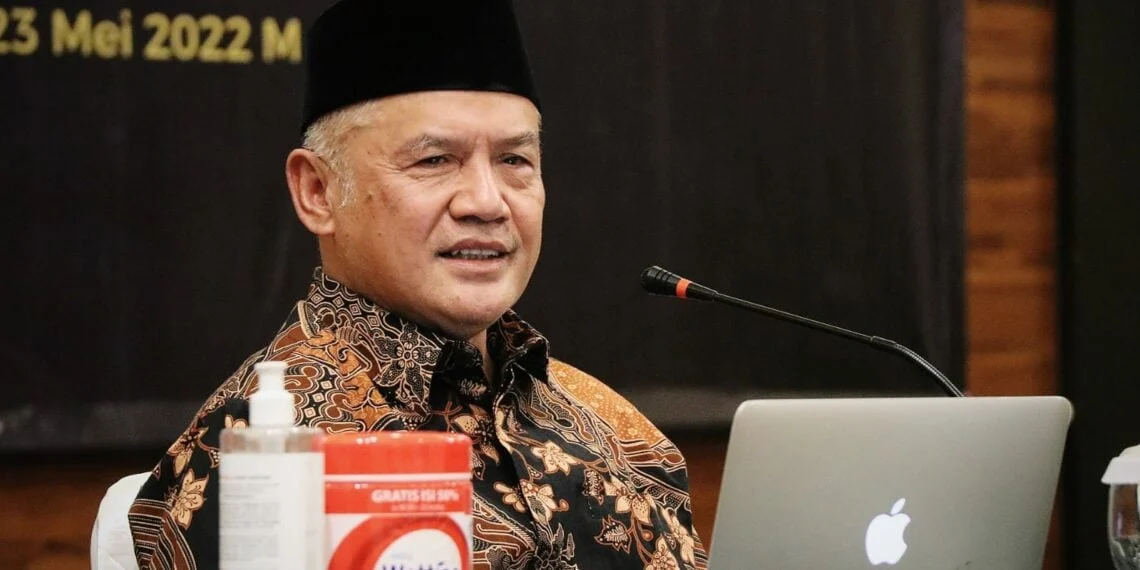
The pursuit of higher education is frequently measured by the culmination of a graduation ceremony, the handing over of a diploma, and the conferment of an academic degree. However, graduates stepping out into an increasingly complex and technologically disrupted world must recognize that a piece of paper does not signify the end of intellectual growth. This central thesis formed the core message delivered by Professor Dadang Kahmad, Chairman of the Central Leadership of Muhammadiyah, during the 9th Bachelor Degree Graduation Ceremony of Universitas Muhammadiyah Bandung (UM Bandung). Addressing hundreds of newly minted graduates, academic senate members, faculty, and proud families, the senior Muhammadiyah official issued a profound reminder that true knowledge transcends administrative credentials and must instead manifest as a lifelong commitment to societal betterment, ethical integrity, and continuous adaptation.
The event, held on Saturday, September 12, marked another significant milestone for Universitas Muhammadiyah Bandung as it continues to expand its footprint as a premier institution under the auspices of Muhammadiyah, one of Indonesia’s largest Islamic socio-religious organizations. Against the backdrop of rapid global transformations driven by artificial intelligence, automation, and shifting economic paradigms, the graduation ceremony served as both a celebration of academic achievement and a critical orientation toward the realities of the modern workforce and civic life.
The True Essence of Knowledge Versus Academic Credentials
Opening his address to the graduating cohort, Professor Dadang Kahmad drew a sharp distinction between obtaining a diploma and acquiring genuine, actionable knowledge. He emphasized that academic degrees are merely administrative testaments to a period of structured study, whereas knowledge is a dynamic force meant to be continuously applied, expanded, and shared.
"An academic degree is a mandate of knowledge that you have acquired during your studies at UM Bandung, and it must be manifested through acts of service and societal benefit. Knowledge must never stop at the diploma," Dadang stated during his keynote address.
He elaborated that education within the framework of Islamic and progressive values championed by Muhammadiyah should act as an illuminating beacon. Rather than serving as a static terminal point, knowledge must function as a light that guides individuals through the complexities of daily life, provides practical solutions to pressing community problems, and contributes meaningfully to the construction of an advanced civilization.
This philosophy aligns closely with the broader educational mission of Perguruan Tinggi Muhammadiyah-’Aisyiyah (PTMA)—the network of higher education institutions operated by Muhammadiyah and its women’s wing, ‘Aisyiyah. Across Indonesia, PTMA institutions have long positioned themselves not merely as job-training centers, but as holistic incubators designed to produce graduates who are intellectually robust, spiritually grounded, and socially responsible.
Navigating the Future: The Imperative of Lifelong Learning
In an era characterized by unprecedented technological disruption, the half-life of professional skills is shrinking rapidly. Skills acquired at the beginning of a four-year degree program can become obsolete by graduation day. Acknowledging this shifting landscape, Dadang strongly cautioned graduates against falling into the psychological trap of intellectual completion.
"Do not ever feel that once you have obtained your diploma, the learning process is finished. In fact, it is precisely after graduation that the real learning process begins. Become lifelong learners," he urged the audience.
This call to continuous education reflects a growing consensus among global economists, educational theorists, and industry leaders. According to recent labor market reports from organizations such as the International Labour Organization (ILO) and the World Economic Forum, the future of work demands high levels of adaptability, digital literacy, and continuous upskilling. Traditional models of front-loading education—where individuals study intensely for a few years and then rely on those skills for a forty-year career—are no longer viable.
For UM Bandung graduates, this means embracing a mindset of relentless curiosity. Whether entering the corporate sector, public service, entrepreneurship, or civil society organizations, graduates must remain attuned to technological shifts, regulatory updates, and evolving societal needs. The ability to unlearn outdated practices and relearn new methodologies is emerging as the defining competitive advantage of the twenty-first-century professional.
Beyond Technical Competence: The Supremacy of Character and Integrity
While technological proficiency, critical thinking, teamwork, communication skills, and digital adaptability are indispensable tools for navigating the modern economy, Dadang underscored that technical brilliance alone is insufficient for sustainable societal progress. In a pointed segment of his address, he elevated moral integrity and personal character above mere intellectual capacity.
"However, there is one thing that is far more important than mere intelligence and skills, and that is character and integrity. The world may need smart people, but society desperately needs honest people," Dadang emphasized.
This emphasis on ethics addresses a critical vulnerability in contemporary global development. As societies grapple with complex ethical dilemmas arising from data privacy breaches, financial corruption, institutional decay, and the misuse of emerging technologies, the demand for principled leadership has never been more urgent. Muhammadiyah, since its founding by K.H. Ahmad Dahlan in 1912, has consistently prioritized the synthesis of modern rational education with deep spiritual and moral grounding.
By reminding graduates that honesty and integrity form the bedrock of public trust, the Muhammadiyah leadership sought to inoculate the new alumni against the moral compromises often associated with hyper-competitive corporate and political environments. True leadership, from this perspective, is measured not by personal accumulation of wealth or status, but by the steadfast adherence to ethical principles in the face of temptation and pressure.
The Role of PTMA in Shaping National and Global Landscapes
The 9th graduation ceremony of UM Bandung also highlights the expanding strategic role of Perguruan Tinggi Muhammadiyah-’Aisyiyah in Indonesia’s national education ecosystem. Comprising over 170 higher education institutions spread across the archipelago—ranging from universities and colleges to polytechnics and academies—the PTMA network represents a formidable pillar of human capital development in Indonesia.
Educational analysts point out that PTMA institutions have increasingly positioned themselves as catalysts for regional development, innovation, and social equity. By providing accessible, high-quality education grounded in values of moderation, inclusivity, and progress, these institutions bridge the gap between marginalized communities and the formal knowledge economy.
For UM Bandung specifically, situated in the capital of West Java—a province with a massive population and diverse economic challenges—the institution serves as a vital intellectual hub. The university offers various study programs spanning science, technology, social sciences, humanities, and economics, all designed to respond directly to regional and national development priorities.
Graduates from institutions like UM Bandung are expected to act as change agents within their local communities. Dadang noted that upon completing their formal education within the PTMA system, students carry a distinct moral obligation to develop themselves further and cultivate a deep-seated empathy for the marginalized and vulnerable.
Chronology and Institutional Context of UM Bandung’s Growth
To understand the weight of the messages delivered at the 9th graduation ceremony, it is essential to examine the trajectory of Universitas Muhammadiyah Bandung itself. Established to meet the growing demand for quality higher education adhering to Islamic values in West Java, UM Bandung has undergone rapid institutional maturation.
- Founding and Operational Permit: UM Bandung received its official operational permit from the Ministry of Research, Technology, and Higher Education, marking its formal entry into Indonesia’s competitive higher education sector.
- Infrastructure Development: Over the years, the university has continuously expanded its campus facilities, upgrading laboratory equipment, digital libraries, and research centers to support modern pedagogical standards.
- Curriculum Adaptation: In alignment with the Indonesian government’s Merdeka Belajar Kampus Merdeka (Independent Learning Independent Campus) initiative, UM Bandung has integrated experiential learning, internships, and community service projects into its core curricula.
- Milestone Graduations: The progression from its early graduation cohorts to the 9th Bachelor Degree Graduation Ceremony reflects a steady increase in student enrollment, institutional accreditation ratings, and alumni output.
The steady expansion of UM Bandung mirrors the broader institutional modernization strategy undertaken by Muhammadiyah across its entire educational portfolio. By upgrading facilities, pursuing international accreditation partnerships, and emphasizing research output, PTMA institutions are increasingly competing on both national and international stages.
Broader Economic and Societal Implications
The insights shared by Professor Dadang Kahmad at the UM Bandung graduation ceremony carry profound implications that extend far beyond the walls of the auditorium. They touch upon critical themes relevant to Indonesia’s demographic dividend, national competitiveness, and social cohesion.
1. Maximizing the Demographic Dividend
Indonesia is currently navigating a demographic window where the proportion of the working-age population significantly outnumbers dependents. However, economists repeatedly warn that a large population alone does not guarantee economic prosperity; quality is the decisive factor. If the millions of youth graduating from Indonesian universities each year possess only rote-learned theoretical knowledge without critical thinking, adaptability, and integrity, the demographic dividend could turn into a demographic burden characterized by underemployment and social friction. Emphasizing lifelong learning and practical problem-solving directly addresses this risk.
2. Bridging the Skills Gap in the Workforce
Employers across various sectors frequently voice concerns regarding a mismatch between the competencies taught in academic institutions and the actual needs of the marketplace. While universities must continuously update their curricula, individual graduates must also take personal responsibility for bridging this gap. The mindset of a "lifelong learner" encourages graduates to pursue professional certifications, engage in micro-credentialing, and remain receptive to ongoing professional development.
3. Restoring Trust Through Ethical Professionalism
In an era plagued by scandals involving corporate governance failures and public sector corruption, the emphasis on character and honesty serves as a vital corrective. When universities intentionally cultivate ethical integrity alongside technical competence, they supply society with professionals who are not only capable of driving economic growth but are also committed to preserving justice, transparency, and public welfare.
Conclusion and Future Outlook
As the 9th Bachelor Degree Graduation Ceremony of Universitas Muhammadiyah Bandung drew to a close, the prevailing atmosphere was one of optimism tempered by a clear-eyed realism regarding the challenges ahead. The graduates left the venue not merely with diplomas in hand, but with a guiding framework articulated by the Muhammadiyah leadership: that education is an ongoing journey, knowledge must serve humanity, and integrity is the ultimate currency of a successful life.
For UM Bandung, the successful execution of this graduation ceremony reinforces its institutional commitment to producing graduates who embody the ideals of Islam berkala—an Islam that brings progress, enlightenment, and universal mercy. As these new alumni disperse into various sectors of society, their ability to adapt to technological change while steadfastly upholding ethical values will serve as the ultimate litmus test of the education they received within the halls of the university.
