
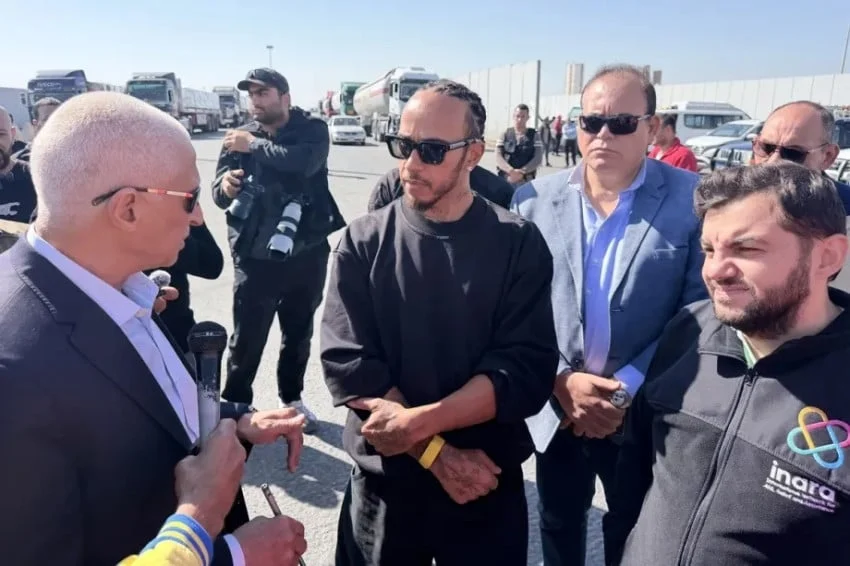
Seven-time Formula One world champion Lewis Hamilton has issued a stark condemnation of the ongoing conflict in Gaza, describing the situation as a "horrifying" humanitarian crisis. The British racing icon, who is set to join Ferrari in the upcoming season, visited the Rafah border crossing between Egypt and the Gaza Strip on November 10, 2026. His visit, which included an inspection of the Egyptian Red Crescent aid warehouses in El Arish, has brought renewed global attention to the severe restrictions on humanitarian supplies entering the enclave.
Hamilton’s intervention marks a significant moment for athlete activism, as he utilized his platform to characterize the violence of the past three years as a "genocide." His public statement on social media highlighted the systemic deprivation of fundamental human rights, including freedom, safety, and dignity, which he witnessed firsthand during his visit to the border region.
The Humanitarian Context at the Rafah Border
The Rafah crossing, once the primary gateway for civilian movement and aid delivery into Gaza, has been the site of intense geopolitical tension since the escalation of hostilities in late 2023. During his visit, accompanied by North Sinai Governor Khaled Megawer, Hamilton was briefed on the complex logistical challenges involved in coordinating the delivery of essential supplies—ranging from food and medical equipment to fuel and sanitation materials.
Hamilton’s account of the journey underscored the physical reality of the blockade. He described the vast, miles-long wall structures that delineate the border, noting the profound psychological and physical impact these barriers have on the Palestinian population. The visibility of the border infrastructure served as a stark contrast to the narratives often presented in international media, prompting the driver to emphasize that no human being should be subjected to conditions that treat their lives as having diminished value.
Chronology of the Crisis: A Three-Year Perspective
To understand the weight of Hamilton’s remarks, it is necessary to contextualize the three-year timeline mentioned by the driver. The conflict, which underwent a massive escalation in October 2023, has resulted in unprecedented levels of civilian casualties and infrastructure destruction.
- October 2023: The conflict experienced a sharp, catastrophic escalation following a major cross-border attack, leading to the initiation of large-scale military operations within the Gaza Strip.
- Late 2023–2024: The implementation of a near-total blockade saw the restriction of water, electricity, fuel, and food supplies. The international community, including various UN agencies, repeatedly warned of impending famine and the collapse of the healthcare system.
- 2025: Despite intermittent international mediation efforts, humanitarian corridors remained highly restricted. Reports from organizations such as Doctors Without Borders (MSF) and the World Food Programme (WFP) consistently documented the struggle of aid agencies to reach vulnerable populations.
- November 2026: Hamilton’s visit coincides with a period of sustained international concern regarding the lack of progress in facilitating consistent, large-scale aid access. The ongoing volatility continues to hinder recovery efforts and the delivery of life-saving interventions.
Supporting Data and Humanitarian Metrics
The severity of the crisis in Gaza is backed by extensive data from international monitoring bodies. According to reports from the United Nations Office for the Coordination of Humanitarian Affairs (OCHA), the volume of aid trucks entering Gaza has remained significantly below the pre-conflict daily average.
The integration of health data paints an even grimmer picture. The healthcare system, which was already fragile prior to the conflict, has suffered from the destruction of hospitals and a chronic shortage of medical supplies. Malnutrition rates, particularly among children, have reached historic highs, and the lack of clean water has fueled the spread of preventable diseases. Hamilton’s inspection of the Red Crescent facilities in El Arish provided him with a direct view of the logistical bottleneck, where thousands of tons of aid remain stalled, awaiting clearance to enter the strip.
Official Responses and Diplomatic Stance
The Israeli government has historically maintained that its border restrictions are necessary for security reasons, citing concerns over the diversion of dual-use materials by militant factions within Gaza. Israeli officials have frequently asserted that their operations are compliant with international law, a claim that has been subject to intense scrutiny in various international forums, including the International Court of Justice (ICJ).
Conversely, the Egyptian authorities have sought to act as a neutral mediator, facilitating the movement of aid while managing the immense pressure at the Rafah crossing. Governor Khaled Megawer’s presence with Hamilton suggests an effort by regional authorities to highlight the humanitarian urgency of the situation to global figures who possess significant cultural influence.

While the Israeli government has not issued a specific rebuttal to Hamilton’s statement, similar high-profile criticisms in the past have typically been met with assertions of the "right to defend" and accusations that aid distribution is being hampered by the security conditions on the ground.
Broader Implications of Athlete Activism
Lewis Hamilton’s decision to engage directly with the situation in Gaza reflects a growing trend of "athlete-activists" who are no longer content with remaining silent on global geopolitical issues. Having previously used his platform to advocate for social justice, climate change, and racial equality, Hamilton’s foray into the Israel-Palestine conflict represents his most politically sensitive endeavor to date.
The implications of such a statement are multifaceted:
- Public Awareness: Hamilton’s massive social media reach ensures that the dire state of the humanitarian crisis in Gaza is brought to the attention of audiences that may not typically follow Middle Eastern politics.
- Pressure on Governing Bodies: His involvement adds pressure on sports organizations—such as the FIA and Formula One management—to define their positions regarding the political activism of their participants.
- Diplomatic Leverage: While a racing driver cannot change the outcome of a conflict, the visibility provided by his visit forces the issue back into the headlines, potentially complicating the narrative for nations involved in the blockade.
Analysis: The Intersection of Sport and Geopolitics
The intersection of professional sports and international conflict has always been a fraught space. Critics often argue that athletes should "stick to sports," maintaining that the sporting arena should be a neutral ground. However, proponents of athlete activism, including Hamilton, argue that their influence is a tool that carries moral weight.
In the case of Gaza, the sheer scale of the humanitarian catastrophe has made it difficult for public figures to maintain neutrality. By framing the issue through the lens of human dignity—the idea that no life is worth less than another—Hamilton transcends the political complexities to focus on the universal right to survival.
The logistical reality at the border, which Hamilton witnessed, is the central pillar of this debate. The "bottleneck" at Rafah is not merely a bureaucratic failure but a strategic instrument of the ongoing conflict. By shining a light on this, Hamilton is effectively asking the international community to re-evaluate the human cost of current security policies.
Conclusion: The Path Forward
As of mid-November 2026, the situation at the Gaza border remains in a state of suspended crisis. While high-level negotiations continue in various international capitals, the physical reality on the ground—the walls, the waiting trucks, and the desperate population—remains unchanged.
Lewis Hamilton’s visit and his subsequent call for action serve as a reminder that the crisis in Gaza is not a static event but a dynamic, ongoing tragedy. His demand for the opening of borders for humanitarian aid aligns with the consistent appeals made by the United Nations, the Red Cross, and various human rights organizations. Whether this advocacy will contribute to a shift in policy or merely serve as a moral marker in a long-standing conflict remains to be seen. However, the resonance of his words underscores a global sentiment that the current status quo, characterized by the restricted flow of life-sustaining supplies, is increasingly viewed as untenable by the international community.
As Hamilton prepares for his transition to Ferrari, his commitment to these global causes suggests that he intends to use his continued prominence to ensure that, while he may be racing on the track, the world does not lose sight of the humanitarian emergencies unfolding far from the grandstands of Formula One.
